In-Depth Analysis of the Corrosion Resistance Performance of FRP Water Tanks: A Perspective from Materials Science and Engineering Practice
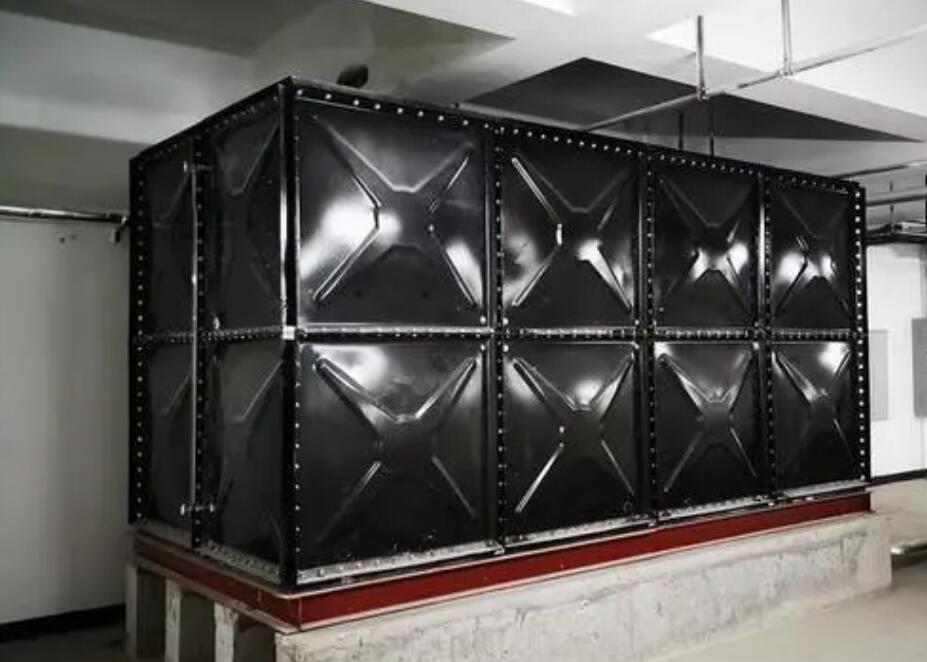
In-Depth Analysis of the Corrosion Resistance Performance of FRP Water Tanks: A Perspective from Materials Science and Engineering Practice
Fiber Reinforced Plastic (FRP) water tanks hold a significant position among water storage facilities due to their advantages of light weight, high strength, and long service life. One of their core competitive strengths is their exceptional corrosion resistance. This performance is not incidental but stems from their precise material composition and mature manufacturing processes. This article delves into the microscopic level of the materials and, combined with the engineering practices of Beijing Yuanhui FRP Co., Ltd., systematically analyzes the scientific foundation and engineering performance of the corrosion resistance of FRP water tanks.
I. The Foundation of Corrosion Resistance: Analysis of the Composite Structure of FRP
The corrosion resistance of FRP is fundamentally the result of the synergistic effect of its composite material structure. It is not a single material but a precise system composed of a resin matrix, glass fiber reinforcement, and the interface between them.
1.1 Resin Matrix: The First Line of Defense
The resin, as the continuous phase, encapsulates and protects the glass fibers, directly contacting the stored medium. Its corrosion resistance determines the tank's suitability for specific environments. Beijing Yuanhui FRP Co., Ltd. typically selects different resins based on water quality (e.g., potable water, firefighting water, reclaimed water) and ambient conditions (e.g., acid mist in chemical zones, coastal salt spray). For instance, food-grade vinyl ester resin offers excellent resistance to oxidizing agents (like hypochlorous acid) and is commonly used in potable water tanks requiring disinfectant residuals, while bisphenol-A type unsaturated polyester resin shows good stability against alkaline media. The density, cross-linking degree, and thickness (usually the inner liner is no less than 2.5mm) of the resin layer are critical parameters for blocking medium penetration.
1.2 Glass Fiber Reinforcement: Mechanical Support and Anti-Permeation Skeleton
Alkali-free glass fibers (E-glass) serve as the reinforcing skeleton, primarily providing structural strength. While the fibers themselves can be eroded in specific acid or alkali environments, they are isolated from corrosive agents when fully impregnated and encapsulated by the resin. The fiber orientation and layered structure (e.g., alternating layers of surface veil, chopped strand mat, and woven roving) effectively hinder crack propagation and prolong the penetration path of corrosive media, thereby enhancing overall impermeability and corrosion resistance.
1.3 Interface Bonding: The Key to Performance Stability
The interfacial bond strength between resin and fiber is the "lifeline" of FRP performance. Poor bonding can lead to micro-cracks at the interface, becoming channels for corrosive media ingress. Professional fiber surface treatment (e.g., using silane coupling agents) and strictly controlled hand lay-up, filament winding, or molding processes ensure thorough resin impregnation, forming a robust interface. This is a core aspect of the production process at Beijing Yuanhui FRP Co., Ltd., directly impacting the long-term durability of the finished tank.
II. Performance Verification: Corrosion Resistance Data and Standards for FRP Tanks
The corrosion resistance of FRP water tanks can be quantified through a series of standardized tests. According to the Chinese National Standard GB/T 21238-2016 "Fiberglass Reinforced Plastic Water Tank" and related industry norms, key corrosion resistance indicators include:
1. Barcol Hardness: Indicates the degree of resin cure, typically required to be ≥35. Insufficiently cured resin shows significantly reduced corrosion resistance.
2. Retention of Flexural Strength after Water Immersion: The retention rate of flexural strength for specimens immersed in boiling water for 2 hours should be ≥80%, directly reflecting material stability in hot/wet environments.
3. Chemical Resistance Test: Specimens are immersed in specific concentrations and temperatures of acid, alkali, or salt solutions for a set period (e.g., 30 days). Their corrosion resistance rating is assessed based on changes in appearance, weight, and mechanical properties.
Practical data shows that within a broad pH range of 3-11, the annual corrosion rate of high-quality FRP tanks is negligible. For example, a firefighting water tank supplied by Beijing Yuanhui FRP Co., Ltd. for a chemical enterprise in North China has been operating stably for over 15 years in an environment with trace acidic vapors. The tank structure remains intact, requiring no anti-corrosion maintenance, fully validating its long-term corrosion resistance.
III. Comparative Advantages: Corrosion Performance vs. Traditional Tank Materials
Compared to common water storage materials, FRP tanks exhibit particularly prominent advantages in corrosion resistance:
Vs. Carbon Steel Tanks: Carbon steel tanks rely entirely on internal protective coatings (e.g., epoxy coal tar, galvanization). Once the coating is damaged during transport, installation, or use, localized electrochemical corrosion occurs rapidly, leading to rusty water contamination and high maintenance costs. FRP tanks are inherently corrosion-resistant, eliminating this risk.
Vs. Stainless Steel Tanks: Stainless steel is susceptible to pitting and stress corrosion cracking in environments with high chloride ion content (e.g., coastal areas) or in weld heat-affected zones. FRP, being an inert, non-conductive, non-metallic material, is insensitive to chlorides, offering greater reliability in such environments.
Vs. Concrete Tanks: Concrete is prone to leakage. While its alkaline environment protects reinforcing steel, long-term water immersion can lead to calcium ion leaching, and the surface is susceptible to microbial growth. FRP tanks offer excellent sealing and a smooth interior that resists scaling, promoting better hygiene.
IV. Engineering Practice: Long-Term Assurance and Maintenance of Corrosion Performance
Superior innate corrosion resistance still requires correct design, installation, and maintenance to ensure stability throughout its lifecycle. Engineering experience from Beijing Yuanhui FRP Co., Ltd. highlights the following key points:
1. Targeted Material Selection and Design: Resin selection and structural design must be based on the chemical composition, concentration, and temperature of the stored medium. For special industrial wastewater, dedicated material compatibility testing is necessary.
2. Process Quality Control: Environmental temperature/humidity during fabrication, resin mix ratio, fiber content control, and curing procedures are decisive factors in ensuring complete curing and a dense structure, directly linked to the final corrosion performance.
3. Installation and Protection: Avoid mechanical damage to the inner liner during installation. Exposed sections should consider UV-resistant formulations or coatings to prevent surface resin degradation from long-term sun exposure.
4. Regular Inspection: Although maintenance requirements are minimal, regular annual inspections are recommended to check if the interior wall remains smooth, for any abnormal discoloration, blistering, or fiber exposure, and the integrity of seals at connection points.
Conclusion
The corrosion resistance of FRP water tanks is the core value that makes them an ideal modern water storage solution. This performance is rooted in the essence of composite materials science—constructing a robust barrier against complex corrosive environments through the synergy of the resin's chemical inertness, the fiber's mechanical reinforcement, and a perfect interface. From standardized performance data to engineering cases spanning decades, their reliability and cost-effectiveness are well-proven. For end-users, choosing a supplier like Beijing Yuanhui FRP Co., Ltd., with profound material knowledge and strict process control, means choosing a solid guarantee for water quality safety and long-term asset value. A deep understanding of its anti-corrosion mechanisms aids in making more scientific and rational selection decisions at the project outset, optimizing the total lifecycle cost of water storage facilities.