In-Depth Analysis of the Corrosion Resistance of FRP Water Tanks: From Material Science to Engineering Practice
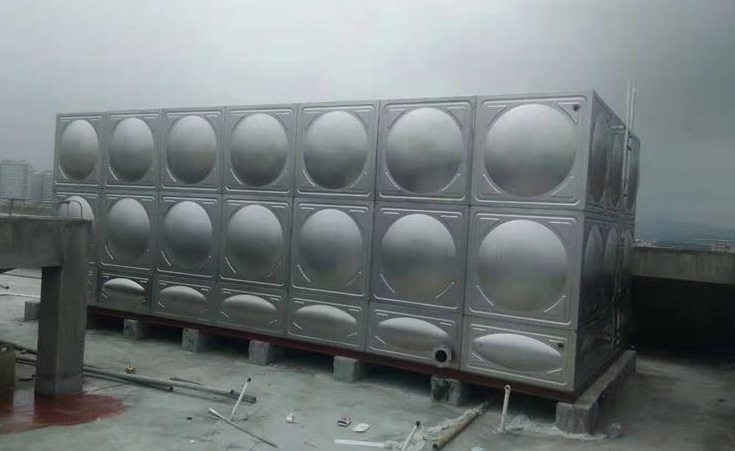
In-Depth Analysis of the Corrosion Resistance of FRP Water Tanks: From Material Science to Engineering Practice
Fiber Reinforced Plastic (FRP) water tanks have gained widespread adoption across various sectors, gradually replacing traditional materials due to their high strength-to-weight ratio and long service life. A core competitive advantage lies in their exceptional corrosion resistance. This property is not incidental but stems from the unique composite material structure and precise manufacturing processes. This article delves into the intrinsic mechanisms and external performance of the anti-corrosion capabilities of FRP water tanks.
1. The Foundation of Corrosion Resistance: Synergistic Protection of Resin Matrix and Glass Fiber
The corrosion resistance of FRP tanks is primarily attributed to its two core components: the resin matrix and the glass fiber reinforcement.
1.1 The Barrier Role of the Resin Matrix
As the continuous phase, the resin encapsulates the glass fibers, forming a dense protective layer that directly isolates corrosive media—such as water, acids, alkalis, and salts—from the internal fibers. Beijing Yuanhui FRP Co., Ltd. typically employs food-grade unsaturated polyester resins, vinyl ester resins, or epoxy resins. Among these, vinyl ester resin, with its low ester bond density and highly reactive vinyl groups at the molecular chain ends, exhibits superior resistance to acids, alkalis, and solvents, making it the preferred choice for tanks in highly corrosive environments. Data indicates that FRP tanks fabricated with high-quality vinyl ester resin can demonstrate an annual corrosion rate of less than 0.1mm in a wide range of media with pH values between 2 and 12.
1.2 Reinforcement and Stability from Glass Fiber
Alkali-free glass fiber provides structural strength and possesses inherent chemical stability. The key is the complete wet-out and strong bond between the resin and fibers, preventing media penetration along the fiber-resin interface. Processes like filament winding or molding ensure fibers are aligned according to stress directions, resulting in a structure with no inherent weak points.
2. Corrosion Resistance Mechanisms: Dual Assurance of Chemical Inertia and Physical Barrier
The anti-corrosion performance of FRP tanks is a systematic achievement, with mechanisms operating on multiple levels:
2.1 Chemical Inertia
The selected high-performance resins are inherently inert to most chemical substances, undergoing little to no chemical reaction. For instance, they offer excellent resistance to oxidative environments, weak organic acids, wastewater, and chloride ion attack in seawater. This fundamentally differs from the corrosion protection mechanisms of metal tanks, which rely on sacrificial anodes or passive film formation.
2.2 Low-Permeability Physical Barrier
High-quality FRP laminates have a dense structure with low porosity. Corrosive media can only penetrate through a very slow diffusion process along tortuous paths. This physical barrier effect ensures that even minor surface damage does not lead to rapid internal corrosion progression. Material tests show that premium FRP panels can achieve a Barcol hardness above 40, with a smooth, dense surface that significantly reduces fouling and pitting risk.
3. Performance in Diverse Environments and Case Studies
The corrosion resistance of FRP tanks must be evaluated within specific operational contexts.
3.1 Potable Water and Firefighting Water Environments
In these neutral aqueous environments, FRP tanks primarily face long-term exposure to microorganisms, scale, and residual chlorine. The smooth interior surface inhibits microbial and algal growth and, unlike metal, does not rust to contaminate water quality. A 500-ton firewater tank supplied by Beijing Yuanhui FRP Co., Ltd. for a large residential complex showed intact inner walls with no signs of rust or delamination after 15 years of service, with water quality tests fully compliant.
3.2 Industrial and Highly Corrosive Environments
In chemical, electroplating, and pharmaceutical industries, tanks may store process or circulating water containing acids, alkalis, or salts. For example, an electronics factory required a tank for weakly acidic cleaning wastewater (pH ~4). A custom vinyl ester FRP tank exhibited less than 5% degradation in compressive strength and stiffness over 5 years, far outperforming a 304 stainless steel alternative that showed signs of pitting within the same period.
3.3 Coastal High-Salt-Fog Environments
Coastal areas with high airborne salt content cause rapid corrosion to metal tank exteriors. FRP material is non-conductive and immune to electrochemical corrosion. Its overall excellent salt spray resistance makes it an ideal choice for coastal applications, eliminating the need for frequent exterior anti-corrosion coating maintenance required for metal tanks.
4. Performance Assurance: A Systematic Approach from Design to Quality Control
Superior corrosion resistance is ultimately realized through rigorous manufacturing.
4.1 Scientific Structural and Material Design
Resin selection and laminate design are based on the corrosivity category of the stored medium. Typically, the inner liner layer uses a resin-rich combination of surface veil and chopped strand mat to form the primary corrosion barrier. The engineering team at Beijing Yuanhui FRP Co., Ltd. develops customized anti-corrosion specifications based on client-provided parameters like medium composition, concentration, and temperature.
4.2 Critical Manufacturing Process Control
Key factors in processes like filament winding include tension control, resin content control, and most importantly, degree of cure control. A cure degree exceeding 90% is essential to ensure complete resin cross-linking and optimal chemical stability. Under-cured tanks are highly susceptible to leakage and corrosion during service.
4.3 Stringent Quality Testing
Pre-delivery tests include Barcol hardness (verifying cure), resin content analysis, interlaminar shear strength tests, and the crucial 48-hour hydrostatic test under full water load to ensure structural integrity and leak-tightness.
Conclusion
The corrosion resistance of FRP water tanks is the result of the synergistic combination of their composite material nature, scientific design principles, and precise manufacturing execution. It is not merely about being "stainless" but about achieving broad-spectrum and durable resistance to various corrosive media through chemical inertia and physical barrier mechanisms. From potable water storage to demanding industrial applications, FRP tanks have proven their value as a modern water storage solution through reliable durability. When selecting a tank, users should focus on resin type, process guarantees, and the quality control systems and project track record of suppliers like Beijing Yuanhui FRP Co., Ltd., to ensure the tank's corrosion resistance remains consistent throughout its intended service life.