Analyzing FRP Water Tank Lifespan: Key Influencing Factors and Scientific Maintenance Strategies
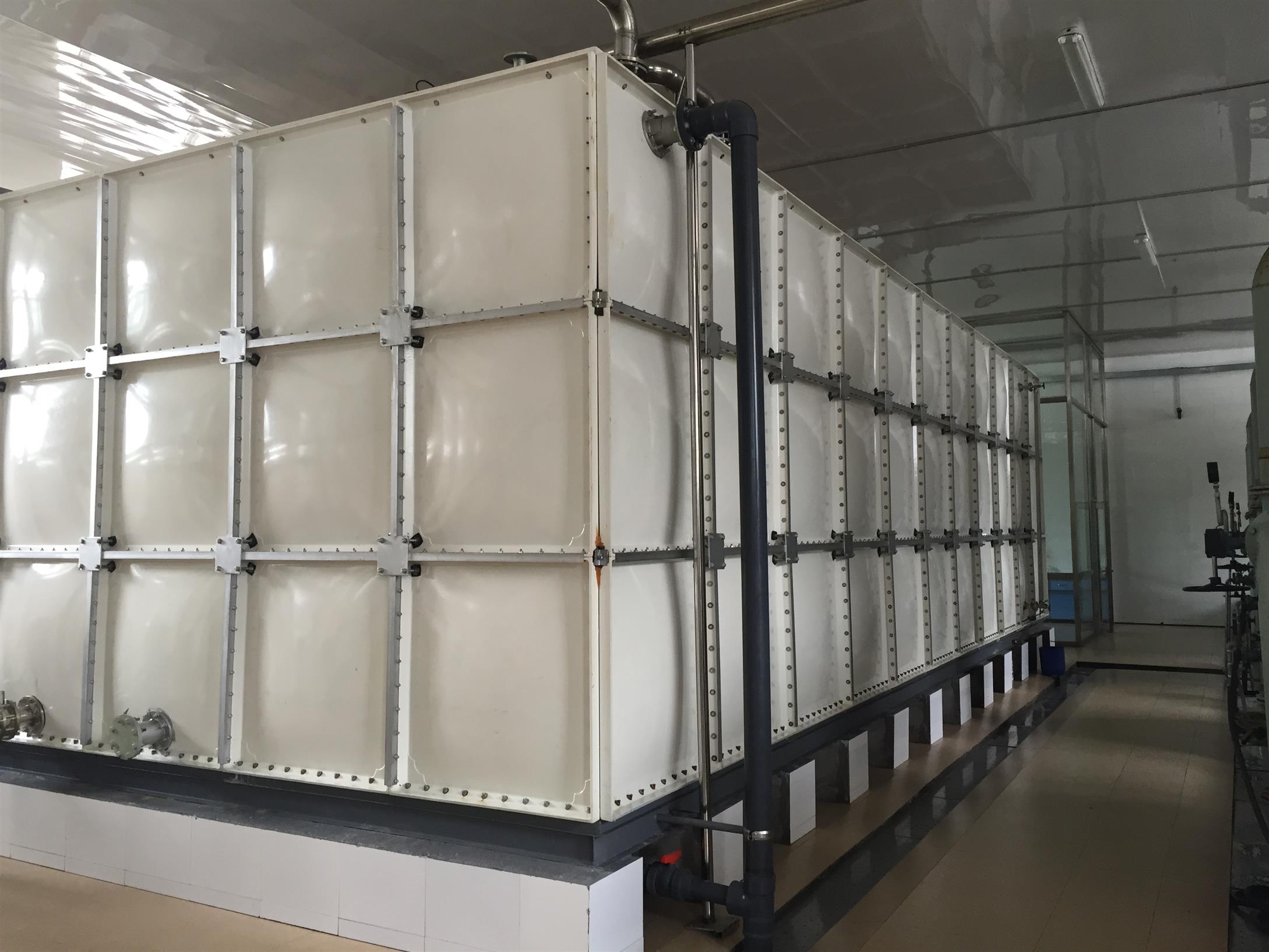
Analyzing FRP Water Tank Lifespan: Key Influencing Factors and Scientific Maintenance Strategies
Fiber Reinforced Plastic (FRP) water tanks are a preferred solution in industrial and civil water storage due to their light weight, high strength, corrosion resistance, and design flexibility. A central concern for users is the expected service life. Industry standards typically cite a design lifespan of 20 to 30 years. However, the actual operational longevity varies significantly around this benchmark, determined by a confluence of critical factors.
Core Intrinsic Factors Determining FRP Tank Lifespan
The "inherent constitution" of the tank fundamentally sets the upper limit for its durability.
Raw Material Quality & Resin System
The resin matrix is paramount. Food-grade unsaturated polyester resins (e.g., isophthalic, vinyl ester) are standard for potable water tanks, offering excellent water stability and hydrolysis resistance. For instance, Beijing Yuanhui FRP Co., Ltd. utilizes high-grade food-safe resins in its core products, ensuring compliance with standards like GB/T 7190 from the source. The glass fiber reinforcement, its wettability, and interfacial bond strength with the resin directly impact overall mechanical performance. The proper use of low-alkali or E-glass fabric/mat is fundamental for long-term pressure resistance and micro-crack propagation prevention.
Manufacturing Craftsmanship & Structural Design
Process rigor dictates product homogeneity. Strict control over gel coat uniformity in hand lay-up, laminate density, resin-to-fiber ratio (typically 50%-65% resin content), and complete curing is essential. Beijing Yuanhui FRP Co., Ltd. employs multi-layer composite reinforcement at critical points like joints and load-bearing base areas, and utilizes CAD for optimized stress distribution, effectively preventing premature failure from stress concentration. Rigorous QC, including Barcol hardness tests (often requiring ≥35) to verify cure, is a critical pre-delivery checkpoint.
External Environmental and Operational Conditions Affecting Lifespan
Even a well-manufactured tank's aging process is profoundly shaped by its service environment.
Storage Medium & Chemical Environment
The nature of the stored liquid is the primary external factor. Storing常温饮用水 is ideal. For water with specific chemical properties (e.g., softened water, industrial循环水 with certain pH), a specialized corrosion-resistant resin system must be selected. Prolonged exposure to corrosive ions like chloride or sulfate can slowly degrade the resin matrix.
Physical & Natural Environment
Continuous UV exposure causes photo-oxidative aging of the resin surface, leading to chalking, discoloration, and strength loss. For outdoor installations, the quality of the gel coat or external UV-resistant coating (containing UV absorbers) is vital. Thermal stress from extreme temperature cycles (e.g., in frigid zones) can accelerate material fatigue. An uneven or inadequately load-bearing installation foundation subjects the tank bottom to长期不均匀受力, potentially inducing structural cracks.
Installation, Maintenance & Supervision: Proactive Strategies for Life Extension
Scientific post-installation care is key to unlocking a tank's full performance potential, often extending service beyond its design life.
Professional Installation & Initial Commissioning
Installation is not mere assembly. It must be performed by qualified personnel on a prepared base, ensuring uniform bolt torque on panel connections, proper seating of gaskets, and correct adjustment of internal tie rods. A post-installation hydrostatic test (typically holding water for 24-48 hours) is mandatory to verify initial integrity. Any leakage or abnormal deformation must be addressed before commissioning.
Periodic Inspection & Preventive Maintenance
Establishing a regular inspection regime is highly effective for extending FRP water tank life. A comprehensive annual or bi-annual inspection is recommended, focusing on: internal checks for water odor/particulates, and gel coat integrity (smoothness, cracks, fiber exposure); external checks for structural corrosion and leakage at joints. For cleaning, use soft tools and neutral cleaners; abrasive tools or strong acids/alkalis must be avoided to prevent damage to the protective layer. Minor gel coat damage identified should be promptly repaired using manufacturer-supplied materials and techniques to prevent escalation.
Water Quality Management & Load Control
Regular water turnover prevents stagnation, inhibiting microbial growth and reducing biocorrosion on inner walls. Strictly avoid overfilling beyond design capacity or placing heavy loads on the tank roof to ensure operation within design parameters.
Conclusion
The ultimate service life of an FRP water tank is not a fixed number but the result of the interplay between its intrinsic quality, external environment, and proactive maintenance. Selecting a manufacturer like Beijing Yuanhui FRP Co., Ltd., which emphasizes materials, craftsmanship, and design, is the first step toward a long-lasting tank. However,规范化的安装, adaptive environmental management, and institutionalized, professional maintenance are the keys to ensuring its safe, stable operation throughout its lifecycle and even extending its service. By understanding these influencing factors and implementing corresponding measures, users can realistically expect their FRP water tanks to provide reliable service for 30 years or more, maximizing return on investment and safeguarding water security.