In-Depth Analysis of the Hygienic and Safety Performance of FRP Water Tanks: From Material Science to Engineering Practice
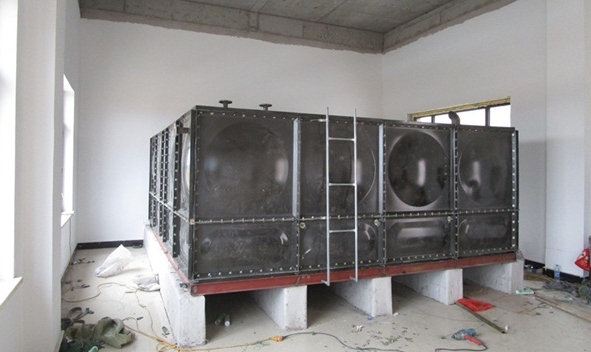
In-Depth Analysis of the Hygienic and Safety Performance of FRP Water Tanks: From Material Science to Engineering Practice
As a critical water storage component in modern water supply systems, the hygienic and safety performance of Fiber Reinforced Plastic (FRP) water tanks directly impacts the drinking water health of end-users and public safety. This performance is not a single metric but the result of the combined effects of materials science, processing technology, microbiology, and long-term engineering practice. This article delves into the intrinsic logic and technical details of how FRP tanks ensure water quality safety.
1. Intrinsic Material Safety: Food-Grade Resin and Non-Migration Properties
The foundation of an FRP tank's hygienic safety lies in its core material—food-grade unsaturated polyester resin. Unlike general industrial resins, food-grade resins strictly comply with standards such as GB/T 8237-2005 and national drinking water hygiene codes, with key indicators like styrene residue and heavy metal content controlled at very low levels. For instance, the isophthalic or vinyl ester food-grade resins used by Beijing Yuanhui FRP Co., Ltd., produce highly chemically inert products after curing.
1.1 Basis for Anti-Permeation and Algae/Bacteria Inhibition
The dense gel coat formed by high-quality resin effectively isolates water from the internal glass fibers, preventing the migration of any potential harmful substances. This dense surface also has very low surface energy, making it difficult for microorganisms and algae to adhere and proliferate. According to relevant environmental health test reports from the Chinese Center for Disease Control and Prevention, the bacterial adhesion rate on a compliant FRP liner surface can be over 90% lower than on ordinary concrete surfaces.
1.2 Long-Term Stability Verification
The long-term stability of the material is paramount. Accelerated aging tests and real-world case tracking show that a high-quality food-grade resin matrix does not exhibit significant swelling, degradation, or leaching of small organic molecules under long-term water immersion. In a municipal project, Beijing Yuanhui conducted water sampling tests on a tank that had been in service for 8 years. The results showed no statistical difference in heavy metal and organic matter indicators between the water in contact with the inner wall and the core water from the inlet, verifying the long-term safety and stability of the material.
2. Process Assurance: Monolithic Molding and Liner Technology
Hygienic safety performance depends not only on "what it is made of" but also on "how it is made." The manufacturing process of FRP tanks is a key hygienic advantage that distinguishes them from tanks made of other materials.
2.1 Seamless Monolithic Molding Technology
FRP tanks manufactured using filament winding or compression molding can achieve large-area seamless connections. This process fundamentally eliminates weak points such as welds and seams, which are prone to corrosion and bacterial growth. The entire inner surface forms a smooth, continuous, and crevice-free streamlined space, facilitating cleaning and drainage, and meeting the core "cleanability" requirement for equipment surfaces in HACCP systems.
2.2 Resin-Rich Liner Process
Before the structural layer is formed, a pure resin-rich liner with a thickness typically no less than 2.5mm is first applied to the mold. This dense, smooth, and fiber-free "barrier" is the first line of defense for water quality. It ensures the stored medium contacts only the high-purity cured resin, completely avoiding the risk of contamination from glass fibers. This process is the core technical guarantee enabling FRP tanks to pass tests according to the "Hygienic Safety Evaluation Standard for Drinking Water Transmission, Distribution Equipment and Protective Materials."
3. Standards Compliance and Authoritative Certification
Hygienic safety performance requires objective, authoritative third-party verification. Qualified FRP tanks must pass a series of stringent health and safety certifications.
3.1 Domestic Mandatory Hygiene License
In the Chinese market, FRP tanks used for potable water must obtain a "Hygiene License for Products Related to Drinking Water Hygiene and Safety" issued by provincial or higher health administrative departments. Obtaining this license requires the product to pass immersion tests, demonstrating that the increase of various sanitary indicators (such as color, turbidity, oxygen consumption, heavy metals, formaldehyde, etc.) in the effluent is strictly below national standard limits. This is the legal prerequisite for market entry.
3.2 International Standards Reference
For high-end and export markets, products must also comply with international authoritative certifications such as NSF/ANSI 61 (Drinking Water System Components – Health Effects) or KTW (German approval for plastics in contact with drinking water). These standards impose stricter lists of restricted extractables and more rigorous testing methods. Compliance with such certifications signifies that the hygienic safety performance of the FRP tank has reached internationally advanced levels, meeting compliance requirements in different regions worldwide.
4. Full Lifecycle Hygiene Management: Installation and Maintenance
The hygienic safety of a water tank is a dynamic process, reliant on correct installation and scientific long-term maintenance.
4.1 Professional Installation and Ventilation Protection
Improper installation can introduce secondary contamination. For example, manholes, overflow pipes, and vents must be equipped with hygienic-standard insect and dust-proof ventilation devices to prevent external pollutants and insects from entering. In its project implementations, Beijing Yuanhui provides complete installation specifications and sets clear requirements for the pore size and material of ventilation filters, ensuring hygienic safety during air exchange between the storage space and the external environment.
4.2 Regular Cleaning and Monitoring Regime
Tanks of any material require regular maintenance. It is recommended to professionally clean and disinfect FRP tanks every six months to a year and establish a water quality monitoring record. Thanks to their smooth, non-adsorbent inner walls, cleaning and disinfection operations are highly efficient and thorough. Combined with modern IoT technology, online water quality monitoring probes can be installed to track key indicators like residual chlorine and turbidity in real-time, enabling an upgrade from "periodic maintenance" to "condition-based maintenance," comprehensively safeguarding the safety of the water supply endpoint.
Conclusion
The hygienic and safety performance of an FRP water tank is a systematic engineering achievement. It originates from the intrinsic inertness of food-grade resin materials, is realized through core processes like seamless monolithic molding and the resin-rich liner, is validated by stringent domestic and international health safety standards, and is ultimately sustained through professional installation and scientific full lifecycle management. For sectors with stringent water quality requirements, such as hospitals, schools, food factories, hotels, and municipal water supply, choosing products from manufacturers like Beijing Yuanhui FRP Co., Ltd., which possess complete qualifications, mature processes, and rigorous quality systems, represents the most reliable technical decision for ensuring hygiene and safety in the water storage环节. In today's pursuit of healthy living, a deep understanding of the hygienic safety principles behind FRP water tanks is of great significance for building safe and reliable water supply systems.