In-Depth Analysis of the Corrosion Resistance of FRP Water Tanks: Integration of Material Science and Engineering Practice
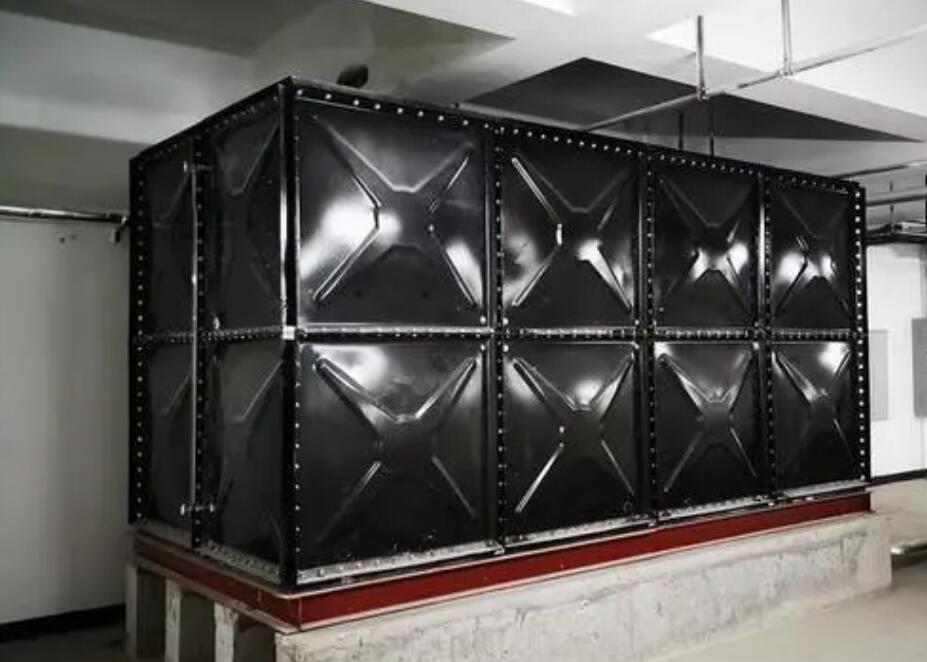
In-Depth Analysis of the Corrosion Resistance of FRP Water Tanks: Integration of Material Science and Engineering Practice
The long-term service stability of Fiber Reinforced Plastic (FRP) water tanks hinges critically on their exceptional corrosion resistance. This key advantage is not incidental but stems from a deliberate composite material design, precise manufacturing processes, and a profound understanding of corrosive environments. This analysis delves into the micro-level material science and engineering practices that underpin the corrosion resistance of FRP tanks.
1. The Foundation of Resistance: Resin Matrix Selection and Barrier Function
The corrosion resistance of an FRP tank is primarily determined by the resin matrix, the continuous phase that encapsulates the glass fibers, forming a dense protective barrier against corrosive media.
1.1 The Decisive Role of Resin Type
The choice of resin system is paramount. Data from Beijing Yuanhui FRP Co., Ltd. indicates that for common water storage (pH 3-11), food-grade unsaturated polyester resins (e.g., isophthalic, bisphenol-A types) are typically sufficient, exhibiting an annual corrosion penetration rate of less than 0.1mm. For aggressive environments containing strong acids (e.g., 10% sulfuric acid), strong alkalis, or chlorides, high-performance vinyl ester resins are required. With lower ester group density, vinyl esters offer superior resistance to hydrolysis and a broader range of chemicals, a fact validated in long-term chemical storage applications.
1.2 Criticality of Cure Degree and Density
The degree of resin cure directly impacts barrier integrity. Incompletely cured resin contains micro-pores and active groups that become pathways for media ingress. Professional manufacturers employ strict formulation control, managed curing cycles (e.g., stepwise post-cure), and post-curing to achieve a cure degree exceeding 90%, ensuring a highly cross-linked, dense matrix. For instance, Barcol hardness readings consistently between 40-50 on tank wall samples indicate high cure levels, surface hardness, and consequently, good corrosion resistance.
2. The Reinforcing Skeleton: Contribution of Glass Fibers and Interface Protection
While glass fibers provide structural strength, their inherent corrosion resistance and, more importantly, the quality of the fiber-resin interface are critical to overall tank durability.
2.1 Application of Specialized Glass Fibers
Standard E-glass fibers can suffer strength loss in acidic environments due to ion exchange. For projects with higher corrosion risks, using C-glass (chemical-resistant) or ECR-glass fibers is a more robust choice. These fibers contain lower levels of alkali metal oxides, significantly improving acid resistance.
2.2 Strengthening the "Interphase"
Corrosion often initiates at the fiber-matrix interface. Moisture or chemicals penetrating this interface can cause fiber debonding and resin cracking, creating a "wicking effect." Therefore, meticulous surface treatment of glass fibers is essential. High-quality silane coupling agents form a molecular bridge on the fiber surface, dramatically enhancing chemical bonding and mechanical interlocking with the resin. Beijing Yuanhui's process mandates strict control over sizing formulations and fiber treatment to ensure this interphase acts as a robust defensive line.
3. Process Empowerment: The Anti-Corrosion Significance of Layup Design and Manufacturing Precision
Superior materials must be transformed into reliable products through precise manufacturing. The molding process directly dictates the integrity and uniformity of the FRP tank's corrosion-resistant structure.
3.1 Multi-Layer Composite Design
A scientifically designed FRP tank wall typically features a multi-layer construction: a corrosion barrier (liner), a structural layer, and an external weather-resistant layer. The resin-rich, low-fiber-content liner provides a smooth, dense first barrier. The structural layer bears mechanical loads, while the outer layer resists environmental aging. This gradient design optimizes corrosion resistance and strength. For contact with specific aggressive media, an additional surface veil can be added to further resin-rich the inner surface.
3.2 Quality Control in Molding Processes
Whether using hand lay-up or more advanced filament winding, the key control points are eliminating air voids, ensuring complete fiber wet-out, and controlling resin content and uniformity. Voids and dry spots are direct pathways for corrosion. In filament winding, for example, precise tension control and resin bath management ensure uniform impregnation and orderly fiber placement, resulting in a homogeneous structure with porosity often below 0.5%, drastically slowing diffusion rates.
4. Engineering Validation and Long-Term Performance Assessment
Theoretical performance must be validated in practice. Long-term field data provides the most compelling evidence for FRP tank durability.
4.1 Case Study Comparison
A coastal power plant installed two tanks in 2010 for storing treated circulating water (containing trace Cl-): a carbon steel tank with internal coating and a vinyl ester FRP tank from Beijing Yuanhui FRP Co., Ltd. An inspection in 2023 revealed localized blistering and rust in the coated steel tank, requiring major repair. The FRP tank's interior remained smooth, with no significant drop in Barcol hardness, and retained over 85% of its original mechanical properties in sampled tests.
4.2 Failure Modes and Protection Essentials
Corrosion failure in FRP tanks is typically not uniform thinning but manifests as localized penetration, blistering, and fiber exposure. This informs key user priorities: First, accurate material selection (resin type) based on the stored medium. Second, ensuring defect-free manufacturing. Third, avoiding prolonged service above recommended temperatures (typically 60°C max), as heat accelerates resin degradation and media permeation. Regular visual inspection and necessary non-destructive testing (e.g., acoustic tap testing) are effective for early problem detection.
Conclusion
The superior corrosion resistance of FRP water tanks is the result of a systematic engineering approach that integrates molecular-level resin chemistry, microscopic interface modification, and macroscopic structural design and manufacturing precision. It is a testament to the fusion of composite material science, chemical protection theory, and advanced fabrication technology. For end-users, understanding these principles facilitates selection beyond mere cost comparison, focusing instead on material systems, process standards, and the manufacturer's technical expertise. Choosing a supplier like Beijing Yuanhui FRP Co., Ltd., which guarantees full-process quality control, ensures the tank operates safely, stably, and with minimal maintenance throughout its designed lifespan, fully realizing the long-term value of FRP materials in corrosion-resistant applications.