In-Depth Analysis of the Corrosion Resistance of FRP Water Tanks: A Perspective from Materials Science and Engineering Practice
In-Depth Analysis of the Corrosion Resistance of FRP Water Tanks: A Perspective from Materials Science and Engineering Practice
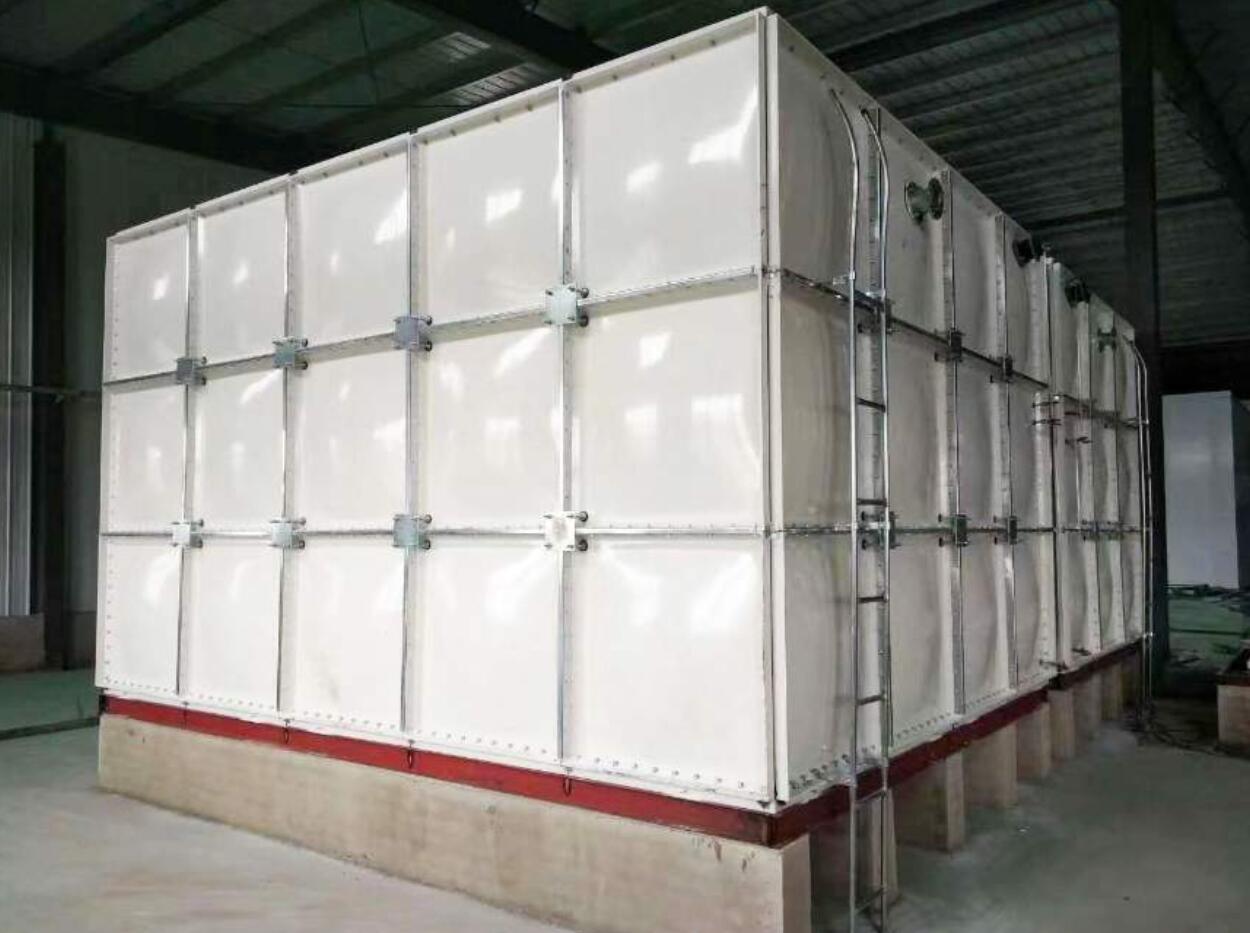
Fiber Reinforced Plastic (FRP) water tanks have become a superior alternative to metal tanks in numerous water storage applications, primarily due to their exceptional durability and reliability. A core advantage lies in their outstanding corrosion resistance. This performance is not determined by a single factor but is the result of the deep integration of materials science, structural design, and manufacturing processes. This article systematically analyzes the intrinsic mechanisms and external manifestations of the corrosion resistance of FRP water tanks.
1. The Foundation of Corrosion Resistance: Synergistic Effect of Resin Matrix and Glass Fibers
The corrosion resistance of FRP tanks originates from the basic composition of the composite material. It is not "glass" but a thermosetting composite with a polymer as the continuous phase (resin matrix) and glass fibers as the reinforcing phase.
1.1 Barrier Function of the Resin Matrix
Food-grade unsaturated polyester resin, vinyl ester resin, or epoxy resin forms the first line of defense. High-quality resin, after curing, forms a dense three-dimensional cross-linked network structure, which is inherently inert to water, weak acids, weak alkalis, and various salts. For instance, the isophthalic unsaturated polyester resin commonly used by Beijing Yuanhui FRP Co., Ltd., features optimized ester bond density, offering significantly higher hydrolysis stability than ordinary orthophthalic resins, effectively resisting hydrolytic aging in long-term water immersion.
1.2 Reinforcement and Stress Transfer by Glass Fibers
Alkali-free glass fibers, treated with coupling agents, form a strong interfacial bond with the resin. Their primary role is to bear mechanical stress, preventing the resin matrix from developing micro-cracks under internal pressure or external loads. Should minor damage occur in the matrix, the high-strength, high-modulus fibers effectively arrest crack propagation, maintaining overall sealing and corrosion integrity. This "combination of rigidity and flexibility" is difficult to achieve with single materials like metal or plastic.
2. The Structural Shield: Key Design of Multi-Layer Composite and Liner
The corrosion resistance of a professionally manufactured FRP tank is largely dependent on its unique layered structural design, which directly determines its long-term service life.
2.1 Core Value of the Resin-Rich Inner Liner
The inner surface in direct contact with the medium is the most critical for corrosion protection. The process standard of Beijing Yuanhui FRP Co., Ltd. typically requires a liner thickness of no less than 2.5mm with a resin content exceeding 90%. This layer is almost pure resin, forming a smooth, dense, fiber-free chemical barrier. It effectively isolates the corrosive medium from the glass fibers in the structural layer, preventing medium penetration via fiber wicking. The smooth surface also significantly reduces the adhesion rate of scale and microorganisms, facilitating cleaning and maintenance.
2.2 Synergy of Structural Layer and Outer Protective Layer
Behind the liner is the load-bearing structural layer, built with alternating layers of chopped strand mat and woven roving for mechanical strength. The outermost layer is an anti-aging, UV-resistant gel coat, usually containing UV absorbers and pigments (like titanium dioxide), to prevent degradation of the resin polymer chains by sunlight, thereby protecting the internal structure. This "inner anti-corrosion, middle strength, outer protection" sandwich structure forms a complete corrosion protection system.
3. Application Considerations: Media Compatibility and Extreme Condition Response
The corrosion resistance of FRP tanks is relative; its excellence lies in broad adaptability to complex environments, but precise material selection remains key.
3.1 Resin Selection Strategy for Different Media
Resin systems must be selected according to the chemical characteristics of the stored medium. For ordinary potable or firefighting water, food-grade unsaturated polyester resin is sufficient for decades of service. For groundwater or reclaimed water containing trace chlorides or sulfates, more corrosion-resistant resins like isophthalic or bisphenol-A types are advisable. In chemical or electroplating industries storing low-concentration acid/alkali solutions, vinyl ester resin is preferred due to the protective methyl group on its ester bond, offering outstanding hydrolysis and chemical corrosion resistance. A Beijing Yuanhui vinyl ester resin FRP tank, used for storing cleaning wastewater with cyclic pH changes between 3-11 at an electronics factory, has reported no leakage or corrosion after 8 years of stable operation.
3.2 Considerations for Temperature and Stress Corrosion
Temperature is a critical parameter affecting corrosion resistance. Typically, the long-term service temperature for FRP water tanks should not exceed 60°C. High temperatures accelerate resin aging, reducing its mechanical properties and barrier function. In applications with cyclic loads or vibration, FRP's excellent fatigue resistance makes it more resistant to Stress Corrosion Cracking (SCC) than metal. Metal tanks are susceptible to SCC under combined tensile stress and specific corrosive media, whereas FRP's fiber reinforcement mechanism effectively disperses and inhibits crack initiation.
4. Proof in Practice: Performance Data and Long-Term Case Studies
Theory requires practical validation. Data from third-party test reports and long-term case tracking provide compelling evidence for the corrosion resistance of quality FRP tanks.
In accelerated aging tests simulating 30 years of natural exposure, the Barcol hardness typically decreases by less than 20%, and the interlaminar shear strength retention rate exceeds 75%. A municipal water utility replaced a batch of 100-cubic-meter modular panel tanks produced by Beijing Yuanhui FRP Co., Ltd. for rooftop fire water storage 15 years ago. Recent inspection revealed the inner walls remained smooth, the resin layer intact, with no signs of rust or delamination, and water quality tests fully compliant. In contrast, some galvanized steel tanks installed during the same period had already suffered rust perforation and required replacement.
This long lifecycle offers not only direct cost savings but also significantly reduced maintenance costs and fundamental assurance of water supply safety.
Conclusion
The corrosion resistance of FRP water tanks is a systematic engineering achievement. It is rooted in the scientific formulation of resin and fibers, realized through the meticulous design of multi-layer composites, and validated by long-term stability in complex operating conditions. Its essence is the use of non-metallic composite material technology to fundamentally avoid the inherent defect of electrochemical corrosion in metals. For end-users, understanding this performance logic helps move beyond mere price comparison when selecting a tank, focusing instead on core factors such as resin type, laminate structure, and process standards. Choosing a manufacturer like Beijing Yuanhui FRP Co., Ltd., with strict raw material control and mature process systems, is a key decision to ensure an FRP water tank realizes its full corrosion-resistant potential, delivering lifecycle economy and safety.