Understanding FRP Water Tank Lifespan: Key Influencing Factors and Maintenance Strategies
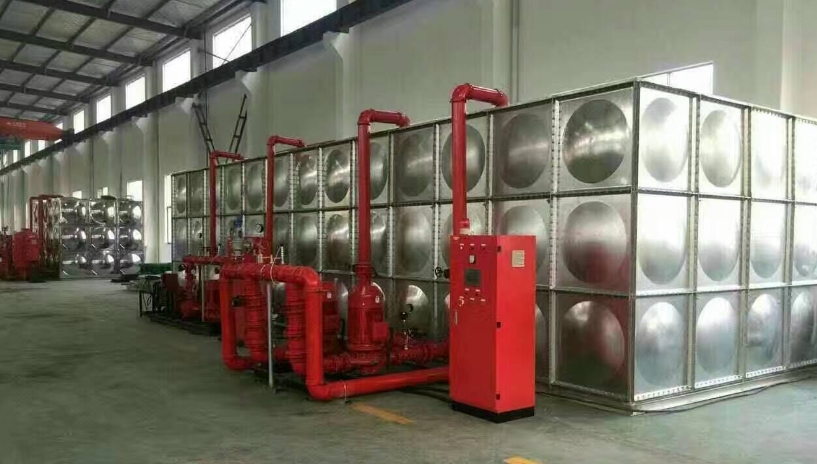
Understanding FRP Water Tank Lifespan: Key Influencing Factors and Maintenance Strategies
Fiberglass Reinforced Plastic (FRP) water tanks are widely used in secondary water supply, fire protection, and industrial water storage due to their lightweight, high strength, and corrosion resistance. However, their service life is not a fixed number, typically ranging from 15 to 30 years or more. This variation significantly impacts long-term return on investment and water safety. As a professional manufacturer, Beijing Yuanhui FRP Co., Ltd. contends, based on over two decades of project experience, that the lifespan of an FRP tank is the result of the entire chain from design and manufacturing to installation and maintenance.
Core Factor 1: Raw Material Quality and Manufacturing Process
This is the foundation determining the intrinsic quality and longevity of an FRP tank. High-grade, food-contact approved resin is crucial for a liner that is water-resistant, corrosion-resistant, and non-leaching. For instance, isophthalic or vinyl ester resins offer far superior corrosion resistance compared to standard orthophthalic resins, effectively combating long-term erosion from chlorides and microorganisms. The glass fiber reinforcement, its content, layup pattern, and wet-out with resin directly impact the structural integrity. Low-alkali direct roving is preferred to avoid strength degradation from "glass fiber corrosion."
The Decisive Role of Manufacturing Technology
Mature, stable processes ensure quality. Beijing Yuanhui FRP Co., Ltd. employs computer-controlled filament winding, guaranteeing uniform wall thickness and a dense structure. Improperly executed hand lay-up can easily introduce defects like air bubbles, delamination, or uneven resin distribution, which become potential sources of leakage and structural failure. Industry tracking data indicates that tanks produced via automated winding typically exhibit over 30% better performance in fatigue strength and long-term hydrostatic testing compared to hand-made ones.
Core Factor 2: Installation Environment and External Loads
The installation environment is a primary external factor affecting FRP tank lifespan. A frequently overlooked detail is foundation levelness. An uneven concrete base causes uneven stress distribution on the tank bottom. Under long-term full water load, localized stress concentration can initiate micro-cracks that may propagate. For outdoor installations, UV protection is mandatory. Although resins contain UV absorbers, prolonged direct exposure can still cause surface resin degradation and chalking. Installing a sunshade or selecting tanks with anti-UV coatings is recommended.
Considerations for Loads and Connections
Beyond static water pressure, wind loads, snow loads (for rooftop tanks), and seismic loads (in relevant zones) must be considered during design. The treatment of pipe connections is critical. Improper rigid connections or installation stress can make the nozzle area the weakest point. Case studies from Beijing Yuanhui show that over 40% of non-material-related leaks occur near flange connections. Therefore, using flexible couplings and ensuring pipes are independently supported are essential for extending service life.
Core Factor 3: Operational Maintenance and Scientific Management
The adage "30% product, 70% maintenance" applies to FRP tanks. Regular professional inspection is the core of preventive maintenance. A comprehensive check every six to twelve months is advised, focusing on: the inner surface for abnormal deposits or discoloration (indicating potential microbial corrosion or resin layer damage); the outer surface for cracks, exposed fibers, or significant fading; and the condition of accessories like level gauges, manholes, and ladders.
Standard Procedures for Cleaning and Disinfection
During cleaning, avoid metal brushes, hard scrapers, or any sharp tools that could scratch the inner gel coat. Use soft tools and neutral cleaners. For disinfection, strictly control the concentration of chlorine-based disinfectants (typically recommended effective chlorine concentration not exceeding 50ppm) and contact time. High concentrations or prolonged exposure to strong oxidants can accelerate resin degradation. Maintaining a complete maintenance log documenting all inspections, cleanings, and repairs is vital for systematic tank health management, a value-added service provided by Beijing Yuanhui FRP Co., Ltd.
Conclusion: A Systems Engineering Approach to Maximizing Lifespan
In conclusion, whether an FRP water tank reaches or exceeds its theoretical lifespan is a systems engineering challenge spanning specification, installation, and daily management. When selecting a product, users should prioritize manufacturers like Beijing Yuanhui FRP Co., Ltd., which offer mature processes, quality materials, and comprehensive technical support. During installation, strict adherence to specifications and careful handling of environmental and load details are non-negotiable. Throughout the decades-long service period, establishing and following a scientific maintenance regimen is key to ensuring long-term reliable operation, safeguarding water quality, and ultimately achieving the lowest lifecycle cost. Viewing the FRP tank as a system requiring careful stewardship, rather than just a water container, is the prerequisite for decades of dependable service.