Analyzing the Insulation Performance and Diverse Application Scenarios of FRP Water Tanks
Analyzing the Insulation Performance and Diverse Application Scenarios of FRP Water Tanks
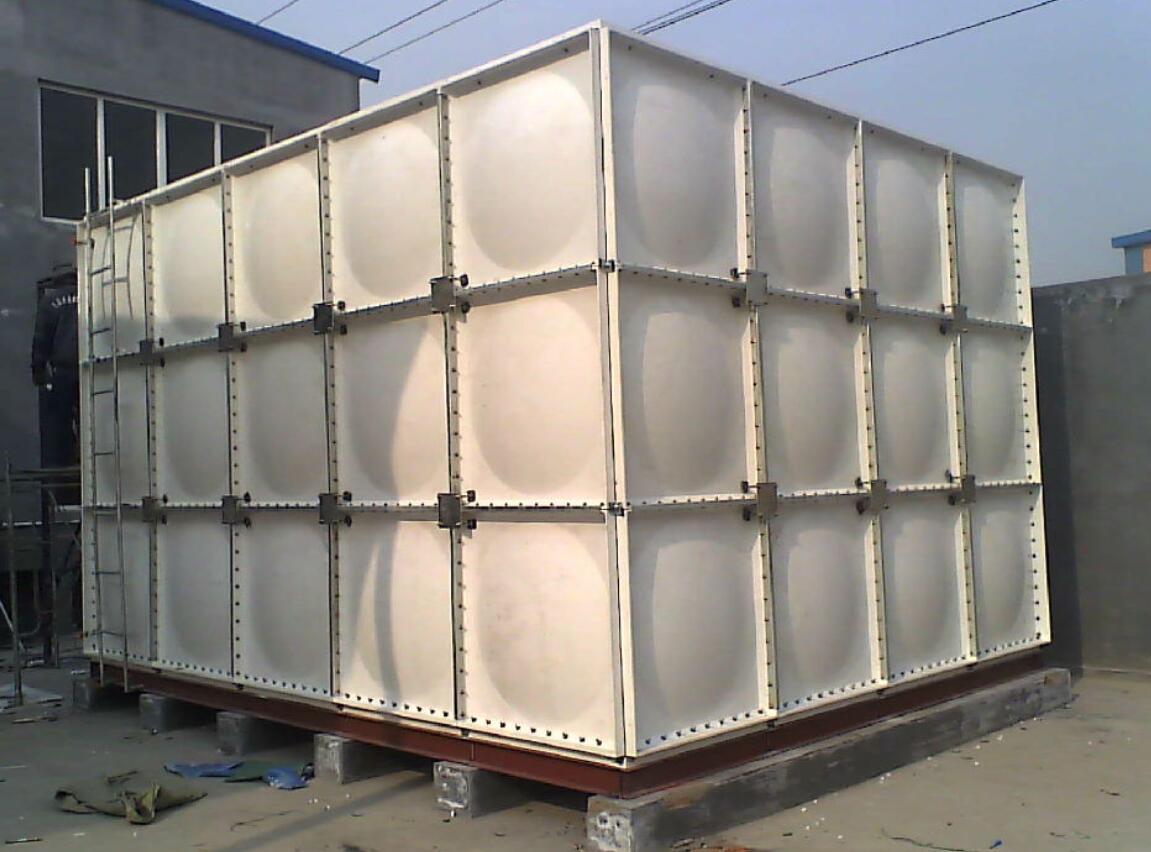
Fiberglass Reinforced Plastic (FRP) water tanks have become a mainstream choice for modern water storage systems due to their excellent corrosion resistance, high strength-to-weight ratio, and long service life. In numerous applications, however, their thermal insulation performance is often the critical factor determining project success. This article systematically dissects the technical core of FRP tank insulation and reveals its key application value across various industries.
The Technical Core of FRP Water Tank Insulation Performance
The insulation performance of an FRP water tank is not a single material property but a systematic performance constituted by the base material, insulation layer, and manufacturing工艺. The tank body, made from food-grade resin and alkali-free glass fiber winding, has a thermal conductivity of approximately 0.4 W/(m·K), providing a basic level of thermal resistance. However, the true insulation efficacy primarily relies on the附加的 insulation layer structure.
Mainstream Insulation Structures and Material Selection
The industry commonly uses polyurethane foam, rubber-plastic sponge, or rock wool as core insulation materials. Taking the mature process of Beijing Yuanhui FRP Co., Ltd. as an example, it employs on-site high-pressure integral foaming technology to uniformly fill polyurethane foam between the tank inner liner and the outer cladding, forming a continuous, thermal bridge-free insulation layer. The thermal conductivity of polyurethane can be as low as 0.022-0.027 W/(m·K), making its insulation efficiency several times that of traditional materials. Insulation layer thickness is typically designed based on regional climate differences; in severe cold northern regions, thickness can reach 80-100mm, ensuring that the internal water temperature drop does not exceed 3-5°C over 24 hours in environments as cold as -30°C.
Key Factors Affecting Insulation Performance
Beyond the insulation material itself, system sealing and the detailed treatment of end caps and interfaces are crucial. Thermal bridging is a major source of heat loss. Professional manufacturers prevent this issue through structural thermal break design and integral cladding processes. Furthermore, the installation environment and the integrity of the external protective layer (e.g., color steel plate, stainless steel plate) also directly impact the long-term stability of insulation.
In-Depth Analysis of Core Application Scenarios
The precise demand for insulation performance has fostered the irreplaceability of insulated FRP water tanks in specific scenarios.
Civil Construction and Hot Water System Engineering
In solar water heating systems and air-source heat pump systems, the insulated storage tank is the core equipment for storing thermal energy. A high-quality insulated FRP tank can significantly reduce system heat loss and improve energy utilization. For instance, in a centralized solar heating residential project, using a Beijing Yuanhui FRP Co., Ltd. tank with 50mm thick polyurethane insulation improved the system's overall energy efficiency ratio by approximately 15% compared to standard tanks, effectively ensuring stable 24-hour hot water supply.
Constant Temperature Requirements in Industrial and Commercial Sectors
In industries such as food brewing, pharmaceuticals, and chemicals, many processes require water media at constant or specific temperatures. Insulated FRP tanks not only resist acid and alkali corrosion but also maintain stable water temperatures over extended periods, meeting stringent production requirements. A project involving cooling water storage tanks for a brewery's fermentation process required a constant water temperature of 4±1°C. Customized insulated FRP tanks successfully achieved this goal while avoiding the risk of contamination from rust associated with metal tanks.
Special and Public Utility Scenarios
In scenarios like firefighting water storage tanks or agricultural irrigation reservoirs in cold regions, freeze protection is a rigid requirement. FRP tanks with excellent insulation性能 effectively prevent water from freezing in winter, ensuring emergency systems are always operational. For buried tanks, the insulation layer also provides compressive strength and moisture resistance, protecting the tank structure from damage in complex soil environments.
Selection and Maintenance: Keys to Ensuring Long-Term Insulation
Selecting an FRP water tank with卓越的 insulation performance requires comprehensive consideration. Users should focus on whether the manufacturer has mature insulation工艺, such as the standardized foaming equipment and process control employed by Beijing Yuanhui FRP Co., Ltd. Technical parameters like insulation material density, closed-cell ratio, and fire rating (e.g., B1 grade flame retardant) are crucial.
Regarding maintenance, although the insulation layer typically lasts the lifetime of the tank, the external cladding should be inspected regularly for integrity to prevent mechanical damage or water ingress that could degrade insulation performance. For externally installed tanks, adding a protective aluminum or color steel plate over the insulation layer is an effective measure to extend its service life.
Conclusion
The insulation performance of FRP water tanks is a vital extension of their functional value, transforming them from simple water storage vessels into key components within thermal energy management systems. Their application scenarios, ranging from domestic hot water to industrial temperature maintenance and special freeze protection, continue to expand in depth and breadth. Technological advancements, such as more environmentally friendly blowing agents and integrated intelligent temperature monitoring, will continue to drive insulated FRP tanks towards greater efficiency, intelligence, and reliability. For project decision-makers, a deep understanding of their insulation principles and selecting a supplier with professional design and manufacturing capabilities, like Beijing Yuanhui FRP Co., Ltd., based on specific application scenarios, is fundamental to ensuring the long-term stable and efficient operation of the system.