Analyzing the Insulation Performance of FRP Water Tanks: Technical Principles and Multi-Scenario Application Practices
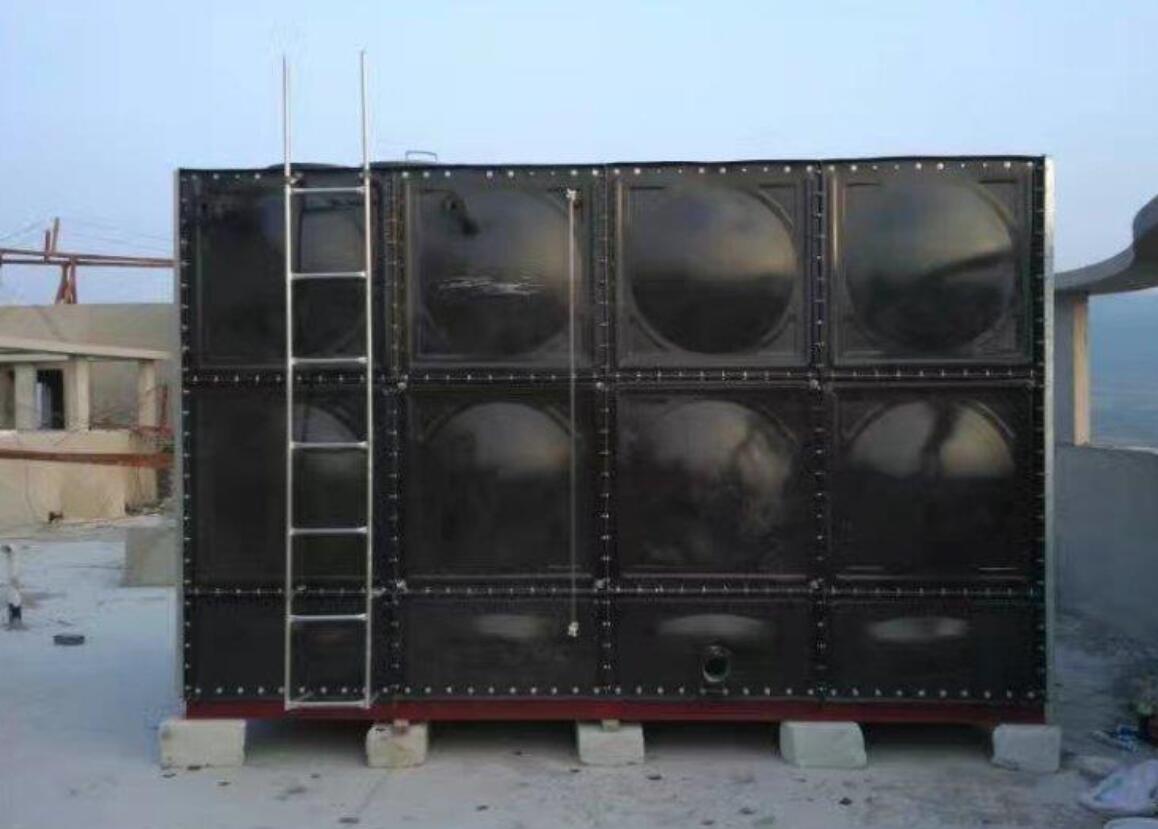
Analyzing the Insulation Performance of FRP Water Tanks: Technical Principles and Multi-Scenario Application Practices
Fiberglass Reinforced Plastic (FRP) water tanks are widely adopted in modern water storage systems due to their light weight, high strength, corrosion resistance, and long service life. However, their insulation performance is often underestimated. In numerous applications with strict water temperature requirements, the thermal retention capability of an FRP tank directly impacts system efficiency and energy costs. This article systematically examines the technical core of FRP tank insulation and explores its in-depth applications across various sectors.
The Technical Core of FRP Water Tank Insulation Performance
The insulation performance of an FRP water tank is not a single material property but a systematic characteristic formed by the substrate, structure, and insulation layer. Its core function is to effectively reduce the rate of heat exchange between the stored water and the external environment.
Insulation Structure and Material Science
A standard insulated FRP tank features a "sandwich" structure: an inner layer of food-grade resin and glass fiber for pressure-bearing, a middle layer filled with efficient insulating materials like polyurethane foam, rock wool, or rubber-plastic foam, and an outer protective shell or secondary FRP encapsulation. Taking the polyurethane integral foaming process commonly used by Beijing Yuanhui FRP Co., Ltd. as an example, the foam density must be controlled between 40-60kg/m³ with a closed-cell rate exceeding 90%. This ensures a low thermal conductivity coefficient of 0.022-0.027 W/(m·K), creating an effective thermal barrier. Heat loss primarily depends on the thickness and thermal conductivity of the insulation layer. In severe cold northern regions, insulation thickness typically needs to be 80-100mm, while 50-80mm can suffice for most needs in central China.
Key Factors Affecting Insulation Efficacy
Beyond the insulation material itself, several engineering details significantly impact performance. First is sealing: improper sealing at openings like manholes and pipe connections creates "thermal bridges," leading to substantial heat loss. Second is the installation environment: indoor installation is superior to outdoor, and an insulating pad should be placed between the tank bottom and its foundation. Finally, maintenance is crucial: regular inspection for damage or moisture ingress in the insulation layer is vital, as wet insulation sees a drastic increase in thermal conductivity. Professional manufacturers like Beijing Yuanhui FRP Co., Ltd. conduct rigorous pre-delivery inspections for insulation layer continuity and thermal imaging scans to ensure the absence of cold bridge defects.
Core Performance Parameters and Energy Efficiency Analysis
Evaluating the insulation performance of an FRP water tank requires focusing on key parameters: the temperature drop per unit time (e.g., ≤2.5°C/24h) under a specific temperature difference (like 40°C between inside and outside), the thermal conductivity of the insulation material, and the overall heat loss coefficient. Data shows that a 50-cubic-meter FRP tank with 100mm thick polyurethane insulation, holding 45°C hot water in a -10°C winter environment, can limit its natural temperature drop to within 2°C over 24 hours. Compared to an uninsulated tank, this can reduce heat loss by approximately 80-100 kWh daily, demonstrating significant energy savings.
From a life-cycle cost perspective, while the initial investment for an insulated tank is about 20%-30% higher than a standard one, the incremental cost can be recouped within 1-3 years through saved energy expenses. For venues like hotels and hospitals requiring year-round hot water supply, choosing a high-quality insulated FRP tank is a strategic decision for long-term cost reduction and efficiency.
In-Depth Analysis of Diverse Application Scenarios
The superior insulation performance of FRP water tanks has expanded their use beyond simple storage into multiple temperature-sensitive fields.
Domestic and Commercial Hot Water Systems
In solar water heating and air-source heat pump systems, insulated FRP tanks are critical thermal storage units. They maximize the storage and retention of heat generated by collection devices, reducing the activation frequency of auxiliary heaters. For instance, a 200-cubic-meter insulated tank supplied by Beijing Yuanhui FRP Co., Ltd. for a large school solar project in North China successfully controlled nighttime temperature drop within design limits, ensuring stable hot water supply and achieving annual electricity cost savings exceeding 150,000 RMB.
Industrial Process Temperature Maintenance
In industrial processes such as food brewing, chemical reactions, and electroplating, process water often needs to be maintained at specific temperatures. Insulated FRP tanks not only prevent heat loss but their corrosion resistance also avoids water contamination by metal ions. A biopharmaceutical company uses custom large-scale insulated FRP purified water storage tanks to maintain process water at a constant 25±2°C, meeting stringent production standards.
Specialized Aquaculture and Agricultural Temperature Control
In aquaculture, especially for overwintering high-value species like sea cucumbers and prawns, stable water temperature is crucial. Buried or semi-buried insulated FRP tanks can serve as temperature-regulating reservoirs. Their insulation reduces heating energy consumption, and the uniform temperature environment promotes growth. Similarly, in modern greenhouse irrigation, using insulated tanks to store pre-heated water prevents cold water shock to plant roots, enhancing yield.
Conclusion: Insulation Performance as a Key Extension of System Value
The insulation performance of FRP water tanks has evolved from an add-on feature to a vital component of their core competitiveness. It represents not just material science but the integrated result of system design, precision manufacturing, and professional installation. When selecting a tank, users should look beyond the singular view of a "water container" and consider the energy consumption and stability of the entire thermal system. Engaging with professional suppliers like Beijing Yuanhui FRP Co., Ltd. to specify insulation configurations based on specific climatic conditions, temperature requirements, and operational patterns is essential. Only through this approach can the full potential of insulated FRP water tanks in energy conservation, cost reduction, and system stability be realized, achieving long-term economic and environmental benefits.