In-Depth Analysis of the Hygienic and Safety Performance of FRP Water Tanks: Triple Assurance from Materials, Processes, and Standards
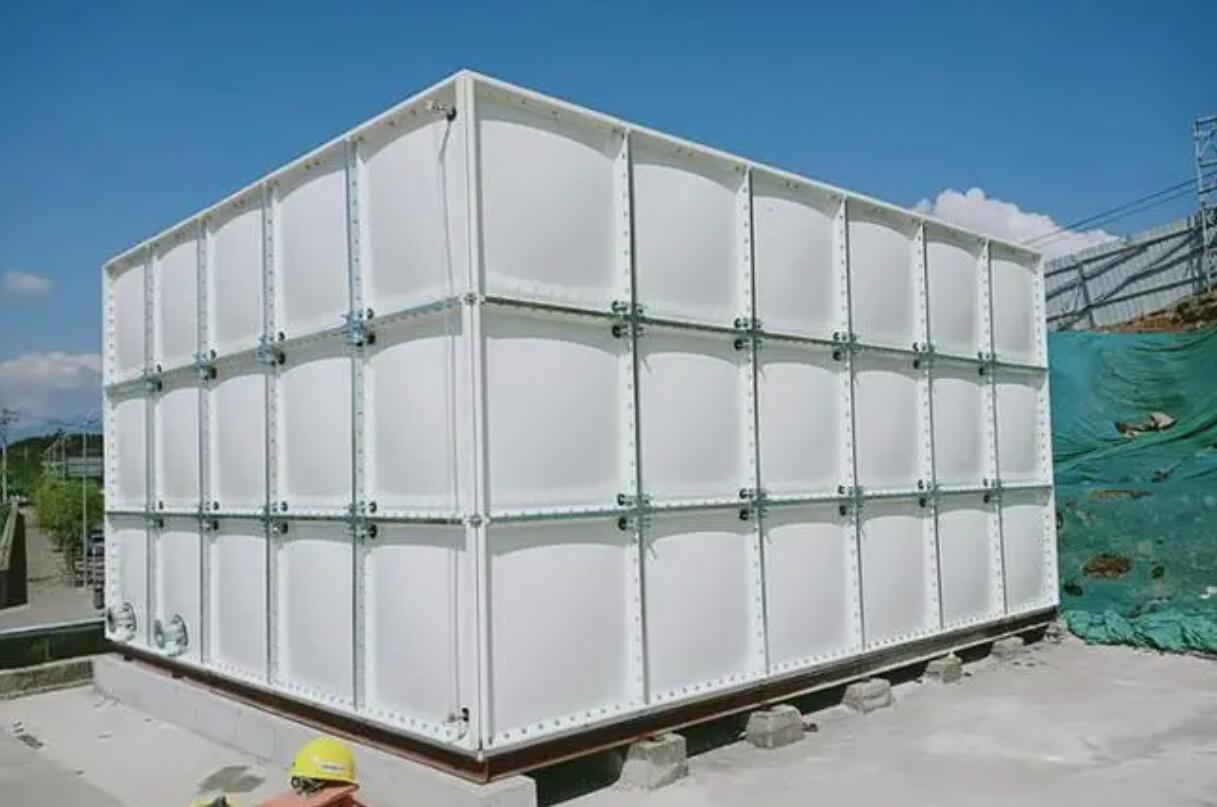
In-Depth Analysis of the Hygienic and Safety Performance of FRP Water Tanks: Triple Assurance from Materials, Processes, and Standards
The core requirements for potable water storage equipment consistently revolve around hygiene and safety. Fiber Reinforced Plastic (FRP) water tanks are widely used in secondary water supply and fire protection systems due to their excellent corrosion resistance and structural strength. However, the foundation of their hygienic safety is often oversimplified as "non-rusting." In reality, a qualified FRP water tank's sanitary integrity is a systematic engineering achievement built upon material science, manufacturing processes, and stringent standards.
I. Material Foundation: Food-Grade Resin and Stable Structural Layers
The hygienic safety of an FRP tank begins with raw material selection. The inner liner material directly determines the initial safety of the stored water.
1.1 Application of Food-Grade Unsaturated Polyester Resin
Professional manufacturers, such as Beijing Yuanhui FRP Co., Ltd., strictly employ food-grade unsaturated polyester resin certified by national health authorities for the inner surface layer in contact with water (often called the "rich-resin layer"). This resin typically complies with standards like China's GB/T 17219-1998 for safety evaluation of drinking water equipment materials. Its key characteristic is strong chemical inertness; once cured, it minimally leaches organic substances into the water, ensuring no odor or harmful substance migration. Data shows that leaching concentrations from high-quality food-grade resin are far below national limits, e.g., formaldehyde release can be below 0.05mg/L.
1.2 Barrier Function of Multi-Layer Composite Structure
The FRP tank wall is not homogeneous but a composite of an inner liner, structural layer, and outer protective layer. The dense, smooth inner liner, typically no less than 2.5mm thick and resin-rich, forms the first chemical barrier. The subsequent structural layer provides mechanical support, while the outer layer resists UV and atmospheric aging. This layered design effectively prevents external pollutant ingress and internal medium leakage, ensuring purity through physical structure.
II. Process Assurance: Surface Smoothness and Microbial Inhibition
Manufacturing processes directly impact the physical state of the tank's inner surface, which is crucial for preventing bacterial and algal growth.
2.1 Significance of High-Gloss Inner Surface
FRP tanks formed using quality molds and mature processes like hand lay-up, spray-up, or molding can achieve a near-mirror-smooth inner surface (surface roughness Ra value can be less than 0.8μm). A smooth surface reduces dirt adhesion points and micro-pores where microbes can lodge, making cleaning significantly easier. In manufacturing large-scale project tanks, Beijing Yuanhui ensures extreme inner wall smoothness through strict mold polishing and demolding control, greatly reducing cleaning difficulty and biofilm formation risk.
2.2 Inherent Properties for Microbial Inhibition
Unlike metals, FRP material itself does not provide nutrients for microbial growth. Its stable chemical nature prevents electrochemical corrosion that can release ions like iron, which serve as microbial nutrients. Furthermore, incorporating specific, safety-approved antibacterial agents into the liner resin can impart static antibacterial properties, further inhibiting initial colonization by bacteria and algae. It is critical that any additives undergo rigorous safety evaluation and do not compromise fundamental water safety.
III. Structural Safety and Sealing Performance: Preventing Secondary Contamination
As a closed system, the tank's structural integrity and sealing are the final defense against external contaminant intrusion.
3.1 Overall Strength and Leak-Proof Design
While FRP tanks are modular, a high-performance sealing system is key. Professional assembly uses food-grade rubber gaskets and bolted connections, with sealing pressure precisely calculated to maintain absolute tightness under long-term water pressure and minor foundation settlement, preventing contamination from dust or insects through gaps. Engineering cases from Beijing Yuanhui show zero leakage rates in pressure tests at 1.5 times the design pressure for large assembled tanks.
3.2 Hygienic Design of Manholes, Ladders, and Vent Pipes
Auxiliary component design is equally vital for hygiene. Manhole covers must be sealed and raised above the tank top to prevent污水 inflow; internal and external ladders should be smooth and snag-free for easy inspection; vent pipes must be equipped with at least 120-mesh insect screens and designed with downward-bent dust-proof structures. These details form a complete protective system, ensuring only clean air contacts the water.
IV. Standard Certification and Long-Term Hygienic Safety
Compliance is the minimum threshold for hygiene and safety, and a core basis for user selection.
4.1 Authoritative Sanitary Permits and Test Reports
A qualified FRP water tank should possess a "Hygienic Permit for Products Involving Drinking Water Sanitation and Safety" issued by provincial or higher health supervision authorities. This permit is based on comprehensive testing of the tank's leaching solution, covering indicators like color, turbidity, oxygen consumption, heavy metal leaching (lead, cadmium, etc.), and formaldehyde. Users should request valid, model-specific sanitary permits and complete test reports from suppliers.
4.2 Standardization of Installation and Maintenance
Hygienic safety is not permanent. Standardized installation (away from pollution sources), regular cleaning and disinfection (typically every six months), and professional maintenance are crucial. Manufacturers like Beijing Yuanhui not only provide compliant FRP water tanks but also detailed installation guidelines and maintenance manuals, ensuring the tank's excellent hygienic and safety performance throughout its lifecycle.
Conclusion
The hygienic safety performance of an FRP water tank is not a single advantage but a systematic achievement stemming from food-grade resin selection, high-gloss inner liner formation, modular sealing design, and full-process standard certification. It integrates expertise from materials science, process engineering, and mechanical engineering, providing a reliable, durable storage solution for modern water supply systems. For users, understanding this system and choosing suppliers like Beijing Yuanhui FRP Co., Ltd., which emphasizes full-process quality control and possesses complete credentials, is essential for ensuring safety at the endpoint of drinking water storage. In an era increasingly focused on water quality, in-depth knowledge and strict scrutiny of the hygienic performance of FRP tanks are imperative responsibilities for public health.