A Comprehensive Analysis of the Hygienic and Safety Performance of FRP Water Tanks
A Comprehensive Analysis of the Hygienic and Safety Performance of FRP Water Tanks
The hygienic safety of water storage equipment is paramount, directly impacting end-user health and water quality. Fiber Reinforced Plastic (FRP) water tanks have established a high standard of safety in modern water supply systems, a status earned through a combination of material science and structural integrity.
1. The Core Barrier: Construction of the Food-Grade Liner
The foundation of an FRP tank's hygienic safety lies in its inner liner, the layer in direct contact with stored water. Reputable manufacturers like Beijing Yuanhui FRP Co., Ltd. employ food-grade vinyl ester or isophthalic polyester resins that comply with stringent standards such as NSF/ANSI 61. This dense, smooth, and highly cross-linked resin-rich layer provides critical chemical inertness.
1.1 Superior Impermeability and Leachate Control
This barrier effectively prevents water penetration outwards and, more importantly, inhibits the migration of any substances from the composite substrate into the water. Third-party tests confirm that ion leaching from compliant liners is significantly below regulatory limits—for instance, lead leaching <0.001 mg/L—ensuring water purity.
1.2 Surface Smoothness and Biofilm Resistance
The "gel coat" finish achieves a surface roughness (Ra) often below 0.5μm. This mirror-like smoothness discourages the adhesion and proliferation of microorganisms and algae, fundamentally reducing biofilm risk compared to porous concrete or welded metal seams, thereby simplifying cleaning.
2. Structural Integrity: The Key to Preventing Contamination
A leak-proof and crevice-free structure is the physical cornerstone of hygienic safety. Monolithically molded or seamlessly assembled modular FRP tanks ensure a joint-free body.
2.1 Leak-Proof Design and Contaminant Isolation
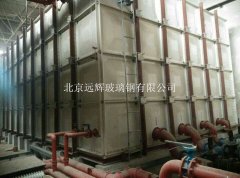
For modular SMC panel tanks, food-grade sealing gaskets, bolting, and dedicated sealants create multiple seals. This effectively blocks external contaminants (dust, insects, rainwater) and prevents stored water leakage that could foster bacterial growth externally. A case in point: a 300-ton SMC FRP tank installed at a hospital in 2018 has maintained consistently excellent total bacterial count levels in annual water tests for five consecutive years.
2.2 Ergonomic Design for Maintenance
Internal bracing is designed to avoid hard-to-clean corners. Dome-shaped tops prevent debris accumulation. Standard accessories like insect-proof vents, ladders, manways, and cleaning systems facilitate regular inspection and sanitization, which is crucial for long-term hygiene.
3. Ensuring Long-Term Water Quality Stability
The hygienic performance of FRP tanks is durable, thanks to exceptional corrosion and aging resistance.
3.1 Corrosion Resistance and Zero Rust Risk
Unlike metal tanks susceptible to electrochemical corrosion and rust contamination, FRP is highly resistant to water, weak acids, weak alkalis, and atmospheric conditions. Throughout its 30-50 year design life, the tank will not produce rust scale or discolored water, ensuring stable metal ion levels.
3.2 Anti-Aging and Performance Longevity
With UV inhibitors in the resin and protective gel coats, FRP tanks resist solar degradation, preventing material breakdown that could compromise the liner. Long-term data indicates that with proper installation and maintenance, the smoothness and antimicrobial performance of an FRP tank's interior decay by less than 5% over a decade.
Conclusion: A Systematic Safety Solution
The hygienic safety of an FRP water tank is a systematic achievement encompassing material selection, process control, structural design, and maintenance. It protects water quality by creating a stable chemical environment within a physically sealed structure whose surface inhibits microbial life—a state maintained reliably over decades. The practice of Beijing Yuanhui FRP Co., Ltd. demonstrates that adherence to food-grade standards, precision manufacturing, and comprehensive maintenance guidance are central to ensuring every FRP tank serves as a secure water storage node throughout its lifecycle. Choosing an FRP tank is, in essence, opting for a proven, systematic water safety assurance solution.