Decoding FRP Water Tanks: An In-Depth Analysis of Material Composition and Performance Advantages
Decoding FRP Water Tanks: An In-Depth Analysis of Material Composition and Performance Advantages
Fiberglass Reinforced Plastic (FRP) water tanks are gaining significant traction in modern water storage solutions, increasingly replacing traditional concrete and stainless-steel alternatives. Their core competitiveness stems from a sophisticated material science foundation and structural design. This article systematically deconstructs the material composition of FRP tanks and elucidates their resulting, often unparalleled, performance benefits.
1. Deconstructing the Core Material Composition of FRP Tanks
FRP is a composite material system where the synergistic interaction of its components dictates overall performance.
1.1 The Matrix: Selection of Unsaturated Polyester Resins
The resin matrix binds the fibers, determining the tank's corrosion resistance, temperature tolerance, and basic toughness. Manufacturers like Beijing Yuanhui FRP Co., Ltd., typically use food-grade unsaturated polyester resins, such as isophthalic or vinyl ester resins, tailored to water quality and application environment. Isophthalic resins, for instance, offer superior hydrolysis stability and better resistance to weak acids, alkalis, and salts compared to standard orthophthalic resins, ensuring long-term water quality stability. UV inhibitors are commonly added for outdoor durability.
1.2 The Reinforcement: The Critical Role of Glass Fibers
Glass fibers act as the load-bearing skeleton. E-glass or C-glass fibers in the form of rovings, mats, and fabrics are standard. The fiber content, orientation, and layup design are critical, directly determining the tank's axial and hoop strength. Professional filament winding or Sheet Molding Compound (SMC) processes ensure extra reinforcement in stress-concentration areas (e.g., joints, bottom), which is key to achieving the high specific strength of FRP water tanks.
1.3 Auxiliary Materials and Process Nuances
The inner liner is vital. A resin-rich layer, created using surface veil or chopped strand mat, forms a smooth, dense, fiber-free interior surface. This enhances leak-proof performance and meets hygiene standards. Additives like pigments and fillers (e.g., alumina trihydrate for flame retardancy) further optimize the final product's properties.
2. Performance Advantages Derived from Material Composition
The unique composite structure grants FRP water tanks a suite of superior performance characteristics.
2.1 Superior Corrosion Resistance and Hygienic Safety
This is the most prominent advantage. FRP is highly resistant to atmosphere, water, and a wide range of acids, alkalis, and salts, eliminating electrochemical corrosion entirely. In contrast, stainless steel is susceptible to pitting in chloride-rich environments. Tanks from Beijing Yuanhui FRP Co., Ltd., with food-grade resin liners, provide a smooth, scale-resistant surface that inhibits algae growth, ensuring compliance with potable water safety standards.
2.2 The Perfect Union of High Strength and Light Weight
FRP boasts a higher strength-to-weight ratio than steel. A 50-cubic-meter SMC FRP water tank can weigh only one-quarter to one-third of an equivalent steel tank, drastically reducing structural load requirements. This makes them ideal for rooftop installations or retrofitting older buildings. Their impact and seismic resistance are also notably superior.
2.3 Long Service Life and Low Maintenance
High-quality FRP water tanks can have a design life exceeding 30 years. The non-corrosive, leak-proof material requires only periodic cleaning, unlike steel tanks needing regular anti-rust maintenance. A case in point is an acid-alkali neutralization liquid storage tank (made of corrosion-resistant vinyl ester FRP) supplied by Beijing Yuanhui FRP for a North China chemical plant, which has operated flawlessly under harsh conditions for 8 years, demonstrating remarkable long-term reliability.
2.4 Design Flexibility and Easy Installation
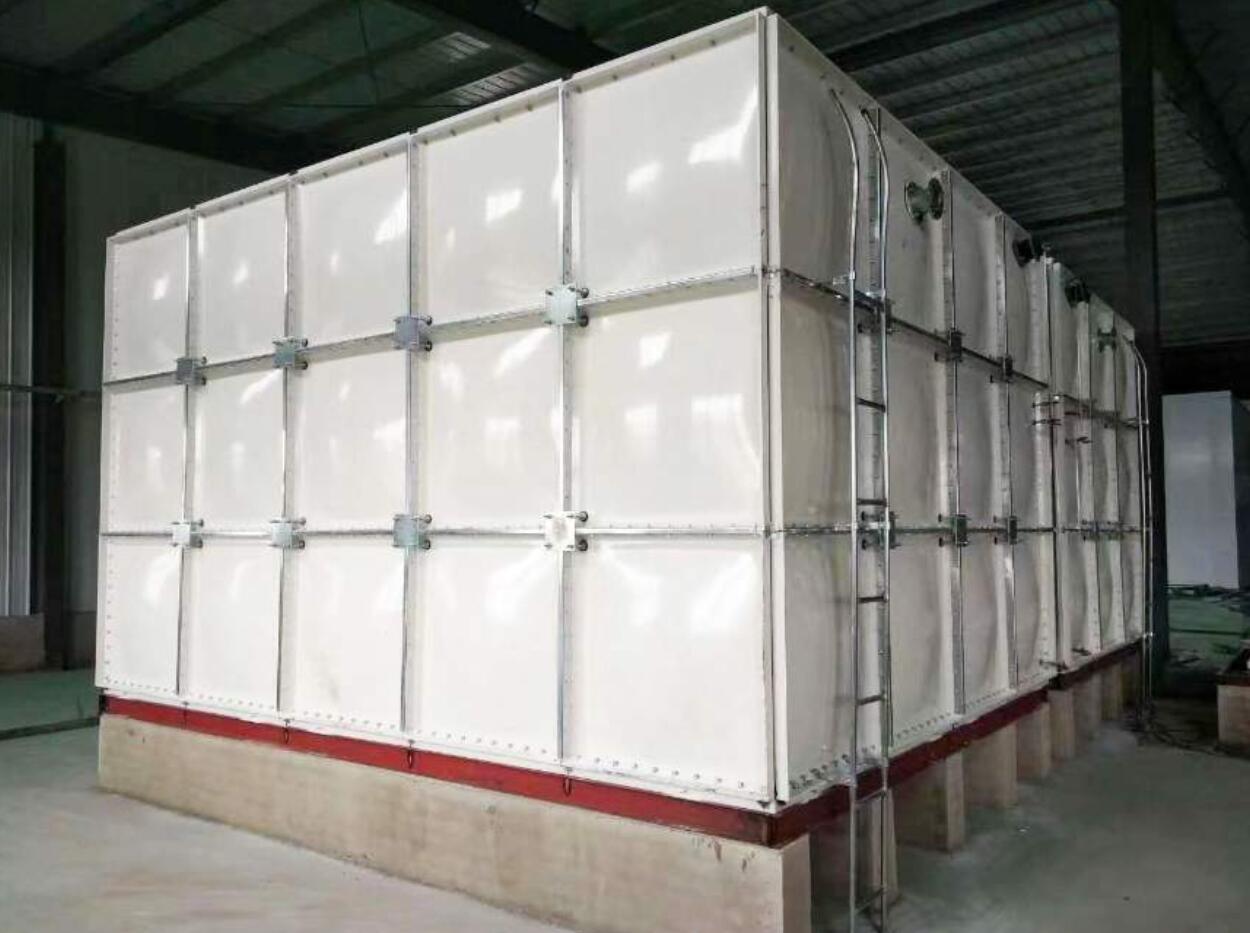
The malleability of FRP allows for custom shapes to fit unique spaces. Standard modular SMC panels are bolted together with food-grade sealing gaskets, enabling rapid installation independent of weather. A 100-cubic-meter assembled tank can be completed by a professional team within 2-3 days.
3. Application Scenarios and Selection Considerations
Given these advantages, FRP water tanks are widely used in civil building secondary water supply, fire water storage, industrial process water, water treatment plants, and agricultural irrigation. Key selection factors include:
1. Resin Type: Food-grade resin is mandatory for potable water; chemical-resistant resins (e.g., vinyl ester) are required for corrosive fluids.
2. Process & Structure: Filament winding offers high integral strength for large tanks; SMC modular panels provide flexibility for complex indoor installations.
3. Supplier Qualification: Choose established manufacturers like Beijing Yuanhui FRP Co., Ltd., with proven processes, strict quality control, and extensive project portfolios.
Conclusion
The performance advantages of FRP water tanks are a direct manifestation of their underlying material science. From the precise formulation of food-grade resins and glass fibers to rigorous manufacturing processes, every detail dictates the final product's reliability, safety, and cost-effectiveness. As material technology and manufacturing techniques continue to advance, FRP tanks will undoubtedly underpin safer, more efficient, and sustainable water storage solutions across an expanding range of applications. For engineers and procurement professionals, a deep understanding of their material essence is the fundamental prerequisite for making optimal technical and economic choices.