An In-Depth Analysis of the Hygienic and Safety Performance of FRP Water Tanks: From Material Science to Potable Water Assurance
An In-Depth Analysis of the Hygienic and Safety Performance of FRP Water Tanks: From Material Science to Potable Water Assurance
The hygienic safety of water storage equipment is a paramount concern for public health. Fiberglass Reinforced Plastic (FRP) water tanks have become a critical component in modern water supply systems due to their unique material properties and manufacturing processes. Their safety profile is not a single feature but a systematic engineering achievement integrating material selection, structural design, process control, and long-term maintenance.
1. Material-Level Safety: Food-Grade Resins and Non-Toxic Curing
The foundation of an FRP tank's hygienic safety lies in its inner liner, which contacts the stored water. Following the production standards of companies like Beijing Yuanhui FRP Co., Ltd., the liner is typically made from food-grade unsaturated polyester resins, such as isophthalic or vinyl ester resins, compliant with potable water safety standards (e.g., China's GB/T 17219). These resins, when fully cured, form a stable molecular matrix that effectively prevents the leaching of harmful substances like styrene monomer.
1.1 Critical Process: Complete Curing and Post-Processing
The degree of resin cure is directly linked to hygienic performance. Incomplete curing can lead to the migration of residual small molecules. Professional manufacturers ensure a cure degree exceeding 95% through precise control of catalyst ratios, temperature, and curing time. Advanced processes, including secondary curing and post-heat treatment of the liner, further reduce extractable content, ensuring the tank passes stringent water immersion tests per drinking water regulations.
1.2 Microbial Inhibition and Smooth Surface
A high-quality FRP tank features a glass-smooth interior with a Barcol hardness often above 40. This high-gloss finish minimizes physical niches for microbial and algal attachment and growth. Compared to concrete tanks prone to algae or metal tanks susceptible to corrosion and scale, the inert nature of the FRP interior provides a superior foundation for microbial control.
2. Structural Integrity and Leakage Prevention: Averting Secondary Contamination
Leakage not only wastes water but is a primary pathway for external contaminants. FRP tanks are manufactured using filament winding or molding processes, resulting in a seamless or minimally jointed monolithic structure. This fundamentally eliminates common issues in traditional tanks, such as weld corrosion and seam leakage.
2.1 Data on Impermeability and Corrosion Resistance
According to standards like JC/T 658.1, a quality FRP tank must show "no leakage when full." The material exhibits an extremely low permeability coefficient and outstanding corrosion resistance to water, acids, alkalis, and salts. For instance, when storing potable water (pH 6.5-8.5) long-term, the material shows no swelling or softening, with strength retention rates consistently above 85%, ensuring lasting structural seal over decades of design life.
3. Hygienic Maintenance and Long-Term Stability in Service
Hygienic safety is a dynamic process, demanding performance stability over time. FRP material does not undergo electrochemical corrosion like metals nor leach calcium/magnesium ions or carbonate like concrete, thus introducing no new pollution sources into the water.
3.1 Anti-Aging and UV Protection
For outdoor installations, UV absorbers and anti-aging agents in the surface gel coat prevent resin degradation from solar exposure. Case studies from Beijing Yuanhui show that tanks with weather-resistant gel coats experience less than a 15% decrease in Barcol hardness after ten years of outdoor service, with no chalking or cracking, maintaining surface integrity and smoothness.
3.2 Ease of Cleaning and Disinfection
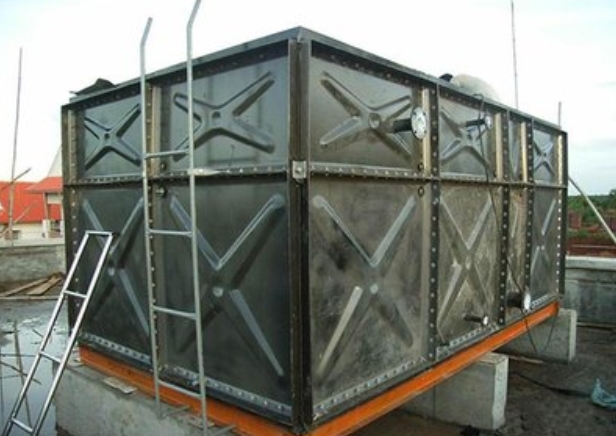
The modular design (for panel-type tanks) or accessible manways facilitate regular professional cleaning and disinfection. The material demonstrates good tolerance to common disinfectants like sodium hypochlorite and chlorine dioxide, without harmful residue post-disinfection, supporting established sanitary maintenance protocols.
4. Industry Standards and Certifications: The Regulatory Framework for Safety
The hygienic safety of FRP tanks is backed by rigorous certifications and testing. Beyond material standards, premium products should possess official potable water hygiene safety approval certificates. Reputable manufacturers like Beijing Yuanhui FRP Co., Ltd., routinely submit product samples for comprehensive testing, obtaining reports covering heavy metals, organic leaching, sensory properties, and microbial indicators.
During installation and commissioning, professional suppliers provide complete documentation and guide clients through initial cleaning and disinfection, ensuring hygienic control throughout the production-installation-operation chain. Selecting a manufacturer with robust credentials and a proven track record is the key decision for guaranteeing the ultimate hygienic safety performance of an FRP water tank.
Conclusion
The superior hygienic and safety performance of FRP water tanks is the core reason for their widespread use in residential, commercial, hospital, school, and food & beverage applications. This performance stems from the correct selection of food-grade resins, high-standard curing processes, leak-proof monolithic construction, and excellent long-term corrosion and aging resistance. For end-users, selecting an FRP tank should involve scrutinizing the manufacturer's hygiene safety certifications, material test reports, and process control capabilities. Transforming the abstract concept of "hygienic safety" into verifiable technical specifications and contractual commitments lays a solid foundation for long-term, stable, and safe water storage.