An In-Depth Analysis of the Hygienic and Safety Performance of FRP Water Tanks: Triple Assurance from Materials, Processes, and Standards
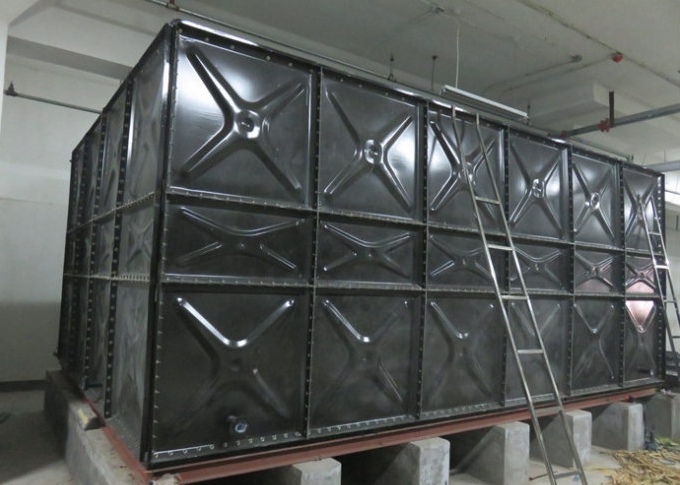
An In-Depth Analysis of the Hygienic and Safety Performance of FRP Water Tanks: Triple Assurance from Materials, Processes, and Standards
The hygienic safety of water storage equipment is directly linked to end-user health and public safety. Fiberglass Reinforced Plastic (FRP) water tanks are widely used across various sectors due to their excellent corrosion resistance and structural strength. Their core hygienic and safety performance stems from a comprehensive system of assurance, spanning from raw material selection to molding processes and standard certifications.
1. Material Foundation: Food-Grade Liner and Antimicrobial Barrier
The foundation of an FRP tank's hygienic safety lies in the liner that is in direct contact with the stored water. Professional manufacturers, such as Beijing Yuanhui FRP Co., Ltd., strictly employ food-grade unsaturated polyester or vinyl ester resins that comply with national standards like China's GB 9685 for food contact materials. Once cured, these resins form a dense, smooth, and chemically inert surface. Key indicators, such as styrene residue, are typically controlled below 0.1%, far under regulatory limits, fundamentally preventing the migration of harmful substances from the material into the water.
1.1 Surface Smoothness and Microbial Adhesion
High-standard spray-up or hand lay-up processes, combined with precision molds, can create a mirror-smooth interior surface for FRP tanks, with a surface roughness (Ra) potentially below 0.5μm. This ultra-smooth surface significantly reduces the physical basis for microbial and algal adhesion and growth. Compared to concrete tanks prone to leakage and metal tanks susceptible to rust creating harborage points, the seamless, smooth nature of FRP liners markedly lowers the risk of biofilm formation. Engineering cases from Beijing Yuanhui show that in maintained secondary water supply systems, biofilm accumulation during regular cleaning is reduced by an average of approximately 60% compared to traditional material tanks.
1.2 Inherent Antimicrobial Properties of Resins
Some high-end FRP tanks utilize resin systems incorporating specific antimicrobial agents. These agents (e.g., silver-ion or zinc-ion based additives) remain stable within the cured resin, providing a long-term, slow-release effect on the interior surface. They offer continuous inhibition against common pathogens like E. coli and Staphylococcus aureus, with antimicrobial rates potentially exceeding 99%, adding an active protective layer to water safety.
2. Structural Assurance: Monolithic Construction and Sealing Integrity
Hygienic safety depends not only on materials but crucially on the tank's overall structural design. Leakage and ingress of external contaminants are two primary threats to water quality.
2.1 Seamless Monolithic Molding Technology
High-quality FRP tanks utilize large-mold filament winding or sectional construction with seamless internal jointing technology. Particularly, computer-controlled filament winding ensures the main tank body has no transverse seams, eliminating primary leakage risks. Beijing Yuanhui's "integral molding stiffener" technology enhances both tank strength and sealing. Their products exhibit near-zero leakage rates in pressure hold tests at 1.5 times the design pressure.
2.2 Comprehensive Sealing System
Tank sealing is a systematic engineering effort:
Manhole & Ladder: Feature a double-seal cover. The inner lid uses a food-grade silicone gasket for compression sealing against the flange, while the outer lid provides dust protection.
Pipe Connections: All inlets, outlets, overflow, and drain ports employ flanged connections with water-aging resistant, non-toxic rubber gaskets, ensuring long-term reliable sealing.
Venting & Insect Proofing: Vent pipes must be fitted with at least 120-mesh stainless steel insect screens, effectively preventing dust and insect entry while maintaining air pressure balance.
3. Standards Compliance and Long-Term Service Safety
The hygienic safety performance of FRP tanks requires verification and maintenance through authoritative standards.
3.1 Sanitary License and Immersion Testing
In China, FRP tanks used for potable water must obtain the "Hygienic License for Products Involving Drinking Water Sanitation and Safety" issued by provincial health authorities. A prerequisite for this license is passing stringent immersion tests. According to the relevant evaluation规范, material samples are immersed in test water under specific temperature and duration conditions. Parameters like color, turbidity, oxidizability, and heavy metal leaching are measured, all of which must fall within specified limits. This directly proves the material's long-term safety in contact with drinking water.
3.2 Contamination Resistance and Ease of Cleaning
Hygienic safety is also reflected in maintenance convenience. Well-designed FRP tanks have a roof slope of no less than 5° to prevent water and dust accumulation. Internal structures like ladders and braces are designed smoothly to avoid cleaning dead spots. The inert surface resists scaling and allows cleaning with standard potable water disinfectants (e.g., sodium hypochlorite solution) without causing material corrosion or performance degradation. Follow-up data from Beijing Yuanhui indicates that cleaning intervals for their tanks can be extended by 30%-50% compared to traditional metal tanks, with reduced water and chemical consumption during cleaning.
Conclusion
The hygienic and safety performance of an FRP water tank is a systematic engineering achievement, integral from inception to operation. It begins with the inherent safety of food-grade resin materials, is realized through monolithic, seamless construction and precise sealing processes, and is ultimately ensured by strict sanitary certifications and user-friendly maintenance design. For facilities with stringent water quality requirements—such as hospitals, schools, food processing plants, hotels, and residential complexes—selecting FRP tanks from suppliers like Beijing Yuanhui FRP Co., Ltd., which possess complete certifications, mature processes, and rigorous quality control, is not merely an infrastructure decision but a long-term investment in water health and safety. In an era of increasing focus on public health, deeply understanding and leveraging the hygienic safety advantages of FRP tanks plays an indispensable role in safeguarding the final link of water supply systems.