Decoding FRP Water Tanks: The Integration of Material Science and Performance Advantages
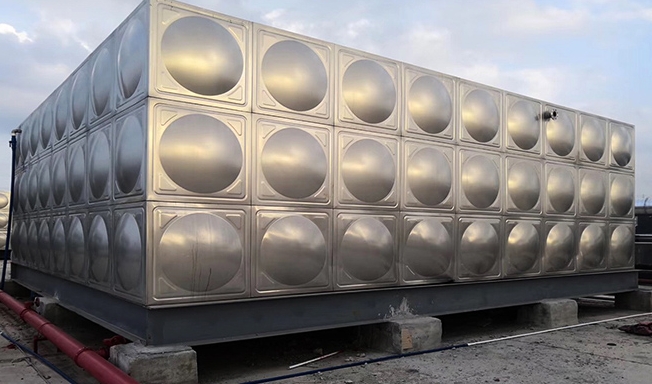
Decoding FRP Water Tanks: The Integration of Material Science and Performance Advantages
The enduring market position of Fiberglass Reinforced Plastic (FRP) water tanks is fundamentally rooted in their advanced material science and superior engineering performance. Companies like Beijing Yuanhui FRP Co., Ltd., with over two decades of industry expertise, have witnessed the evolution of FRP tank formulations and their expanding applications. Understanding their material composition is key to appreciating their performance benefits.
I. Core Material Composition of FRP Water Tanks
The performance of FRP is directly determined by the quality of its matrix and reinforcement materials, as well as the composite manufacturing process.
1.1 Matrix Material: Selection of Food-Grade Resins
The resin matrix is central to the tank's corrosion resistance, hygiene, and mechanical properties. Reputable manufacturers like Beijing Yuanhui FRP Co., Ltd. typically use food-grade unsaturated polyester resins compliant with potable water standards, such as isophthalic or vinyl ester resins. Isophthalic resins offer superior molecular stability and resistance to water, weak acids, and weak alkalis compared to general-purpose resins, ensuring long-term water quality. For harsh industrial environments, premium vinyl ester resins are employed, offering a broader pH resistance range and extending service life by over 30%.
1.2 Reinforcement Material: The Architecture of High-Strength Fiberglass
The primary reinforcement is alkali-free fiberglass in forms like surface veil, chopped strand mat (CSM), and woven roving. The surface veil creates a resin-rich inner liner for enhanced impermeability and corrosion barrier. CSM provides isotropic strength and crack arrestment, while woven roving delivers primary tensile strength in the longitudinal and latitudinal directions. Through precise Computer-Aided Design (CAD) and controlled lamination, the fiber orientation and layup sequence are optimized for uniform stress distribution under hydrostatic pressure. In professional FRP water tank fabrication, the glass content is strictly controlled between 30%-40% for an optimal strength-to-toughness ratio.
1.3 Auxiliary Materials and Process Assurance
High-quality FRP tanks also incorporate key additives: UV inhibitors (for outdoor weathering), flame retardants (for fire safety compliance), and food-grade pigments. Precise control of molding processes—whether compression molding or hand lay-up/filament winding—ensures composite integrity and defect-free construction, which is the physical foundation for leak-proof performance.
II. Five Key Performance Advantages Derived from Material Composition
The unique composite structure grants FRP water tanks a series of advantages difficult to match with traditional materials.
2.1 Superior Corrosion Resistance and Hygienic Safety
This is the most prominent advantage. The inert material does not rust or undergo electrochemical corrosion, eliminating the need for periodic anti-corrosion coatings required for steel tanks. The smooth, non-porous gel coat interior inhibits microbial and algal growth. A case study from Beijing Yuanhui involving an 800-ton FRP tank at a food processing plant in North China showed the interior surface remained smooth and uncontaminated after 8 years of continuous use, with water quality consistently meeting national standards.
2.2 The Unity of High Strength and Light Weight
FRP boasts a higher strength-to-weight ratio than steel. A 50-ton FRP tank weighs only about one-tenth of an equivalent concrete tank and one-third to one-fourth of a steel tank. This significantly reduces transportation and installation costs (typically saving 15%-20% on craneage) and minimizes structural load requirements, making it ideal for rooftop installations or projects with limited load-bearing capacity.
2.3 Exceptional Durability and Low Maintenance
Under normal conditions, high-quality FRP water tanks have a design service life exceeding 30 years. The material ages slowly, and maintenance requirements are minimal. Compared to traditional metal tanks that risk corrosion and require annual inspections, FRP tanks offer a lower total cost of ownership. Industry case analyses indicate that for a medium-sized community water storage system, the 15-year comprehensive maintenance cost of an FRP tank can be approximately 25% lower than that of a stainless-steel equivalent.
2.4 Thermal Insulation and Design Flexibility
FRP has a thermal conductivity about 1/100 to 1/200 that of metal, providing inherent insulation that helps maintain water temperature stability in extreme climates. Furthermore, its flexible molding process allows for custom shapes and sizes to fit spatial constraints—a feat difficult with concrete. The modular panel design of many FRP tanks also facilitates future expansion or relocation.
III. Professional Selection and Quality Control Considerations
To fully realize these advantages, scientific selection and rigorous quality control are paramount.
First, select the resin grade based on the stored medium (potable water, firewater, industrial water, etc.). Second, scrutinize key performance data: Barcol hardness should be ≥40 for scratch resistance; flexural strength should be ≥150 MPa; water absorption should be below 0.5%. Finally, evaluate the manufacturer's process control capabilities, such as the use of computer-controlled winding, degree of cure control, and comprehensive raw material testing and final hydrostatic pressure testing protocols. The value of a complete FRP water tank system lies not only in the modules but also in professional design, installation, and after-sales service.
Conclusion
The performance advantages of FRP water tanks are deeply rooted in their sophisticated composite material composition. From the chemical stability of food-grade resins to the physical reinforcement of fiberglass, each layer serves the core objectives of corrosion resistance, high strength, and long service life. As a professional FRP water tank supplier, Beijing Yuanhui FRP Co., Ltd. maintains that a deep understanding of material science is the foundation for informed user selection and ongoing industry innovation. In an era prioritizing infrastructure reliability, economy, and environmental friendliness, high-performance FRP water tanks will continue to play an indispensable role in municipal water supply, firewater storage, industrial circulation, and beyond.