FRP Water Tanks: An In-Depth Analysis of Material Composition and Performance Advantages
FRP Water Tanks: An In-Depth Analysis of Material Composition and Performance Advantages
Fiber Reinforced Plastic (FRP) water tanks, a cornerstone in modern water storage for buildings, fire protection, and industrial processes, derive their superior performance from a sophisticated composite material structure. This represents a significant engineering advancement over traditional metal tanks. Beijing Yuanhui FRP Co., Ltd., with over two decades of specialized manufacturing expertise, has been at the forefront of optimizing and applying this technology.
I. Core Material Composition of FRP Tanks
FRP is not a single material but a composite system where different components work in synergy to create properties unattainable by individual materials.
1. Matrix Material: Selection of Unsaturated Polyester Resins
The resin matrix binds the fibers, transfers stress, and largely determines corrosion resistance, temperature tolerance, and surface quality. Beijing Yuanhui selects resin grades based on specific application environments. For potable water tanks, food-grade unsaturated polyester resin compliant with stringent potable water standards is mandatory, ensuring minimal styrene residue and water safety. For chemical environments, bisphenol-A or vinyl ester resins are employed, offering corrosion resistance to acids, alkalis, and salts that surpasses ordinary steel by multiples.
2. Reinforcement Material: The Critical Role of Glass Fibers
Glass fibers act as the reinforcing skeleton, providing mechanical strength. E-glass or C-glass fibers in the form of rovings, mats, and fabrics are used. In filament winding processes, roving strands are wound in precise helical and hoop patterns, aligning fibers with stress directions. The fiber content is typically engineered between 25%-35%, an optimal range validated by mechanical testing to ensure strength and proper resin wet-out. The inner liner, rich in resin from the use of surface veil and chopped strand mat, is critical for corrosion barrier integrity and leak prevention.
3. Auxiliary Materials and Process Precision
The curing system (initiator, promoter), pigment pastes, and UV stabilizers are vital auxiliary components. The core of Beijing Yuanhui's manufacturing lies in computer-controlled filament winding, which ensures uniform wall thickness, isotropic structural properties, and the absence of weak points through precise control of fiber tension, winding angle, and resin content.
II. Five Key Performance Advantages of FRP Water Tanks
The unique material composition grants FRP tanks a suite of integrated advantages over metallic alternatives.
1. Superior Corrosion Resistance and Hygienic Safety
This is the most prominent advantage. FRP materials are chemically inert to atmosphere, water, and a wide range of acids, alkalis, and salts. They are immune to the electrochemical rusting that affects steel tanks and the chloride-induced pitting that can compromise some stainless steels. A case study from Beijing Yuanhui involved a fire water tank at a coastal power plant; after 8 years in a high-temperature, high-salinity environment, the FRP tank showed no signs of corrosion, while a galvanized steel tank installed concurrently had severe corrosive perforation. The smooth, non-porous food-grade gel coat liner inhibits microbial adhesion and algae growth, maintaining water quality.
2. High Strength-to-Weight Ratio
FRP has a higher specific strength (strength-to-density ratio) than steel. A 50-cubic-meter SMC molded FRP tank weighs only one-fourth to one-third of an equivalent steel tank. This drastically reduces transportation and installation costs (often saving over 30% in craneage) and minimizes structural load requirements on buildings. FRP tanks also exhibit excellent impact strength and fatigue resistance, accommodating water pressure fluctuations and minor foundation settlement.
3. Thermal Insulation and Long Service Life
With a thermal conductivity of only about 0.5% that of steel, FRP provides inherent insulation. Field data indicates water temperature changes within an FRP tank are 2-3 times slower than in a metal tank under identical conditions, contributing to energy savings. With proper use and maintenance, high-quality FRP tanks have a design life exceeding 30 years, offering a lower total lifecycle cost compared to metal tanks requiring periodic anti-corrosion maintenance.
4. Design Flexibility and Ease of Installation
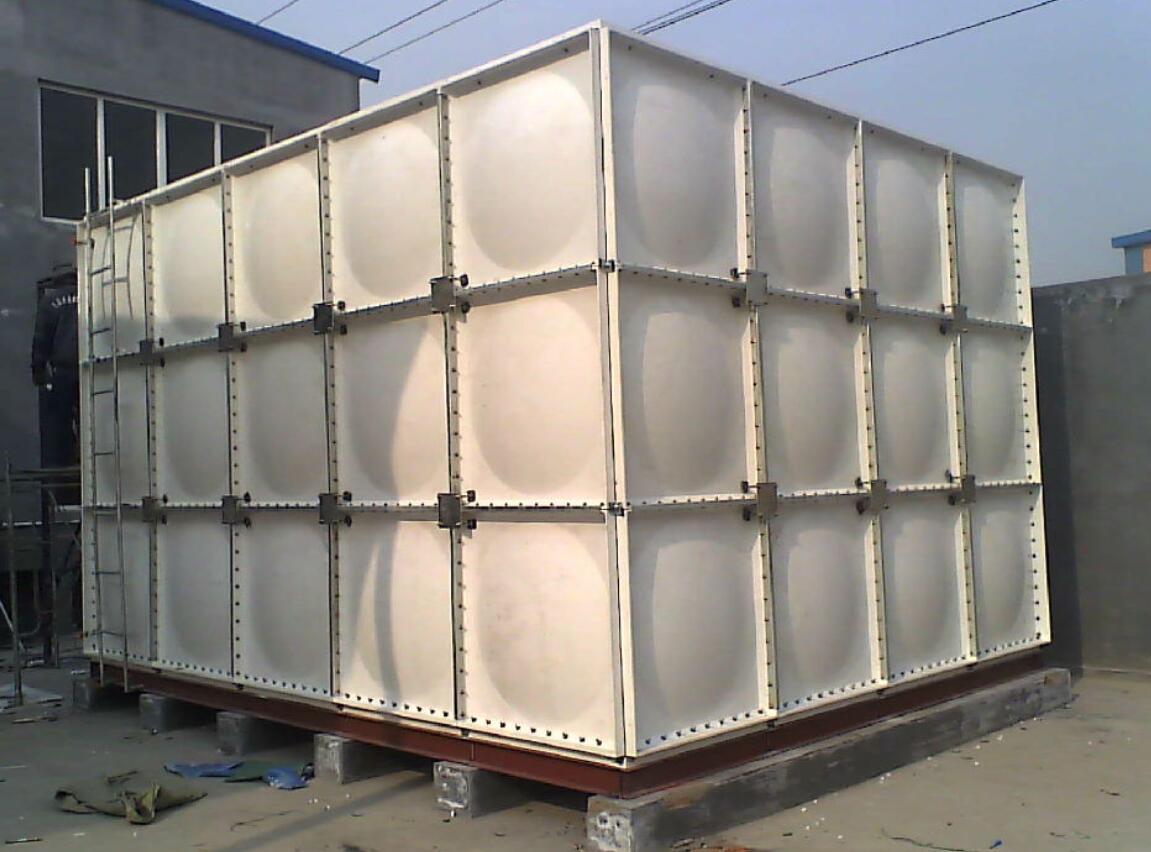
The manufacturing process allows for flexible, custom shapes to fit spatial constraints. The modular bolted assembly system enables the construction of large-capacity tanks on-site in confined spaces, solving the transportation dilemma of monolithic large vessels. Beijing Yuanhui successfully delivered a custom-shaped polygonal tank for a historical building renovation, seamlessly integrating it into the existing structure—a feat difficult for conventional tanks.
III. Scientific Selection and Industry Outlook
Selecting an FRP tank requires a comprehensive analysis of the stored medium, operating temperature, installation site, and budget. For potable water, certification of the resin's food-grade compliance is essential; for industrial use, chemical resistance charts of the resin are paramount. The technical consultation provided by Beijing Yuanhui FRP Co., Ltd. is rooted in this deep understanding of material properties and application scenarios.
Advancements in material science, such as nano-modified resins and smart tanks with integrated monitoring systems, are emerging. With their scientific material composition and comprehensive performance benefits, FRP water tanks are evolving from an "alternative choice" to the "preferred solution" in water storage, reliably supporting urban infrastructure and industrial development.