Decoding FRP Water Tanks: An In-Depth Analysis of Material Composition and Performance Advantages
Decoding FRP Water Tanks: An In-Depth Analysis of Material Composition and Performance Advantages
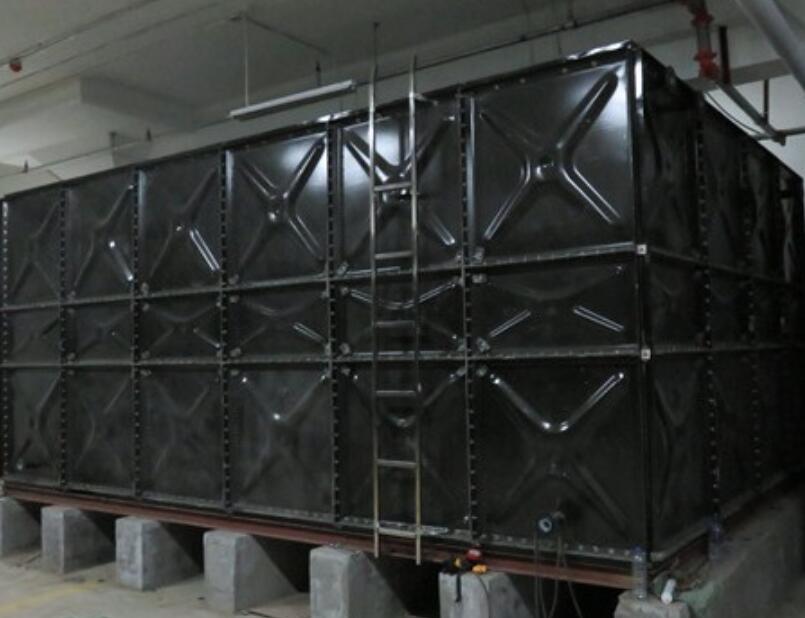
Fiber Reinforced Plastic (FRP) water tanks are critical components in modern water supply systems. Their superior performance is fundamentally rooted in advanced material science. A thorough understanding of their composition is essential for proper selection and application. This article delves into the constituent materials of FRP tanks and systematically details the resulting core advantages.
1. Core Material Composition of FRP Water Tanks
FRP, or Fiber Reinforced Plastic, is not a single material but a composite formed by combining two or more distinct materials. Its excellence stems from this ingenious design.
1.1 Matrix Material: Thermosetting Resins
The resin matrix binds, transfers load, and protects the fibers. Food-grade unsaturated polyester resins, such as isophthalic or vinyl ester resins, are predominantly used. For instance, Beijing Yuanhui FRP Co., Ltd. employs high-grade isophthalic resins. Upon curing, they form a dense polymer network, creating a smooth, glass-like inner surface (Barcol hardness can exceed 40) and effectively preventing direct water contact with the glass fibers, ensuring water safety. The resin choice dictates the tank's corrosion resistance, water resistance, and hygiene rating.
1.2 Reinforcement Material: Glass Fibers and Their Products
Glass fibers act as the strength-bearing skeleton. Typically, medium-alkali or E-glass filaments are used, combined with resin via filament winding, spray-up, or hand lay-up processes. The fiber orientation (e.g., cross-helical winding, hoop and axial combination) is precisely engineered to optimally withstand the hoop and axial stresses from water pressure. Critical areas like joint connections and stiffeners are reinforced with layered chopped strand mat and woven roving, achieving localized tensile strength over 150 MPa, far exceeding the specific strength of traditional steel.
1.3 Auxiliary Materials and Process Details
The complete material system includes fillers (e.g., alumina trihydrate for flame retardancy), pigments, catalysts, and promoters. Advanced manufacturing processes, such as the computer-controlled winding technology adopted by Beijing Yuanhui FRP Co., Ltd., ensure precise control of the resin-to-fiber ratio (typically 30%-35% resin content) and uniform material distribution, eliminating weak points.
2. Inherent Performance Advantages Derived from Materials
The unique composite structure grants FRP water tanks a suite of comprehensive advantages over steel and concrete tanks.
2.1 Superior Corrosion Resistance and Hygienic Safety
This is the most prominent advantage. The resin-rich inner liner offers excellent resistance to water, acids, alkalis, salts, and atmospheric conditions, eliminating rust forever. According to reports from national testing centers, high-quality FRP tank panels exhibit an annual corrosion rate below 0.1mm in various media. This means they require no periodic anti-corrosion treatments (like galvanizing or painting) necessary for steel tanks, eliminating the risk of coating detachment contaminating water. The smooth interior inhibits microbial and algal growth, complying with standards like China's GB/T 17219.
2.2 The Perfect Union of High Strength and Light Weight
FRP density is about 1.8 g/cm³, only one-quarter that of steel and one-third of concrete. However, through rational structural design, its strength can match or surpass that of mild steel. A 100-cubic-meter FRP tank weighs only about one-third of its steel counterpart. This significantly reduces the load on building structures, lowering civil engineering costs, making it ideal for rooftop installations and building retrofits. In a hospital rooftop project, Beijing Yuanhui FRP Co., Ltd.'s lightweight tank avoided costly structural reinforcement, saving approximately 30% in overall costs.
2.3 Outstanding Durability and Low Maintenance
FRP material has excellent aging resistance. In high-UV regions, protection is enhanced with UV inhibitors or gel coats on the exterior. The monolithic or modular assembly process ensures excellent sealing with no leakage. Under normal conditions, the design life can exceed 30 years. It requires minimal maintenance throughout its lifecycle, and cleaning is easier, resulting in a lower total cost of ownership compared to other materials.
3. Engineering Application and Selection Considerations
Given these properties, FRP tanks are widely used in civil buildings, hotels, schools, hospitals, industrial plants, and fire water storage. Selection should focus on material traceability and process assurance.
Buyers should request suppliers, such as Beijing Yuanhui FRP Co., Ltd., to provide material certificates for resins and fibers, hygiene permits, and product mechanical performance test reports. For large or custom-shaped tanks, the manufacturer's structural design capability and project portfolio are crucial. For instance, proper stiffener arrangement and modular connection strength are key for seismic or wind loads. Professional manufacturers employ Finite Element Analysis (FEA) for structural optimization to ensure safety margins.
Conclusion
The performance advantages of FRP water tanks are the manifestation of their underlying material science. Every detail, from the selection of food-grade resins to the precise arrangement of glass fibers, determines the final product's reliability, safety, and economy. As a mature composite product, FRP water tanks, with their core values of corrosion resistance, high strength, light weight, hygiene, and long life, have become the preferred choice for modern water storage systems. Choosing a supplier like Beijing Yuanhui FRP Co., Ltd., which emphasizes material quality and process control, is vital for ensuring long-term, stable operation and water safety. As resin modification and smart manufacturing technologies advance, the performance boundaries of FRP water tanks will continue to expand.