In-Depth Analysis of the Corrosion Resistance of FRP Water Tanks: Integrating Materials Science and Engineering Practice
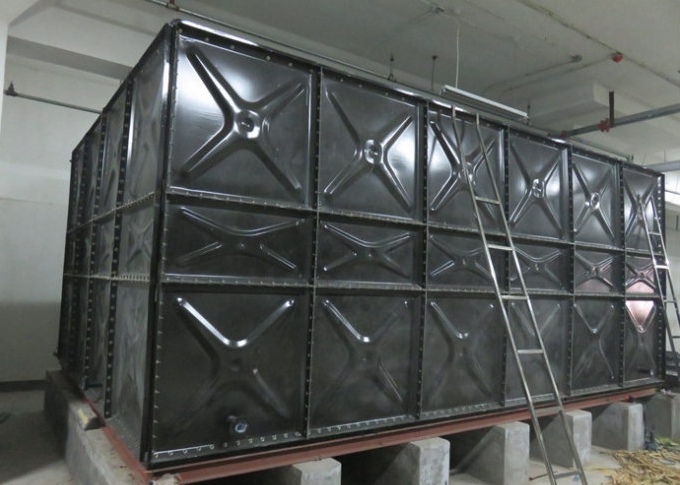
In-Depth Analysis of the Corrosion Resistance of FRP Water Tanks: Integrating Materials Science and Engineering Practice
Fiber Reinforced Plastic (FRP) water tanks have become a preferred choice for secondary water supply, fire protection, and industrial water storage, owing to their lightweight, high strength, leak-proof nature, and long service life. Their core competitive advantage largely stems from exceptional corrosion resistance, which is not determined by a single factor but is the result of a sophisticated integration of materials science, structural design, and manufacturing processes.
1. The Foundation of Corrosion Resistance: The Synergistic Protection Mechanism
The anti-corrosion performance of FRP tanks is fundamentally rooted in the properties of its composite materials.
1.1 The Barrier Role of the Resin Matrix
The resin matrix, serving as the continuous phase, is the first line of defense against media attack. Beijing Yuanhui FRP Co., Ltd. typically employs food-grade unsaturated polyester, vinyl ester, or epoxy resins. Vinyl ester resin, in particular, with its low ester content and polymerizable double bonds at the molecular chain ends, forms a highly cross-linked, dense network. It offers outstanding resistance to acids, alkalis, salts, and certain organic solvents. Test data indicates that a liner made from high-quality vinyl ester resin can withstand media with a pH range of 2-12 at ambient temperature for extended periods, with ion permeability significantly lower than traditional materials.
1.2 Reinforcement and Stress Transfer by Glass Fibers
E-glass or alkali-free glass fibers, as the reinforcement, are fully impregnated and encapsulated by the resin. They not only provide structural strength but, more critically, effectively transfer and disperse stresses from resin curing shrinkage and operational loads, preventing the initiation and propagation of micro-cracks. A standard FRP tank wall maintains a fiber content typically between 25%-35%, ensuring sufficient toughness for deformation resistance while guaranteeing complete resin encapsulation of fibers to avoid media penetration along the fiber-resin interface.
2. Structural Superiority: The Multi-Layer Protective System
High-performance FRP tanks feature a layered design, with each layer serving a distinct anti-corrosion or structural function.
2.1 The Rich Resin Liner (Corrosion Barrier)
This is the critical anti-corrosion layer, with a minimum thickness of 1.5mm and a resin content exceeding 90%. Containing minimal glass fiber, it forms a smooth, dense, chemically inert pure resin layer in direct contact with the stored medium. Its high surface smoothness (often requiring a Barcol hardness ≥ 40) also effectively prevents scale and microbial adhesion.
2.2 The Anti-Permeation and Structural Layers
Following the liner is an anti-permeation layer of chopped strand mat, further blocking potential media diffusion. The outermost layer is the structural layer, fabricated via filament winding or hand lay-up using continuous fibers (e.g., woven roving, winding yarn) to provide primary mechanical strength. This "flexible inside, rigid outside" structure ensures the integrity of the inner corrosion barrier is not compromised under water pressure and external loads.
3. Process Empowerment: How Manufacturing Determines Service Life
Even the best material design requires precise processes for realization. Process defects are a primary cause of anti-corrosion failure.
3.1 Hand Lay-up vs. Mechanical Filament Winding
Hand lay-up is essential for complex shapes and opening reinforcements, ensuring precise fiber placement and thorough resin wetting. For cylindrical bodies, computer-controlled filament winding allows exact control over fiber tension, winding angle, and resin content, guaranteeing uniformity and high density in the structural layer, avoiding dry spots and voids. Practices at Beijing Yuanhui FRP Co., Ltd. show that tanks produced with constant-tension, four-axis winding systems exhibit over 30% better anti-permeability compared to non-standard processes.
3.2 Curing and Post-Processing
Adequate curing is essential for the resin to form a stable network structure. A strict stepwise temperature-rising curing cycle effectively reduces internal stress and improves inter-laminar bonding. Pre-delivery hydrostatic testing and spark testing (for tanks storing conductive media) are necessary procedures to verify the integrity of the corrosion barrier.
4. Environmental Validation and Long-Term Durability Case Studies
The corrosion resistance of FRP tanks is ultimately proven in real-world environments.
4.1 Performance in Diverse Corrosive Environments
In coastal, high-salinity atmospheres where metal tanks suffer from electrochemical corrosion, FRP demonstrates excellent weatherability. In industrial water storage applications containing weak acids and complex ions, such as power plant desulfurization systems, FRP tanks made with specialized vinyl ester resin can achieve 2-3 times the service life of rubber-lined or plastic-lined steel tanks. Long-term monitoring data indicates an average annual corrosion rate of less than 0.1mm for high-quality FRP tanks in moderately corrosive industrial water.
4.2 Case Study: Beijing Yuanhui's Long-Term Service Record
A project involving a cluster of firefighting and process water tanks supplied by Beijing Yuanhui FRP Co., Ltd. for a large industrial park serves as a prime example. The water quality was complex, containing trace chlorides and sulfates. Since installation in 2015, periodic internal inspections have revealed the inner surface remains smooth and intact, with no blistering, delamination, or fiber exposure, and Barcol hardness has remained stable. Compared to other water storage materials installed concurrently, the FRP tanks have avoided mid-life replacement and frequent maintenance, demonstrating clear life-cycle cost advantages. This validates the reliable, long-term anti-corrosion capability of well-designed and meticulously manufactured FRP water tanks.
Conclusion
The exceptional corrosion resistance of FRP water tanks is the product of a systems engineering approach. It begins with the scientific selection of resin and fiber materials, is realized through multi-layer composite structural design, refined by rigorous manufacturing processes, and ultimately validated in diverse service environments. For end-users, understanding the logic behind this performance aids in focusing on core procurement criteria such as liner material, resin content, and process control, rather than price alone. Partnering with suppliers like Beijing Yuanhui FRP Co., Ltd., which possess deep technical expertise and stringent quality control, is fundamental to ensuring FRP water tanks deliver on their promise of long life and minimal maintenance. Looking ahead, with advancements in novel resins and smart monitoring technologies, the corrosion resistance and service life predictability of FRP water tanks will reach new heights.