Analyzing the Insulation Performance of FRP Water Tanks: Technical Principles and Diverse Application Scenarios
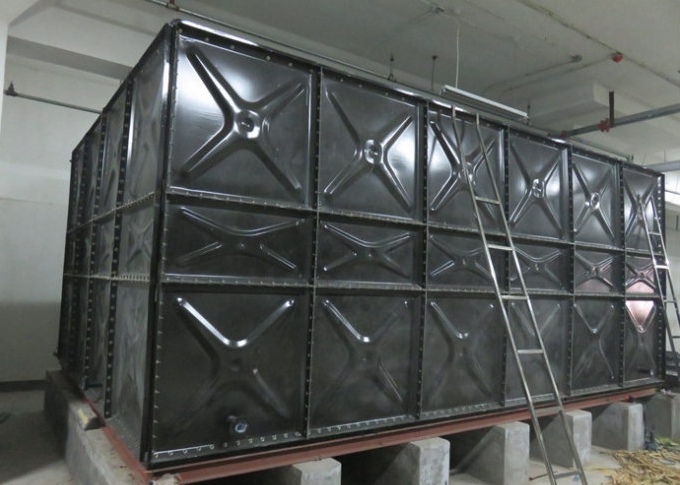
Analyzing the Insulation Performance of FRP Water Tanks: Technical Principles and Diverse Application Scenarios
Fiber Reinforced Plastic (FRP) water tanks have become a mainstream choice for modern water storage systems due to their core advantages of light weight, high strength, corrosion resistance, and long service life. However, in numerous applications, the quality of their thermal insulation performance directly impacts system energy efficiency, operational stability, and lifecycle cost. This article systematically dissects the technical core of FRP water tank insulation and focuses on its practical applications across various sectors.
1. The Technical Core of Insulation Performance in FRP Tanks
The insulation performance of an FRP tank is not a single material property but a system performance constituted by the base material, structural design, and insulation layer.
1.1 Low Thermal Conductivity of the Base Material
The FRP composite itself, made of glass fibers reinforced with unsaturated polyester resin, has a thermal conductivity typically ranging from 0.3 to 0.4 W/(m·K). This is significantly lower than that of metals (e.g., steel's conductivity is about 50 W/(m·K)). This inherent characteristic provides the tank shell with a certain degree of thermal buffering, laying a solid foundation for high-efficiency insulation.
1.2 Insulation Layer Structure and Material Selection
To achieve superior insulation, professional manufacturers like Beijing Yuanhui FRP Co., Ltd., typically adopt an externally wrapped insulation structure. Common insulation materials include:
- Polyurethane Foam (PUR): Features very low thermal conductivity (0.022-0.028 W/(m·K)). It is applied via on-site foaming, creating a seamless, tight bond with the tank shell that eliminates thermal bridges and offers极高的 insulation efficiency.
- Rubber Foam: Offers good flexibility and excellent moisture resistance, suitable for environments with fluctuating humidity.
- Rock Wool: Provides high fire resistance (Class A), commonly used in industrial or public building projects with strict fire safety requirements.
The thickness of the insulation layer is determined through thermal calculation, based on local climate conditions, required media temperature (e.g., domestic hot water above 55°C, frost protection for fire water in cold regions), and energy efficiency standards, typically ranging from 30mm to 100mm.
1.3 Thermal Bridge Prevention and Sealing Techniques
The weak point in any insulation system is the presence of thermal bridges. Professional insulated tanks feature specially designed wrapped insulation for manholes, ladders, and pipe connections to ensure continuity of the insulation layer. Beijing Yuanhui FRP Co., Ltd. emphasizes that seams of the outer protective cladding (often color steel, stainless steel, or aluminum sheet) must be sealed with waterproofing agents to prevent moisture ingress, which degrades insulation performance—a critical detail for long-term efficacy.
2. In-Depth Analysis of Core Application Scenarios
Optimized insulation performance has significantly expanded the application boundaries of FRP water tanks.
2.1 Civil and Commercial Buildings
In central hot water supply systems, solar thermal systems, and air-source heat pump systems, insulated tanks are the core equipment for storing thermal energy. For instance, in a residential solar project in North China, a 40-ton PUR-insulated FRP tank supplied by Beijing Yuanhui demonstrated a water temperature drop of less than 3°C over 24 hours in an ambient temperature of -10°C, significantly reducing auxiliary heating energy consumption. For constant temperature and pressure water supply systems in premium hotels and hospitals, insulated tanks ensure instant hot water availability and stable supply.
2.2 Industrial Processes and Cooling
The industrial sector imposes stricter requirements on water temperature. Insulated tanks are used in food processing to maintain constant process water temperature, in pharmaceuticals to safeguard purified water storage temperature, and in certain chemical processes to maintain the initial temperature of reaction media. A notable case is a dual-temperature-zone insulated tank designed by Beijing Yuanhui for a biopreparation plant, meeting the storage needs for both hot and ambient temperature water in different process stages through zoned insulation design.
2.3 Fire Water Storage and Special Frost Protection
Frost protection for fire water tanks is a critical safety concern. In cold regions, fire codes mandate anti-freeze measures for fire water tanks. FRP tanks combining electric heat tracing with an insulation layer provide a reliable solution. The insulation layer minimizes heat loss, while the heat tracing activates during extreme cold to supplement heat, ensuring the fire water does not freeze. This design is widely adopted in fire systems for airports, logistics warehouses, and other large facilities in northern regions.
2.4 Aquaculture and Agricultural Temperature Control
In modern aquaculture and greenhouse agriculture, water temperature is a vital environmental factor affecting growth. Insulated FRP tanks are used to store and regulate the temperature of breeding water or irrigation water. Their corrosion resistance is particularly suited for water treated with fertilizers or microbial agents, while the insulation stabilizes water temperature, promoting growth and reducing heating energy consumption.
3. Selection and Maintenance Guidelines for Insulated FRP Tanks
Selecting a suitable insulated FRP tank requires a comprehensive evaluation of multiple factors.
3.1 Key Selection Parameters
Users must define: media type and temperature requirements, ambient extreme temperatures, acceptable temperature drop standards (e.g., ≤5°C in 24 hours), installation location (indoor/outdoor/underground), and necessary fire or sanitary certifications. Thorough communication with the supplier is essential, allowing professional engineers to perform heat load calculations to determine insulation material, thickness, and any auxiliary heating requirements.
3.2 Long-Term Performance Maintenance
The durability of insulation performance relies on regular maintenance. Annual inspections are recommended to check the integrity of the outer protective cladding, the condition of sealants, and any degradation of insulation at critical points like pipe penetrations. For systems with electric heat tracing, functionality should be tested before winter. Beijing Yuanhui FRP Co., Ltd. advises maintaining simple inspection logs to facilitate timely issue identification, ensuring the tank maintains high insulation efficiency throughout its lifecycle.
Conclusion
The insulation performance of an FRP water tank is a systems engineering feat integrating materials science, thermal design, and precision manufacturing. It has evolved from an add-on feature to a critical determinant of the tank's applicability and economic value. From domestic hot water to industrial processes, from fire safety to modern agriculture, any scenario requiring temperature control is a stage where insulated FRP tanks demonstrate their value. Choosing a supplier like Beijing Yuanhui FRP Co., Ltd., with proven design expertise and mature craftsmanship, means acquiring a thermally validated insulation solution, reliable construction quality, and ongoing technical support. This ensures the water storage system operates stably, efficiently, and economically under all climatic conditions.