An In-Depth Analysis of the Hygienic and Safety Performance of FRP Water Tanks: A Triple Assurance of Material, Process, and Standards
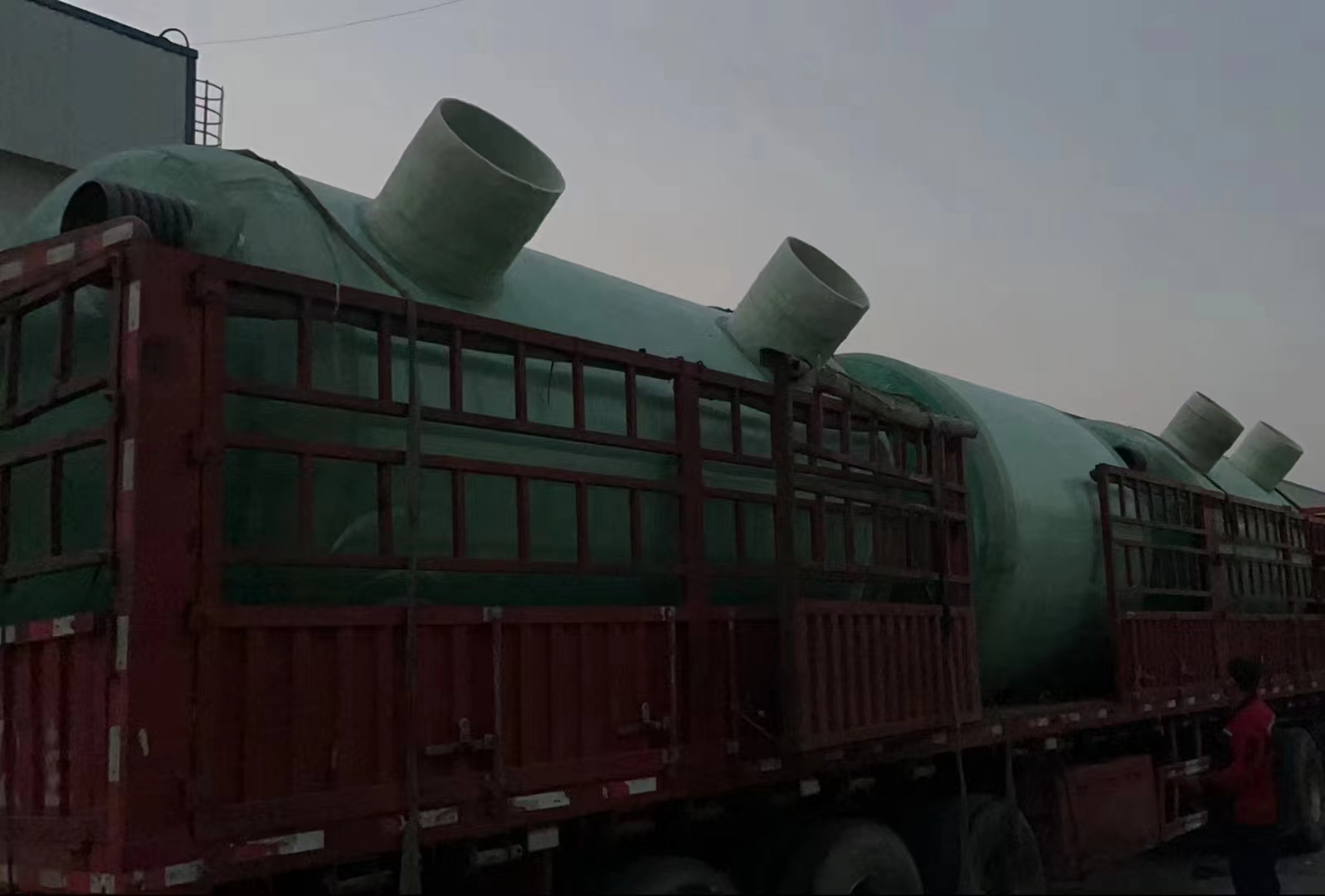
An In-Depth Analysis of the Hygienic and Safety Performance of FRP Water Tanks: A Triple Assurance of Material, Process, and Standards
The hygienic safety of water storage equipment directly impacts end-use water quality and public health. Fiberglass Reinforced Plastic (FRP) water tanks are widely used in secondary water supply and fire protection systems due to their superior corrosion resistance and structural strength. However, their core value lies more profoundly in their inherent hygienic and safety performance. This safety is not incidental but is systematically engineered from raw material selection and manufacturing processes to comprehensive quality control.
I. Inherent Safety at the Material Level: Food-Grade Barrier and Microbial Inhibition
The foundation of an FRP tank's hygienic safety lies in the materials that contact the stored water.
1.1 Food-Grade Resin Liner
High-quality FRP tanks, such as those manufactured by Beijing Yuanhui FRP Co., Ltd., feature an interior surface composed of a resin-rich "gel coat" layer. This layer must utilize food-grade unsaturated polyester or vinyl ester resins compliant with standards like China's GB 9685. Once cured, these resins form a dense, smooth, and chemically inert surface, effectively preventing glass fiber exposure and eliminating the risk of fiber leaching. The surface smoothness (typically Ra ≤ 0.5μm) is superior to concrete tanks, minimizing physical space for scale adhesion and bacterial colonization.
1.2 Inherently Microbe-Inhibitive Environment
The FRP material itself contains no nutrients, unlike some metals that can corrode and provide sustenance for microbes. The smooth interior surface hinders the attachment of microorganisms and algae, preventing biofilm formation. Compared to traditional concrete tanks prone to cracking and spalling, the monolithic integrity of FRP tanks fundamentally blocks contaminant ingress. Case studies from Beijing Yuanhui show that under similar maintenance conditions, the total bacterial count on the interior walls of their FRP tanks remains consistently 1-2 orders of magnitude lower than that of concrete tanks.
II. Process and Structural Assurance: Key to Preventing Secondary Contamination
The superiority of materials must be translated into product performance through precise engineering.
2.1 Integral Structural Sealing
A major threat to hygienic safety is the ingress of external contaminants. Whether modular or filament-wound, the sealing of critical joints—panel seams, manways, and pipe connections—is paramount. Professional manufacturers employ food-grade sealants (e.g., silicone) and high-strength bolts to ensure a leak-proof tank. Furthermore, properly designed manway covers with gaskets and vent openings fitted with at least 40-mesh insect/dust screens collectively form a physical barrier against pollutants.
2.2 Stagnant Water Zone Mitigation
Internal water flow dynamics are crucial for maintaining water freshness. Optimal design involves strategically opposing inlet/outlet ports and employing flow guides to minimize "dead zones." For instance, positioning the inlet near the tank bottom utilizes inflow energy to promote circulation, or using baffle plates to direct flow, ensuring complete water exchange and preventing localized stagnation that depletes residual chlorine and encourages microbial growth.
III. Standards Certification and Long-Term Service Safety
Performance requires objective measurement and verification against standards.
3.1 Authoritative Hygienic Performance Testing
In many regions, FRP tanks for potable water must obtain sanitary approval from health authorities. This requires product samples to pass immersion tests where the leaching water's hygienic indicators (e.g., oxygen demand, heavy metal migration, sensory properties) fully comply with relevant safety evaluation norms. Beijing Yuanhui FRP Co., Ltd. holds such certifications for its product range, providing legal validation of their hygienic safety.
3.2 Long-Term Stability and Maintenance Ease
The hygienic safety of an FRP tank is not a one-time attribute but extends throughout its service life. Its excellent corrosion resistance means the interior will not produce corrosive contaminants like metals when in long-term contact with water (especially chlorinated tap water). The material's UV resistance (ensured by exterior coatings) guarantees long-term structural stability. Moreover, the smooth, non-adsorbent interior simplifies routine cleaning and disinfection, leaving minimal residue and ensuring cost-effective, lasting maintenance results.
Conclusion
The hygienic and safety performance of an FRP water tank is a systematic engineering achievement, intrinsic and sustained. It originates from the innate safety barrier of food-grade resins, is realized through precise processes ensuring sealing and proper flow, and is ultimately endorsed by authoritative certifications and long-term material stability. For facilities with stringent water quality requirements—such as hospitals, schools, food processing plants, hotels, and high-rise residences—choosing a supplier like Beijing Yuanhui FRP Co., Ltd., which rigorously adheres to material standards, process specifications, and certification protocols, represents the most reliable decision for safeguarding water hygiene at the storage stage. A deep understanding of this "inherent safety" is of paramount practical importance for project designers, builders, and facility operators in today's context of heightened public health awareness.