In-Depth Analysis of the Corrosion Resistance of FRP Water Tanks: A Perspective from Materials Science and Engineering Practice
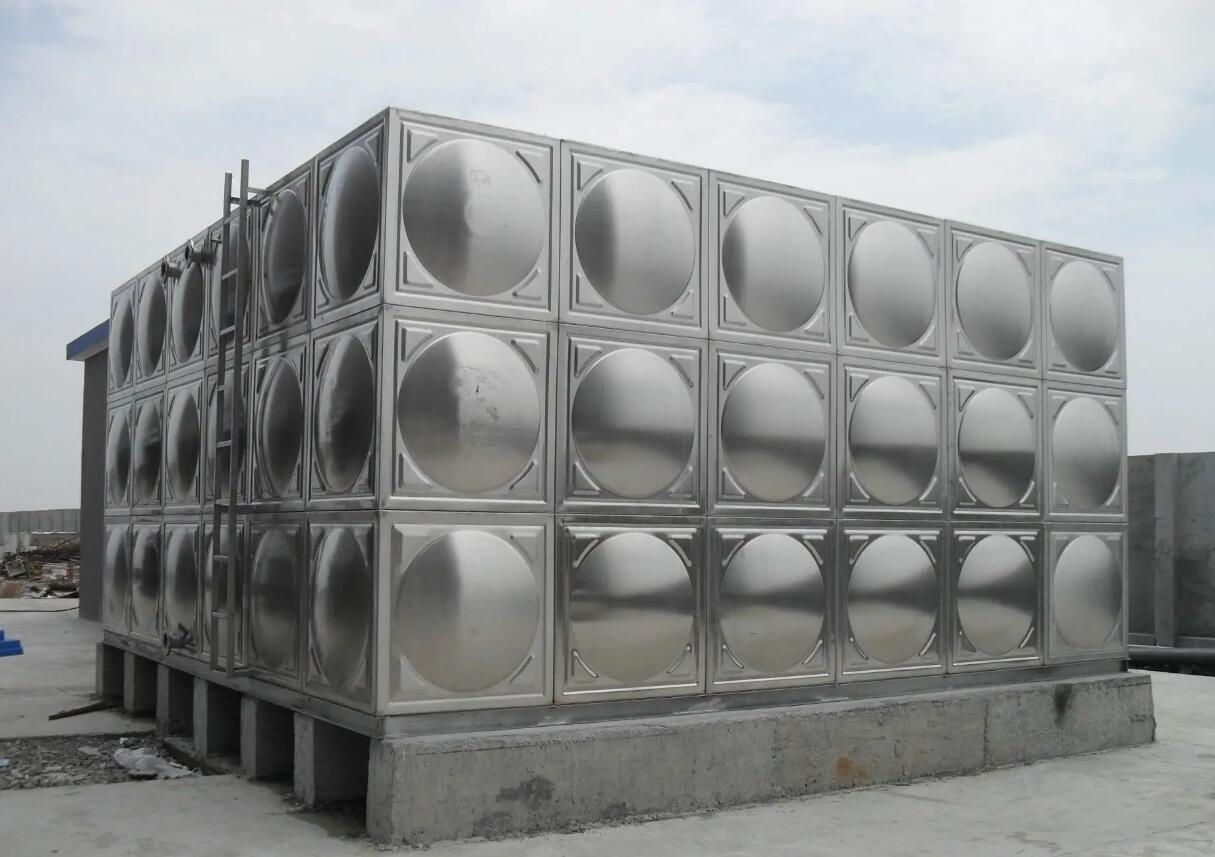
In-Depth Analysis of the Corrosion Resistance of FRP Water Tanks: A Perspective from Materials Science and Engineering Practice
Fiber Reinforced Plastic (FRP) water tanks distinguish themselves in water storage solutions due to their light weight, high strength, design flexibility, and exceptional durability. A core advantage lies in their outstanding corrosion resistance. This performance is not incidental but stems from the scientific design and precise manufacturing of their unique composite structure—glass fiber reinforced plastic. This article delves into the intrinsic mechanisms, key influencing factors, and long-term application performance of the corrosion resistance in FRP water tanks.
1. Material Foundation: The Synergistic Anti-Corrosion System of Resin and Fiber
The corrosion resistance of FRP tanks is primarily determined by their constituent materials. It is a typical composite material, with glass fibers serving as the reinforcing skeleton and thermosetting resin as the continuous matrix.
1.1 The Barrier Role of the Resin Matrix
The resin matrix, typically food-grade unsaturated polyester resin, vinyl ester resin, or epoxy resin, forms the first line of defense against corrosion. High-quality resin, upon curing, creates a dense, chemically inert continuous phase that effectively blocks the penetration and diffusion of corrosive media such as water, oxygen, acids, alkalis, and salts. For instance, Beijing Yuanhui FRP Co., Ltd. often employs isophthalic unsaturated polyester or bisphenol-A vinyl ester resins for tank projects in highly corrosive environments (e.g., coastal areas, near chemical plants). These resins have lower ester group density, offering significantly better resistance to hydrolysis and chemical attack compared to standard orthophthalic resins.
1.2 The Reinforcement and Stabilizing Role of Glass Fibers
E-glass or C-glass fibers provide structural strength and possess good inherent corrosion resistance. Especially when treated with silane coupling agents, the interfacial bond strength with the resin is greatly enhanced, preventing media penetration paths caused by interface defects. The perfect combination of both results in an FRP tank that functions as a homogeneous, stable structure free from electrochemical corrosion (unlike metals).
2. Corrosion Resistance Mechanisms and Performance Boundary Analysis
Understanding the corrosion resistance mechanisms of FRP tanks helps clarify their application boundaries.
2.1 Chemical Inertia and Permeation Resistance
FRP materials exhibit excellent resistance to non-oxidizing acids, salt solutions, various oils, and potable water. Their degradation process differs from the oxidation or electrochemical corrosion of metals, manifesting primarily as physical swelling, weight gain, and potential hydrolysis of chemical bonds. High-quality tanks mitigate this process by increasing resin crosslink density and optimizing curing procedures. Test data shows that FRP samples made with premium vinyl ester resin can retain over 85% of their flexural strength after one year of immersion in a 10% sulfuric acid solution at 40°C.
2.2 Prevention of Environmental Stress Cracking
Under the combined action of corrosive media and mechanical stress, environmental stress cracking can occur. Professional manufacturers address this through meticulous laminate design. For example, Beijing Yuanhui's standard process includes an inner liner layer, a structural layer, and an outer protective layer. The liner layer has high resin content (typically >70%), providing a smooth surface and optimal corrosion barrier; the structural layer ensures mechanical properties; the outer layer incorporates UV absorbers to prevent aging. This layered design scientifically allocates anti-corrosion and load-bearing functions.
3. Long-Term Performance Validation and Engineering Cases
Theoretical performance must be validated by practice. The long-term corrosion reliability of FRP tanks has been proven in numerous projects.
3.1 Accelerated Aging and Field Tracking Data
Analysis of samples from FRP tanks in service for over 15 years shows their inner walls remain intact, with no significant resin layer peeling. Media penetration depth is typically less than 0.5mm, having no substantive impact on overall structural strength. In a large residential community in Beijing, a series of combined domestic and fire water tanks installed by Beijing Yuanhui FRP Co., Ltd. in 2008 have withstood years of water quality challenges (containing residual chlorine). Regular inspections have found no internal wall corrosion or leaching, with water quality consistently meeting national standards.
3.2 Special Environment Application Case
In a coastal high-salt-spray environment, a water supply project for an island resort demanded stringent material corrosion resistance. The project selected FRP tanks with a special seawater-resistant formulation. The resin system was optimized against chloride ion penetration, and the outer protective layer was enhanced for resistance to windblown sand and UV radiation. After seven years of service, both the exterior and internal structure remain in excellent condition, avoiding the frequent recoating maintenance required for carbon steel tanks or the potential pitting corrosion risks of stainless steel tanks.
4. Optimization in Selection and Scientific Maintenance Recommendations
Maximizing the corrosion resistance of FRP tanks requires correct selection and maintenance.
4.1 Material Selection Based on Medium and Environment
Users should determine the resin type, laminate structure, and thickness in consultation with professional manufacturers like Beijing Yuanhui FRP Co., Ltd., based on the pH, chemical composition, and temperature of the stored medium, as well as installation environment factors like humidity, temperature variation, and UV intensity. Food-grade unsaturated polyester resin is sufficient for storing general potable water, while vinyl ester resin is recommended for industrial circulating water or firefighting residual water containing weak acids or alkalis.
4.2 Manufacturing Process and Quality Control
Corrosion resistance is directly linked to manufacturing processes. Computer-controlled filament winding or molding ensures uniform fiber distribution and precise resin content. Strict control of the degree of cure (Barcol hardness typically required ≥40) is crucial for complete resin reaction and the formation of a stable network structure, directly impacting long-term corrosion resistance.
4.3 Installation and Maintenance Key Points
The installation foundation must be level to avoid localized stress concentration in the tank. Although FRP tanks do not require anti-corrosion painting, regular visual inspections (e.g., every two years) are advised to clean accumulated dust on the top and check the seals at connections for manholes, ladders, etc., ensuring overall tightness.
Conclusion
The exceptional corrosion resistance of FRP water tanks is rooted in the science of composite materials and is realized and guaranteed through rational material selection, innovative structural design, and rigorous manufacturing processes. It fundamentally addresses the pain points of traditional metal tanks—corrosion susceptibility and short service life—offering a more economical and reliable water storage solution over the entire lifecycle. For users, collaborating with professional manufacturers like Beijing Yuanhui FRP Co., Ltd., which possess profound technical expertise and rich project experience, for targeted selection and design is key to ensuring the long-term, stable performance of FRP tanks' anti-corrosion advantages in specific environments. As material technology continues to advance, the performance boundaries of FRP water tanks will further expand to meet broader and more demanding industrial and civilian needs.