An In-Depth Analysis of the Hygienic and Safety Performance of FRP Water Tanks: From Material Science to Engineering Practice
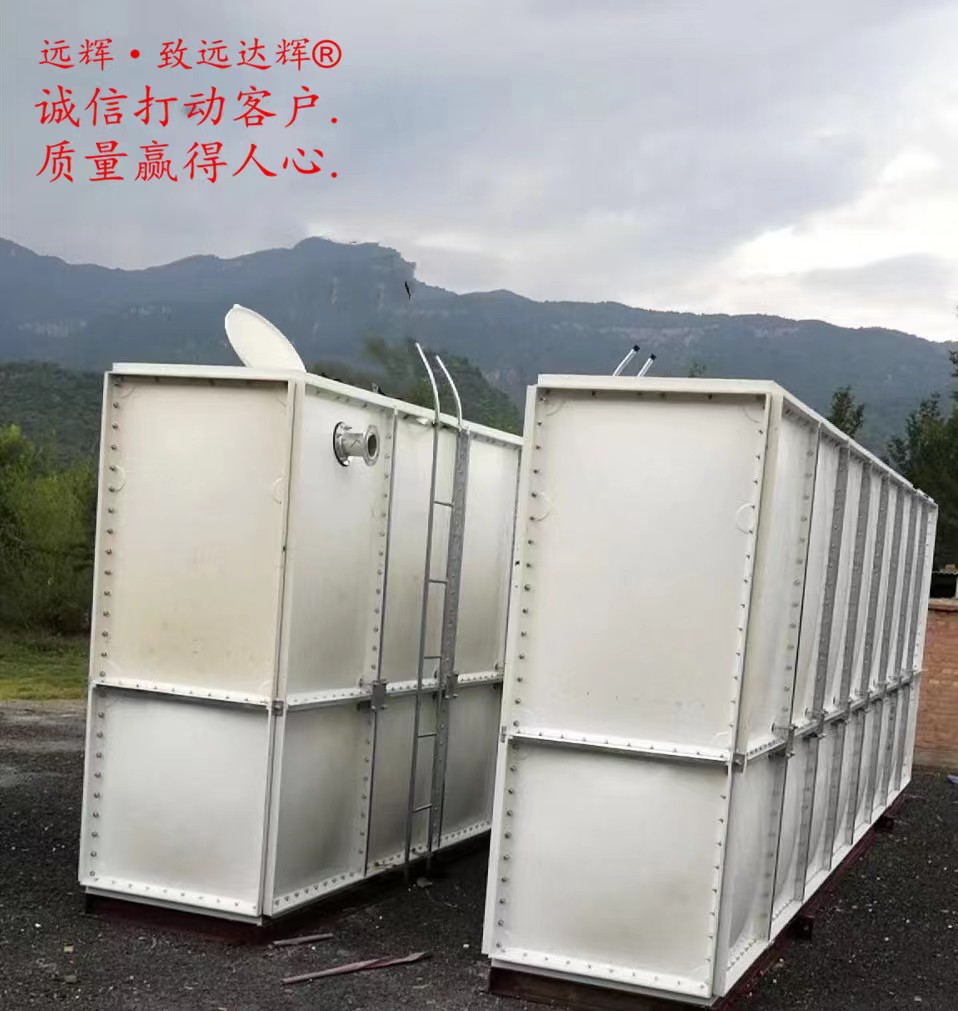
An In-Depth Analysis of the Hygienic and Safety Performance of FRP Water Tanks: From Material Science to Engineering Practice
The hygienic safety of water storage equipment is a core issue concerning public health and drinking water security. Fiberglass Reinforced Plastic (FRP) water tanks have established a significant position in modern building water supply, fire protection reserves, and the food industry, owing to their unique material properties and mature manufacturing processes. Their hygienic and safety performance is not determined by a single factor but is the result of the combined effects of materials, craftsmanship, standards, and maintenance.
1. Inertness and Stability of the Material Matrix: The Foundation of Safety
The hygienic safety of FRP tanks is fundamentally rooted in the chemical and physical properties of their constituent materials. The tank body is formed by filament winding using food-grade resin and alkali-free glass fiber.
1.1 The Food-Grade Resin Liner Barrier
Companies like Beijing Yuanhui FRP Co., Ltd. utilize isophthalic or vinyl ester unsaturated polyester resins that comply with standards equivalent to GB/T 17219 (Safety Evaluation Standard for Equipment and Protective Materials in Drinking Water Transmission and Distribution Systems) for the inner liner. Once cured, this resin forms a dense, smooth, and continuous surface, characterized by chemical inertness. Unlike metals prone to ion leaching or concrete susceptible to calcium/magnesium dissolution, the cured resin barely reacts with acids, alkalis, or salts in water. This effectively prevents the migration of heavy metal ions (e.g., lead, cadmium) or harmful organic compounds into the stored water. Third-party test reports confirm that water quality after immersion meets all requirements of drinking water standards, verifying the intrinsic safety of the material.
1.2 Structural Reinforcement and Zero Leaching from Glass Fibers
The alkali-free glass fibers, serving as reinforcement, are fully encapsulated within the resin matrix and have no direct contact with the stored water. This structure ensures fibers cannot shed or leach, eliminating contamination risks associated with harmful fibers like asbestos. The entire tank becomes a homogeneous, stable composite structure, isolating contamination sources from the outset.
2. Manufacturing Process and Structural Design: Eliminating Sanitary Dead Zones and Microbial Growth
Excellent materials require scientific processes and design to achieve optimal hygienic results. FRP tank manufacturing specifically addresses common sanitary hazards in water storage.
2.1 Monolithic Construction and Seamless Interior
Through computer-controlled filament winding, large tanks can be manufactured monolithically or with minimal panel拼接. The interior wall is mirror-smooth with an extremely low coefficient of friction (typically below 0.0084), resisting the adhesion of scale, algae, or biofilm. In contrast, weld seams in traditional steel tanks and rough surfaces in concrete tanks easily become breeding grounds for bacteria and microbes. The smooth interior also facilitates cleaning, significantly reducing long-term maintenance difficulty and cost.
2.2 Scientific Venting and Sealing Design
A hygienic FRP tank is not entirely sealed. The top is equipped with a multi-layer air filter assembly with insect screens, ensuring air circulation and pressure balance while effectively blocking pollutants like dust, insects, and airborne particles. The manhole cover is tightly sealed and raised above the roof panel to prevent backflow of contaminated water. These detailed designs collectively maintain a clean microenvironment inside the tank, inhibiting the excessive proliferation of anaerobic or aerobic bacteria.
3. Long-Term Performance Stability and Maintenance Essentials
The durability of hygienic safety performance is crucial in evaluating FRP tanks. This stability is reflected in both corrosion resistance and anti-aging properties.
3.1 Superior Corrosion Resistance
FRP materials exhibit excellent resistance to water, acids, alkalis, and salts. They do not undergo electrochemical corrosion or rusting like metal tanks, avoiding water contamination by corrosion products and the risk of tank leakage. For instance, in coastal high-salinity environments or specific industrial atmospheres where stainless steel might suffer pitting or stress corrosion cracking, FRP tanks maintain stable performance, ensuring long-term water safety.
3.2 Anti-Aging and Strength Retention
Adding UV absorbers to the liner, using anti-aging resins, or applying a gel coat surface layer can effectively delay photo-oxidative aging for outdoor use. Engineering cases from Beijing Yuanhui show that tanks produced in strict accordance with standards like JC/T 658.1-2007 can maintain their hygienic performance and structural integrity for over 15 years with normal use and maintenance. Regular professional maintenance, including annual inspection and cleaning, checking seals, and cleaning filters, is indispensable for ensuring lifelong hygienic safety.
4. Standards Compliance and Application Case Validation
The hygienic safety of FRP tanks is not merely theoretical but is backed by stringent international and national standards and validated through extensive practical applications.
In China, high-quality FRP tanks must obtain a Water-Related Product Hygiene License from health authorities, with material testing complying with GB/T 17219. Manufacturing processes must follow industry standards like JC/T 658. For example, in a project where Beijing Yuanhui supplied a 200-ton sterile water storage tank for a large dairy plant, food-grade standards were strictly enforced from material selection and process control to installation and acceptance. This project has operated stably for over 8 years, with regular water quality sampling consistently outperforming national standards, demonstrating the high reliability of FRP tanks in food-grade applications.
In European and American markets, FRP tanks generally require certifications like NSF/ANSI 61 (Drinking Water System Components – Health Effects), which imposes extremely strict limits on material leachables. Products achieving such certifications signify that their hygienic safety performance meets advanced international levels.
Conclusion
The hygienic and safety performance of an FRP water tank is a systematic engineering achievement. It originates from the intrinsic safety provided by the composite of food-grade resin and glass fiber, benefits from process designs enabling monolithic construction and smooth interiors, relies on long-term stability against corrosion and aging, and is ultimately proven by rigorous standard systems and successful application cases. Choosing an FRP tank is essentially selecting a scientifically validated, reliable solution for hygienic water storage. For end-users, alongside focusing on the product itself, partnering with qualified suppliers like Beijing Yuanhui FRP Co., Ltd., which possess comprehensive certifications, strict quality control, and rich project experience, and establishing a scientific maintenance regime are key to ensuring the full lifecycle hygienic safety of FRP water tanks.