A Comprehensive Analysis of the FRP Water Tank Manufacturing Process: From Mold to Finished Product
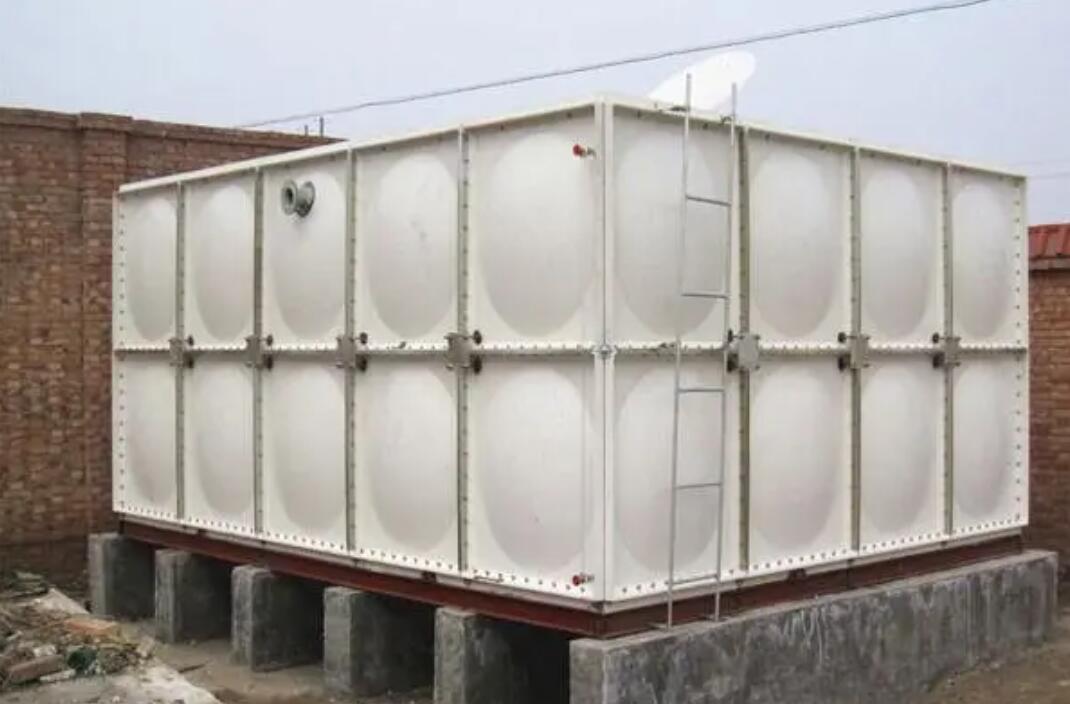
A Comprehensive Analysis of the FRP Water Tank Manufacturing Process: From Mold to Finished Product
Fiberglass Reinforced Plastic (FRP) water tanks are a core component in modern water supply, firefighting, and industrial storage systems, prized for their superior corrosion resistance, high strength-to-weight ratio, and long service life. The reliability of these tanks is directly dependent on the precision and rigor of their manufacturing process. This article provides a detailed breakdown of the complete production workflow, from raw materials to the finished product, highlighting the technical essence and critical quality control points at each stage.
1. Production Preparation and Mold Treatment: The Foundation of Quality
The creation of a qualified FRP tank begins with an excellent mold. The mold's accuracy, surface finish, and stability directly determine the dimensional tolerances and internal surface quality of the final product. Companies like Beijing Yuanhui FRP Co., Ltd. typically use high-precision CNC machining centers to create a male mold (plug), from which the production-grade female FRP mold is replicated. Mold treatment is a critical pre-process involving at least five meticulous steps: cleaning, repairing, fine sanding, application of a release agent (such as Polyvinyl Alcohol (PVA) or semi-permanent mold release wax), and polishing. The uniform application of the release agent is vital, ensuring not only easy demolding but also achieving the Class A surface finish required for food-grade resin linings, effectively preventing microbial growth.
1.1 Raw Material Inspection and Cutting
Concurrently with mold preparation, raw materials undergo strict incoming inspection. Key materials include: unsaturated polyester resins (e.g., isophthalic, vinyl ester for corrosion barriers), alkali-free glass fiber rovings and fabrics (e.g., surface veil, chopped strand mat, woven roving), curing agent (Methyl Ethyl Ketone Peroxide - MEKP), and promoter (Cobalt Octoate). According to Beijing Yuanhui's quality standards, resin viscosity, acid value, gel time, as well as glass fiber moisture content and wet-out speed are mandatory inspection items. Based on the designed mechanical properties of the tank panels (typically requiring flexural strength ≥150MPa, Barcol hardness ≥40), Computer-Aided Design (CAD) is used for nesting, and CNC cutting machines precisely cut the reinforcement materials to ensure fiber orientation matches stress directions and optimize material yield.
2. Hand Lay-up and Spray-up Molding: The Core Manufacturing Stage
The primary molding process for FRP tank panels is contact molding, specifically hand lay-up and spray-up. Hand lay-up offers better control for complex panels with numerous stiffeners, while spray-up is more efficient for large, flat sections.
2.1 Gel Coat and Structural Lamination
The process starts by spraying or brushing a layer of food-grade gel coat resin, approximately 0.3-0.5mm thick, onto the prepared mold. This layer, once cured, forms a dense, smooth, resin-rich surface, serving as the first barrier against water and corrosion. After the gel coat reaches tack-free state, the structural lamination begins. Following the "resin-fiber-resin" wet-out principle, layers of surface veil, chopped strand mat, and woven roving are applied sequentially. Each layer must be thoroughly consolidated using specialized rollers to eliminate inter-laminar air bubbles and ensure complete resin saturation of the fibers. The resin-to-glass ratio (resin content) is strictly controlled, typically around 55%-65% for structural layers and over 70% for the corrosion-resistant liner. Beijing Yuanhui's process specifications require additional local reinforcement with 2-3 extra layers of bidirectional fabric at critical stress areas like panel edges and corners.
2.2 Curing and Demolding Control
The laminated panel undergoes initial curing at ambient temperature (20-25°C). Curing is an exothermic chemical reaction; gel time and peak exotherm temperature require monitoring. Premature demolding causes distortion, while delayed demolding increases difficulty. Demolding is optimally performed when the Barcol hardness reaches 30-35. After demolding, panels are placed in a post-cure area for 24-48 hours to achieve approximately 85%-90% of final cure, ensuring stable mechanical properties.
3. Post-Processing, Assembly, and Testing: Final Quality Assurance
Demolded panels are only semi-finished and must undergo rigorous post-processing and inspection before becoming qualified assembly components.
3.1 Machining and Trimming
Panel edges are trimmed using diamond grinding wheels or water jets to ensure dimensional accuracy within ±1.5mm. Then, based on design drawings, bolt holes, inlet/outlet ports, manways, overflow pipe connections, etc., are precisely machined using CNC drilling equipment. All cut edges are sanded, chamfered, and sealed with resin to prevent fiber exposure, a potential source of leakage.
3.2 Pre-assembly and Seal Testing
Prior to shipment, Beijing Yuanhui typically conducts a pre-assembly of key tank panels (especially adjacent ones) in the factory. Panels are trial-fitted using food-grade rubber gaskets and 304 stainless steel bolts to check for fit and flatness. More importantly, seal integrity tests are performed: pressurized air-leak tests on individual panels or assembled modules (e.g., holding 0.1MPa for 10 minutes with no leakage) or a static water fill test on completed tanks, observing for at least 24 hours to ensure no leakage or abnormal deformation. Only panels passing all tests are approved for packaging and shipment to the site for final assembly.
Conclusion
The manufacturing of FRP water tanks is far from a simple act of "brushing resin and laying glass cloth." It is a precise systems engineering endeavor integrating materials science, chemical engineering, and mechanical manufacturing. From the meticulous attention to mold details, to the perfect impregnation of resin and fiber, and the rigorous precision of post-processing, the control of process parameters at every stage directly impacts the final product's performance and lifespan. Companies like Beijing Yuanhui FRP Co., Ltd., through standardized, data-driven process management, transform artisan experience into controllable, replicable manufacturing processes. This ensures that every FRP water tank leaving the factory operates safely and reliably throughout its decades-long service life. For end-users, understanding this complete manufacturing workflow is also crucial for evaluating product quality and making informed procurement and acceptance decisions.