Stainless Steel Water Tank Welding Process and Quality Control: Key Measures to Ensure Seam Sealing
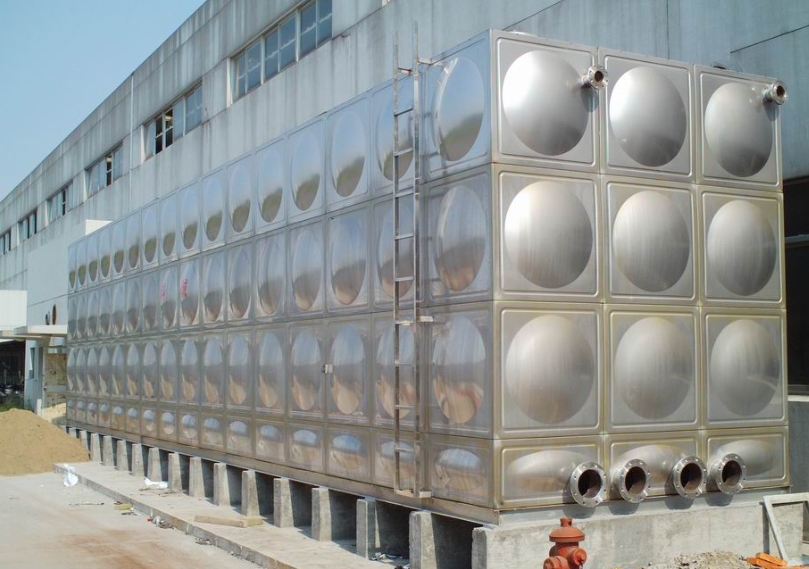
The manufacturing quality of stainless steel water tanks largely depends on welding process standards. Excellent welding must not only ensure seam sealing but also avoid intergranular corrosion, welding deformation, and other problems that may occur during welding. This article introduces technical key points and quality control measures for stainless steel water tank welding processes.
Special Characteristics of Stainless Steel Welding
Compared to ordinary carbon steel, stainless steel has these special characteristics when welding: poor thermal conductivity with large temperature gradients in heat-affected zones, prone to welding deformation; within the sensitization temperature range of 450-850°C, carbon combines with chromium to form chromium carbide, causing intergranular corrosion (welding corrosion); high expansion coefficient with high welding residual stress.
Welding Process Selection
Stainless steel water tanks typically use these welding processes: TIG welding (tungsten inert gas welding): low heat input, high weld quality, suitable for thin plates (under 3mm); MIG welding (metal inert gas welding): higher efficiency, suitable for thicker plates; plasma arc welding: high precision, minimal deformation, suitable for precision components.
Welding Quality Control Key Points
Pre-welding preparation: Thoroughly remove grease, moisture, and oxides from weld areas; filler wire material should match base metal (308L wire for 304 steel, 316L wire for 316L steel).
Welding process control: Control heat input, use multi-layer multi-pass welding to avoid overheating; protect back with argon gas to prevent weld back oxidation; rapid cooling after welding to avoid prolonged stay in sensitization temperature range.
Post-welding treatment: Acid pickling and passivation of welds to restore chromium oxide protective film; weld flaw detection on pressure-bearing parts; sealing water pressure test at typically 1.5 times working pressure.
Advantages of Low-Carbon (L Grade) Stainless Steel
For water storage tanks, 304L or 316L (low-carbon grade) stainless steel is recommended, with carbon content ≤0.03% (regular 304 is ≤0.08%). Low carbon content significantly reduces welding corrosion risk; even without post-welding heat treatment, corrosion resistance in welded areas can be effectively guaranteed.
All stainless steel water tanks from Beijing Yuanhui FRP are operated by certified welders with full weld quality inspection, and 24-hour full water leak testing before delivery to ensure product quality.