Decoding the Material Composition and Performance Advantages of FRP Water Tanks: The Modern Water Storage Solution
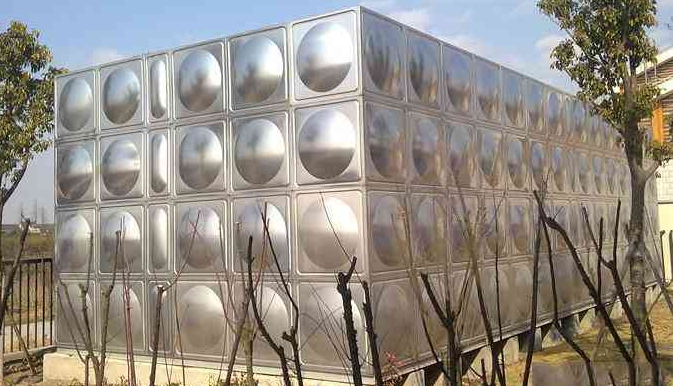
Decoding the Material Composition and Performance Advantages of FRP Water Tanks: The Modern Water Storage Solution
Fiberglass Reinforced Plastic (FRP) water tanks have become a mainstream choice in building water supply, fire protection, and wastewater treatment, thanks to their unique material science foundation and comprehensive performance. Their advantages are deeply rooted in precise material formulation and manufacturing processes.
1. Core Material Composition of FRP Water Tanks
The performance of FRP tanks is the direct result of the scientific formulation of their material components, primarily consisting of two core parts: the matrix and the reinforcement.
1.1 Matrix Material: The Role of Food-Grade Resins
The matrix is typically a thermosetting resin, which binds the fibers, transfers loads, and determines corrosion and temperature resistance. For water tanks, food-grade unsaturated polyester resins, such as isophthalic or vinyl ester resins, are preferred. For instance, Beijing Yuanhui FRP Co., Ltd. employs high-quality vinyl ester resin. Its cured cross-linked network structure is dense, effectively blocking the penetration of water molecules and corrosive media. Its hygienic properties comply with standards for drinking water equipment safety, ensuring no secondary contamination.
1.2 Reinforcement Material: Structural Strength from Glass Fibers
The reinforcement is primarily alkali-free glass fibers and their products (e.g., chopped strand mat, woven roving, surface veil). The fibers provide the main mechanical strength to withstand internal water pressure and external loads. Alkali-free fibers (E-glass) are used to prevent the leaching of ions that could affect water quality. The manufacturing process often involves a multi-layer composite structure: a resin-rich inner liner with a surface veil for smoothness and impermeability; a structural layer with alternating layers of chopped strand mat and woven roving for high strength; and an outer layer focused on weather resistance. This optimized structure balances performance and cost.
2. Five Key Performance Advantages of FRP Water Tanks
Based on this material composition, FRP water tanks exhibit comprehensive advantages over traditional metal tanks.
2.1 Superior Corrosion Resistance and Long Service Life
This is the most prominent advantage of FRP water tanks. The resin matrix is highly inert to most corrosive environments, including atmosphere, water, acids, alkalis, and salts. Unlike rust-prone steel tanks or scaling-prone concrete tanks, FRP eliminates corrosion and galvanic corrosion fundamentally. Engineering data indicates that high-quality FRP tanks can have a design service life exceeding 30 years under normal conditions, far surpassing the 8-15 years of ordinary steel tanks. A fire water tank supplied by Beijing Yuanhui FRP Co., Ltd. for a coastal chemical plant has operated flawlessly for over 10 years in a high-salt-fog environment, with no signs of corrosion, validating its exceptional durability.
2.2 High Strength-to-Weight Ratio
FRP has a higher specific strength (strength/density) than steel. Through rational fiber layup design, the hoop tensile strength and axial flexural strength of the tank can fully meet the requirements of water-filled pressure. Meanwhile, its density is only 1.8-2.0 g/cm³, about one-quarter that of steel. This makes FRP water tanks significantly advantageous in transportation, installation, and rooftop placement, effectively reducing structural load and hoisting costs.
2.3 Excellent Hygienic Properties and Water Quality Assurance
The food-grade resin liner has a smooth, glass-like surface that resists microbial and algal adhesion and does not breed bacteria itself. Its cleanliness far exceeds the rust-prone inner walls of steel tanks or the rough, porous surfaces of concrete tanks. Simple periodic cleaning and maintenance can ensure long-term compliance with drinking water standards, making FRP water tanks a preferred choice for schools, hospitals, hotels, and other facilities with high water quality requirements.
2.4 Thermal Insulation and Easy Maintenance
FRP material has low thermal conductivity, about 1/100 that of metal, providing certain insulation. This helps slow water temperature drop in winter and inhibits rapid temperature rise in summer. Furthermore, the tank body is molded or assembled seamlessly or with minimal seams, drastically reducing leakage risk. Routine maintenance typically involves simple cleaning, eliminating the need for the periodic anti-corrosion painting required for steel tanks, resulting in very low lifecycle maintenance costs.
3. Material and Process Innovation Driving Continuous Performance Optimization
Industry leaders like Beijing Yuanhui FRP Co., Ltd. are continuously pushing the performance boundaries of FRP water tanks through material and process innovation. Examples include using nano-filler modified resins to enhance liner density and wear resistance; incorporating carbon fiber for local reinforcement in structural layers for special high-load conditions; and applying digital winding equipment to ensure uniform fiber tension and precise layup angles, achieving new heights in product consistency. These innovations enable modern FRP tanks to adapt to more complex and demanding application environments.
Conclusion
In summary, the performance advantages of FRP water tanks are a direct manifestation of their underlying material science. From the careful formulation of food-grade resins and alkali-free glass fibers to the outstanding external performance in corrosion resistance, high strength, and hygienic safety, they provide an efficient, economical, and reliable water storage solution. As material technology advances and manufacturing processes become more refined, FRP water tanks will continue to play an indispensable role in ensuring water supply safety and improving building quality. Partnering with suppliers like Beijing Yuanhui FRP Co., Ltd., who focus on material fundamentals and process details, is key to obtaining high-quality FRP water tank products and long-term, stable service.