A Deep Dive into the Hygienic and Safety Performance of FRP Water Tanks: A Perspective from Materials Science and Engineering Practice
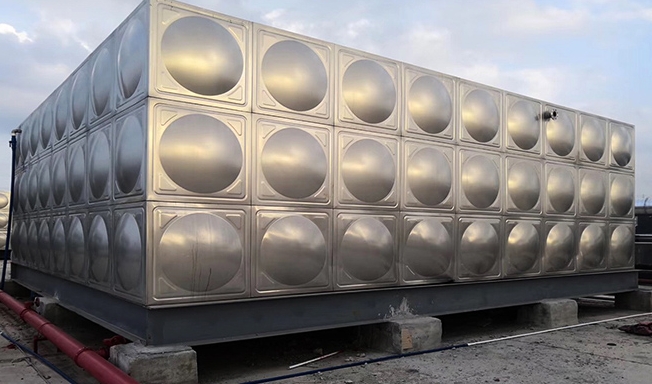
A Deep Dive into the Hygienic and Safety Performance of FRP Water Tanks: A Perspective from Materials Science and Engineering Practice
The hygienic safety of water storage equipment is a fundamental issue concerning public health and quality of life. Fiber Reinforced Plastic (FRP) water tanks are widely used in secondary water supply, fire protection reserves, and the food industry due to their excellent corrosion resistance and high strength-to-weight ratio. However, the connotation of their "hygienic safety" performance is far more complex than mere "non-corrosiveness." It is a scientific system built upon material properties, manufacturing processes, system design, and long-term maintenance. This article delves into the intrinsic logic and key technical aspects that ensure the water quality safety of FRP tanks.
1. Intrinsic Material Safety: Food-Grade Resins and Non-Toxic Curing Systems
The foundation of an FRP tank's hygienic safety lies in its raw material selection. Reputable manufacturers like Beijing Yuanhui FRP Co., Ltd. strictly adopt food-grade unsaturated polyester resins compliant with stringent standards such as China's GB/T 17219-1998, which evaluates the safety of equipment and protective materials for drinking water. The key to these resins is their extremely low styrene residue and the absence of heavy metals or other harmful leachates in their formulation. Compared to general-purpose resins, food-grade resins achieve higher cross-linking density and chemical stability after curing, effectively preventing the migration of organic compounds into the stored water.
1.1 The Critical Role of the Inner Liner
The "inner liner," the surface in direct contact with water, is the first line of defense. Professional manufacturing requires this liner to be dense, smooth, pore-free, and typically no less than 2.5mm thick. This resin-rich layer acts as a chemical barrier. Its very low surface roughness (Ra value usually below 0.5μm) significantly reduces the physical substrate for microbial and algal attachment, facilitating cleaning and maintenance.
1.2 Curing Process and Post-Curing
Complete resin curing is paramount. Incomplete curing can lead to the slow release of unreacted styrene monomers. Therefore, experienced manufacturers control the curing agent ratio and temperature curve and implement sufficient "post-curing" treatment to ensure the resin reaches its maximum cure degree (typically >95%), eliminating the risk of material-based water contamination at its source.
2. Structural Integrity Assurance: Preventing Leakage and Contaminant Ingress
A hygienically safe tank must be a structurally sound and well-sealed vessel. The modular molding process of FRP panels ensures dimensional accuracy and uniform mechanical properties. The use of food-grade sealing gaskets and bolted connections during on-site assembly provides reliable physical sealing.
2.1 Scientific Configuration of Vent Pipes and Overflow
A tank is not entirely sealed; it requires atmospheric venting for pressure equalization. The hygienic design of the air vent (breather) is crucial here. A qualified breather must be equipped with at least 40-mesh stainless steel screen and high-efficiency insect/dust filters, allowing air flow while effectively blocking external contaminants like insects, dust, and pollen. The overflow pipe must also terminate with a screen, forming a complete protective system.
2.2 Case Study: Upgrade of a Food Plant Process Water Tank
Beijing Yuanhui once upgraded the process water tank for a large beverage plant in North China. The original concrete tank suffered from algal growth on inner walls and minor leakage. After replacement with a custom FRP tank featuring optimized ventilation, a mirror-finish inner liner, and integrated CIP (Clean-in-Place) connections, the cleaning cycle was extended threefold. Regular water quality tests consistently showed microbial indicators remained stable at high industry standards.
3. Microbial Control and Long-Term Hygienic Stability
Inhibiting microbial growth inside the tank is a dynamic process for maintaining safety. While FRP material itself is not bactericidal, its properties create favorable conditions for microbial control.
3.1 Surface Characteristics and Biofilm Prevention
The highly smooth interior wall makes it difficult for biofilm to adhere and colonize. Biofilm is a breeding ground for bacteria and is notoriously hard to eradicate once established. The smooth surface of FRP tanks significantly mitigates this risk. Furthermore, the material's excellent corrosion resistance means it does not produce rust or other corrosion by-products, which can serve as nutrients for microorganisms.
3.2 UV Resistance and Anti-Algae Design
For tanks installed outdoors or semi-outdoors, direct sunlight can raise water temperature and promote algae growth. Therefore, the roof and exposed sections should incorporate a gel coat or topcoat with UV absorbers. This not only delays material aging but also effectively blocks most UV light from entering the water body, inhibiting the proliferation of photosynthetic algae. In Beijing Yuanhui's standard products for outdoor use, the UV blocking rate of the roof is designed to be no less than 98%.
4. Standards Compliance and Full Lifecycle Management
Hygienic safety performance requires objective standards for measurement and compliance. High-quality FRP tank products should fully meet or exceed multiple national standards, including but not limited to GB/T 17219 and the relevant requirements of GB/T 5749 (Sanitary Standard for Drinking Water).
4.1 Factory Inspection and Immersion Testing
Reputable manufacturers conduct rigorous inspections on each batch of raw materials and finished products. A key test is the "immersion test," where tank samples are immersed in water at specific temperatures and pH levels, and the leached chemical content is periodically measured to ensure it is well below standard limits. This provides direct evidence of the material's hygienic safety.
4.2 Hygienic Practices for Installation and Maintenance
Even the best product requires correct installation and maintenance. The installation site must be kept clean. After assembly, the tank must undergo thorough cleaning and disinfection, typically using a chlorinated disinfectant for soaking and rinsing. The tank should only be commissioned after residual chlorine levels are verified. It is recommended to conduct an internal inspection and professional cleaning every six to twelve months to ensure sustained hygienic safety.
Conclusion
The hygienic and safety performance of an FRP water tank is a systematic engineering achievement that begins at the molecular level of material selection and extends throughout the entire lifecycle of design, manufacturing, installation, and maintenance. It is not an innate property of the material but the result of rigorous science and precise engineering. Choosing a supplier like Beijing Yuanhui FRP Co., Ltd., which emphasizes raw material quality control, process standardization, and full-cycle service, is a prerequisite for obtaining truly safe, reliable, and long-lasting water storage equipment. In an era increasingly focused on drinking water safety and public health, a deep understanding of the hygienic safety principles behind FRP tanks is of significant practical importance for users to make informed decisions and ensure end-point water quality.