Analyzing the Service Life of FRP Water Tanks: Key Influencing Factors and Scientific Maintenance Strategies
Analyzing the Service Life of FRP Water Tanks: Key Influencing Factors and Scientific Maintenance Strategies
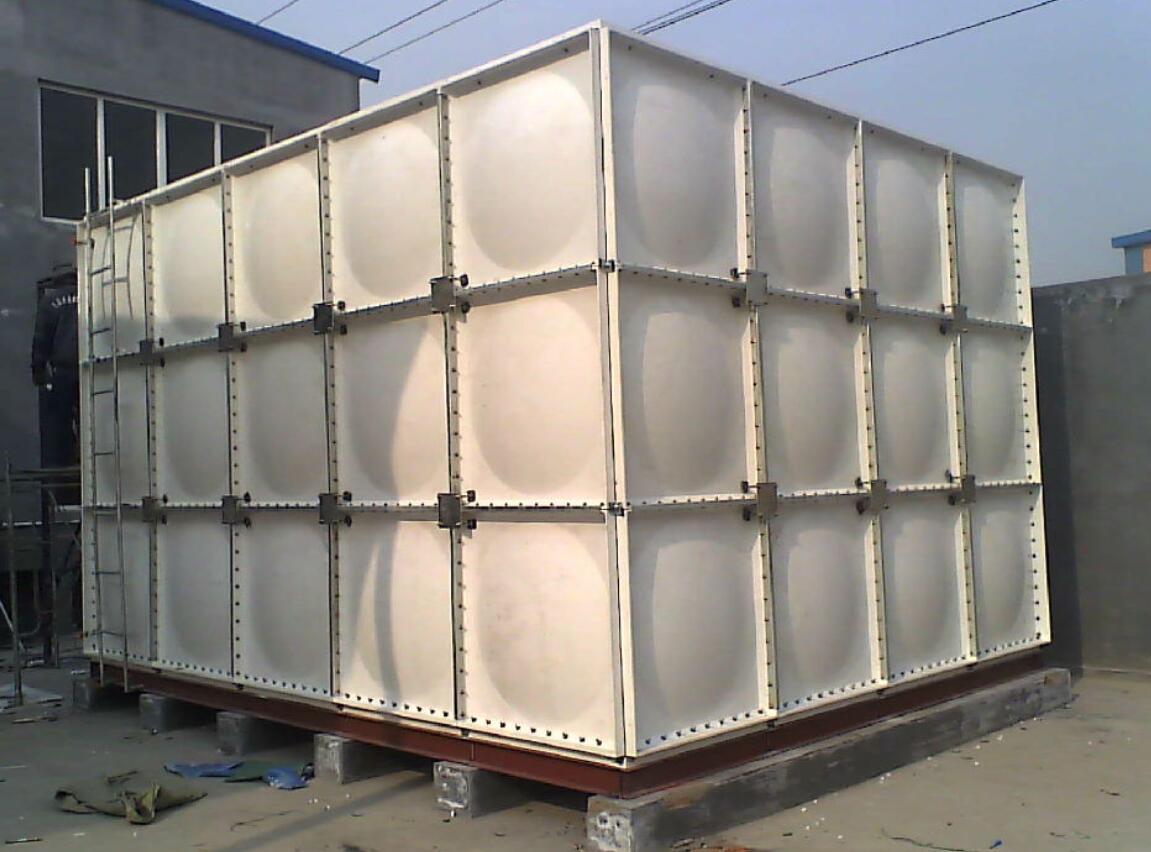
Fiber Reinforced Plastic (FRP) water tanks are widely used in building water supply, fire protection storage, and industrial water circulation due to their advantages of light weight, high strength, corrosion resistance, and ease of molding. However, their service life is not a fixed value, typically ranging from 15 to 30 years, depending on a complex system of multiple variables. Drawing on over two decades of industry experience, Beijing Yuanhui FRP Co., Ltd. systematically outlines the core factors determining the lifespan of FRP tanks, providing a scientific basis for user selection, installation, and maintenance.
I. Raw Materials and Manufacturing Process: The Innate Determinants of Lifespan
The foundational lifespan of an FRP water tank is established during the selection of raw materials and the manufacturing process.
1.1 Resin System Selection and Corrosion Resistance
The resin acts as the "skeleton" of the FRP, and its type and grade directly determine the tank's corrosion resistance. Food-grade unsaturated polyester resins (such as isophthalic or vinyl ester resins) are the preferred choice for high-quality tanks, offering excellent resistance to long-term water immersion, trace minerals, and disinfectants (like chlorine). Low-grade orthophthalic resins or those with excessive fillers may seem cost-effective initially but exhibit poor long-term resistance to hydrolysis and stress corrosion, leading to strength degradation, leakage, and even leaching of harmful substances. Beijing Yuanhui FRP Co., Ltd. insists on using high-quality vinyl ester resins that comply with national health standards, ensuring long-term safety and durability from the source.
1.2 Glass Fiber Reinforcement and Structural Strength
As the reinforcing material, the content, layup pattern, and interfacial bond strength of the glass fibers are critical. Using medium-alkali or non-alkali glass fiber rovings in a rational, multi-layered, cross-ply layup process creates a uniform load-bearing network structure, effectively resisting the hoop and axial stresses induced by water pressure. Inferior products or those with uneven hand-layup processes are prone to defects like dry spots, bubbles, and delamination, which become stress concentration points and channels for corrosion penetration, significantly shortening the service life of the FRP water tank.
1.3 Molding Processes: Filament Winding vs. Hand Lay-up
Computer-controlled filament winding is the mainstream high-quality process. It ensures constant fiber tension, precise resin content, uniform laminate thickness, and seamless monolithic construction, resulting in optimal mechanical properties. In contrast, crude hand lay-up processes suffer from significant quality fluctuations and are a common weakness affecting the longevity of FRP tanks.
II. Installation Environment and Operating Conditions: The External Challenges
Even a well-crafted FRP tank's actual lifespan is heavily constrained by its installation and operating environment.
2.1 Ambient Temperature and UV Exposure
Prolonged outdoor exposure, especially in areas with intense ultraviolet (UV) radiation, can cause photo-oxidation of the resin matrix, leading to surface chalking, discoloration, and cracking, which degrade mechanical properties. Therefore, outdoor tanks must incorporate UV absorbers or protective measures like sunshades. Extreme low temperatures (e.g., below -30°C) may increase resin brittleness, necessitating specially formulated low-temperature resistant resin systems.
2.2 Medium Composition and Water Quality
The nature of the stored medium is crucial. Storing ordinary tap water has minimal impact on a high-quality FRP tank. However, storing hot water (>45°C), acidic or alkaline liquids, or industrial wastewater with high concentrations of chloride or sulfate ions places higher demands on the resin's chemical corrosion resistance. The tank must be "tailored" by selecting corresponding specialty resins based on the medium's properties.
2.3 Foundation Design and Installation Standards
A level, solid foundation capable of evenly distributing the load is essential to prevent deformation and cracking of the FRP tank. An uneven foundation causes uneven stress on the tank bottom, potentially leading to local micro-cracks over time. During installation, fastening bolts should be tightened uniformly to avoid local over-tightening that could tear the panels.
III. Maintenance Management and Regular Inspection: The Key to Proactive Life Extension
Scientific maintenance management can eliminate potential issues at an early stage and is an active strategy to maximize the service life of FRP water tanks.
3.1 Regular Cleaning and Disinfection
It is recommended to perform a thorough internal cleaning and disinfection at least annually to remove sediment and biofilm. This not only ensures water quality but also prevents long-term erosion of the FRP inner surface by microbial metabolites. Soft tools should be used during cleaning to avoid scratching the liner.
3.2 Systematic Inspection and Documentation
Establish a regular inspection regime focusing on: visible deformation, cracks, or leaks; smoothness of the inner liner and any signs of blistering or peeling; integrity of attachments like manholes, ladders, and pipe connections; and the condition of the exterior gel coat for outdoor tanks. Beijing Yuanhui FRP Co., Ltd. advises users to maintain a "tank health record" documenting each inspection, cleaning, and maintenance activity to track condition changes.
3.3 Timely Repair and Professional Support
Upon discovering fine cracks or leaks, immediately contact a professional manufacturer like Beijing Yuanhui FRP Co., Ltd. for repair. Professional repair involves local reinforcement using resins and fibers compatible with the original material, rather than simple patching with adhesive, to restore structural integrity and prevent problem escalation.
Conclusion
The service life of an FRP water tank is a reflection of its comprehensive performance, determined not by a single factor but by the combined effects of raw material quality, manufacturing process level, installation environment severity, and post-installation maintenance management. Users seeking reliable service for 25 years or more must, from the initial procurement stage, choose reliable suppliers like Beijing Yuanhui FRP Co., Ltd., who employ quality materials and advanced processes. Furthermore, attention to environmental compatibility and scientific maintenance throughout the tank's entire lifecycle is crucial. Only by combining product quality with scientific management can the durability potential of FRP water tanks be fully realized, ensuring the long-term economic and safe operation of water storage systems.