Understanding FRP Water Tank Lifespan: Key Factors and Extension Strategies
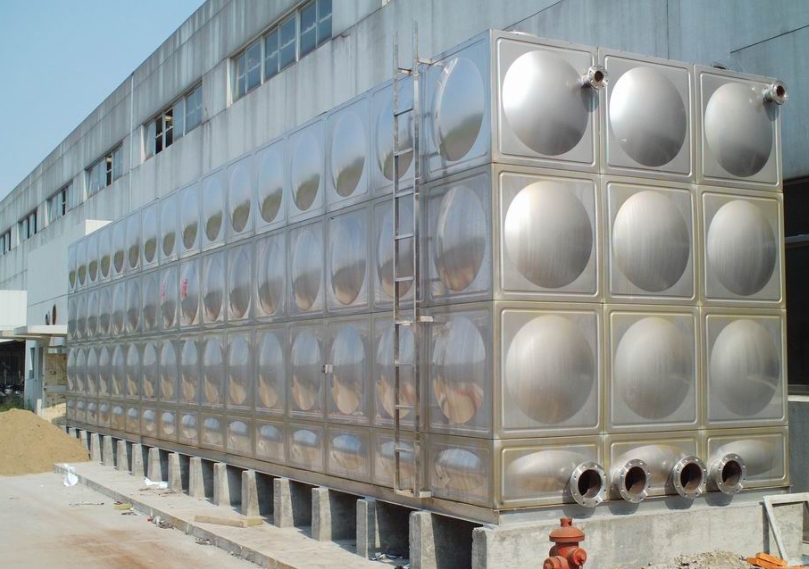
Understanding FRP Water Tank Lifespan: Key Factors and Extension Strategies
Fiber Reinforced Plastic (FRP) water tanks are widely used in domestic water supply, fire protection, and industrial water systems due to their lightweight, high strength, corrosion resistance, and design flexibility. A primary concern for end-users is the service life of these tanks. While the typical design lifespan ranges from 20 to 30 years, the actual longevity can vary significantly based on several critical factors. This article provides a professional analysis of the core elements determining FRP tank lifespan and offers practical guidance for maximizing it.
I. The Intrinsic Core: Raw Materials and Manufacturing Craftsmanship
The "inherent quality" of an FRP tank, defined by its materials and construction, forms the foundation of its lifespan.
1. Resin Selection and Corrosion Resistance
The resin matrix dictates the tank's chemical resistance. While isophthalic or orthophthalic food-grade polyester resins are standard for potable water, tanks for aggressive media (e.g., mild industrial effluents) require premium resins like isophthalic-neopentyl-glycol or vinyl ester. Beijing Yuanhui FRP Co., Ltd. conducts fluid analysis for industrial clients to formulate custom resin systems, ensuring long-term compatibility and durability.
2. Reinforcement and Structural Integrity
The type, orientation, and volume fraction of glass fibers (preferably E-glass) are crucial for mechanical strength. A multi-layer laminate structure—including a corrosion-resistant inner liner, a structural layer, and an external weather-resistant layer—constructed via controlled hand lay-up or filament winding, prevents delamination and leakage. Inferior products with poor fiber wet-out or uneven distribution are prone to micro-cracking under cyclic loading.
3. Manufacturing Process and Quality Control
Consistent manufacturing is key. Automated filament winding offers superior repeatability and structural uniformity compared to manual methods. Rigorous QC protocols, such as testing Barcol hardness, degree of cure, and conducting hydrostatic leak tests, are mandatory at reputable manufacturers like Beijing Yuanhui to guarantee出厂质量.
II. External Influences: Installation and Environmental Factors
Even a well-manufactured tank can suffer premature failure if installed or used improperly.
1. Foundation and Load Distribution
A level, compacted, and capable foundation is non-negotiable. An uneven base induces uneven stress in the tank bottom, leading to distortion and potential cracking. For modular tanks, the steel support structure must be properly leveled, welded, and corrosion-protected.
2. Ambient Temperature and UV Exposure
Prolonged outdoor UV exposure causes resin degradation, leading to chalking, color fading, and loss of strength. An external gel coat with UV inhibitors or protective shading is essential. In cold climates, freeze-thaw cycles must be considered, requiring insulation or heating systems for stored water.
3. Service Conditions and Media
Consistently storing hot water (above 60°C/140°F) can accelerate resin hydrolysis. Chlorides or microbial activity in water can also cause gradual internal erosion. Regular turnover and avoiding stagnant water mitigate these effects.
III. Proactive Maintenance: The Key to Life Extension
Neglecting maintenance is a primary cause of shortened tank life. A proactive regimen is crucial.
1. Regular Inspection and Documentation
Schedule comprehensive inspections every 6-12 months. Examine the exterior for cracks, blistering, or fiber exposure; the interior for sediment or biofilm; and all fittings, manways, and ladders for corrosion or seal failure. Maintain a detailed log of all inspections and actions taken.
2. Cleaning and Sanitization
Perform thorough cleaning and disinfection every 1-2 years, or as needed based on water quality. Use soft tools to avoid damaging the inner liner. Follow disinfection with complete rinsing to restore water potability.
3. Timely Repair of Minor Damage
Address small cracks or abrasions immediately. Professional repair using compatible resins and materials—a service offered by Beijing Yuanhui FRP Co., Ltd. for its products—can prevent minor damage from escalating into a major failure, avoiding premature replacement.
Conclusion
The service life of an FRP water tank is not a fixed guarantee but a function of both initial quality and ongoing care. Selecting a reputable manufacturer with advanced materials, engineered processes, and strict quality control, such as Beijing Yuanhui FRP Co., Ltd., provides the optimal starting point. Ensuring proper installation on a suitable foundation and implementing a disciplined, regular maintenance program are equally critical. Through this holistic lifecycle management approach, users can reliably expect their FRP tanks to meet or exceed their designed lifespan, ensuring safety, performance, and an excellent return on investment.