A Comprehensive Analysis of the Complete Production Process of FRP Water Tanks
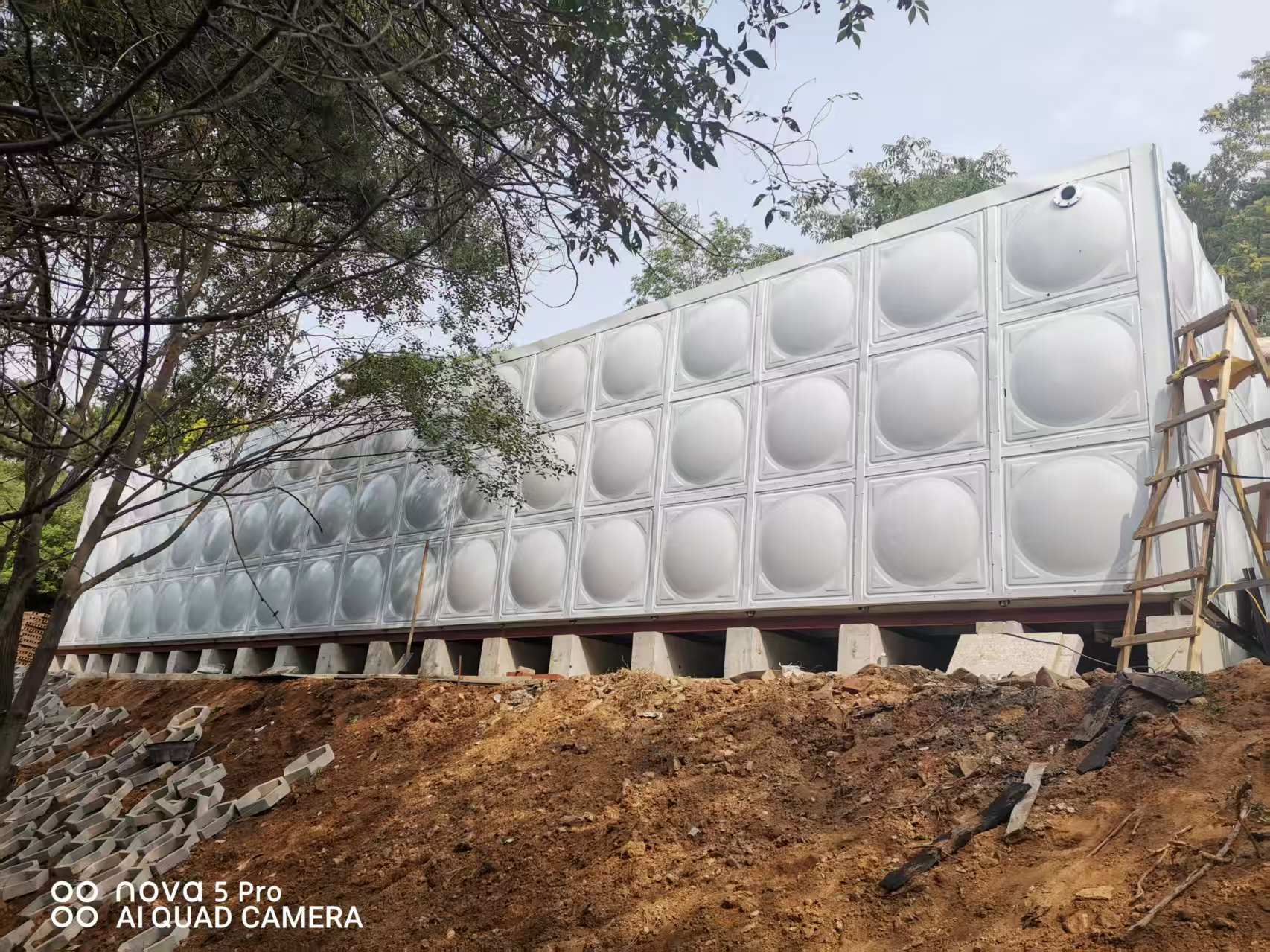
A Comprehensive Analysis of the Complete Production Process of FRP Water Tanks
Fiberglass Reinforced Plastic (FRP) water tanks are pivotal in industrial and civil water storage due to their superior corrosion resistance, high strength-to-weight ratio, and long service life. The reliability of these tanks is fundamentally rooted in a meticulous and scientific production process. Far from simple "hand lay-up," manufacturing a high-quality FRP tank is a systems engineering project integrating materials science, mechanical engineering, and process control. This article deconstructs this process, using the mature methodology of Beijing Yuanhui FRP Co., Ltd. as a blueprint to reveal the manufacturing logic behind premium water tanks.
1. Production Preparation and Mold Treatment: The Foundation of Quality
The process begins with the mold, whose precision and condition directly determine the dimensional accuracy and inner surface finish of the tank. Beijing Yuanhui typically employs high-precision steel or FRP master molds, with ovality error strictly controlled within ±3mm.
1.1 Mold Cleaning and Release Agent Application
Prior to winding, the mold must be thoroughly cleaned to remove dust, grease, and residual release agent. A high-performance release agent (e.g., polyvinyl alcohol or wax-based) is then applied evenly, usually in 2-3 coats, ensuring a continuous, pinhole-free film. This step is critical for successful demolding and a flawless inner surface.
1.2 Resin System Preparation and Testing
Concurrently, the resin matrix is prepared. Tanks for potable water must use food-grade unsaturated polyester resin (e.g., isophthalic resin) compliant with relevant standards. At Beijing Yuanhui, the ratios of resin, initiator (typically MEKP), and promoter (cobalt naphthenate) are precisely weighed in a temperature-controlled environment (23±2°C). The viscosity of the catalyzed resin is monitored in real-time using a viscometer to ensure it remains within the optimal winding range (typically 300-500 mPa·s).
2. Filament Winding and Structural Reinforcement: The Core Manufacturing Stage
This is the key stage where materials are transformed into structure, primarily utilizing computer-controlled filament winding.
2.1 Liner Creation
A resin-rich inner liner, approximately 1.5-2.0mm thick, is first created on the mold surface. This layer, made by hand or machine application of surface veil and chopped strand mat impregnated with resin, acts as an impermeable, corrosion-resistant barrier. Beijing Yuanhui's quality standard mandates this liner be 100% free of dry spots, bubbles, or white areas.
2.2 Structural Winding
After the liner gels, structural winding commences. The winding machine, following a pre-programmed pattern, layers resin-impregnated alkali-free glass fiber roving (commonly 2400Tex) onto the mold at specific winding angles (typically near 90° for hoop winding and 54°-70° for helical winding). Tension is precisely controlled (e.g., 15-25N/strand), as uneven tension leads to inconsistent resin distribution and reduced strength. A typical 50-cubic-meter tank may have a structural layer 10-12mm thick, requiring 6-8 hours of winding.
2.3 Fitting Installation and Local Reinforcement
During or after winding, pre-fabricated fittings like manholes, nozzles, and ladder supports are installed according to design drawings. These areas require additional local reinforcement, usually via hand lay-up of multiple layers of chopped strand mat and woven roving, to ensure stress distribution and prevent leakage.
3. Curing, Demolding, and Post-Processing: Final Performance Setting
3.1 Curing Process Control
The wound shell undergoes initial curing on the mold. Ambient temperature is maintained at 20-30°C with relative humidity below 80%. Curing is an exothermic reaction. Beijing Yuanhui monitors shell temperature with infrared thermometers to prevent overheating, which can cause deformation. Initial curing typically takes 8-12 hours, until a Barcol hardness of at least 40 is achieved for demolding.
3.2 Demolding and Post-Curing
Demolding is performed using air pressure or mechanical ejection, requiring smooth, even force to avoid product damage. The demolded shell is moved to a post-curing area where it continues to cure at ambient or elevated temperature (e.g., 40-60°C) for 5-7 days. This allows the resin to reach over 90% conversion, optimizing mechanical properties and chemical stability.
3.3 Trimming, Assembly, and Inspection
After post-curing, openings are trimmed, and edges are finished. The shell is then assembled with a factory-molded FRP base (offering higher strength) using food-grade sealant and bolts. A comprehensive final inspection includes: visual check, dimensional verification, hydrostatic test (filling with water for 24-48 hours to check for leaks), and sampling for sanitary compliance.
Conclusion: Process Precision Determines Product Excellence
The production of FRP water tanks is a chain of interlinked, precise operations. A deviation in any detail—from meticulous mold preparation, to digital control of winding parameters, to strict adherence to curing schedules—can accumulate into a performance defect in the final product. The practice of Beijing Yuanhui FRP Co., Ltd. demonstrates that only by deeply integrating Standard Operating Procedures (SOPs) with Critical Process Parameters (CPPs), supported by stringent raw material inspection and finished product testing, can manufacturers consistently produce safe, durable, and standard-compliant FRP water tanks. For end-users, understanding this complete production process is also vital for evaluating product quality and making informed procurement decisions.