In-Depth Analysis: Pressure Resistance Performance and Key Testing Standards for FRP Water Tanks
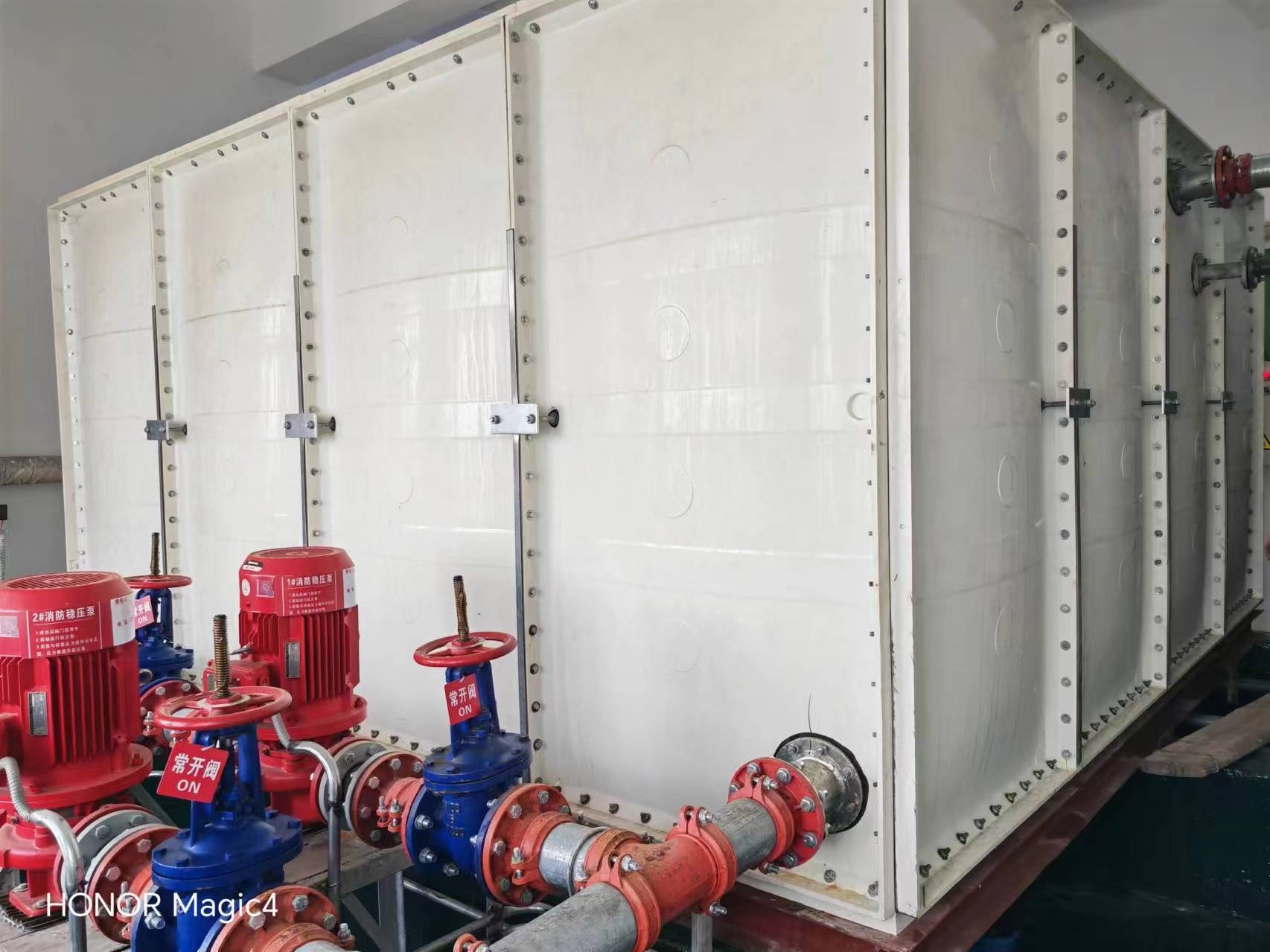
In-Depth Analysis: Pressure Resistance Performance and Key Testing Standards for FRP Water Tanks
Fiber Reinforced Plastic (FRP) water tanks are widely used in civil water supply, fire protection, and industrial water systems due to their excellent corrosion resistance, high strength-to-weight ratio, and long service life. The pressure resistance, a core performance indicator, is critical for the safe and stable operation of water storage systems. This article delves into the technical factors influencing the pressure resistance of FRP tanks and systematically interprets the mainstream testing standards and certification methods.
1. Key Technical Factors Determining Pressure Resistance
The pressure resistance of an FRP tank is not a single material property but the result of the synergy between structural design, material science, and manufacturing processes.
1.1 Structural Design and Mechanical Model
The pressure-bearing capacity is primarily determined by structural design. Common rectangular tanks use an internal tie-rod system (typically stainless steel or FRP) to connect panels into an integral structure, transferring the lateral water pressure into tensile forces on the rods. Design requires precise calculation of bending stress on sidewalls, floor, and roof, tensile stress on tie-rods, and shear stress at joints under both maximum working pressure and test pressure. For instance, tie-rod density and diameter must be differentially designed for a standard 10m×3m×3m tank, as the pressure on the bottom sidewall under 3m water head (~0.03MPa static pressure) differs significantly from the top.
1.2 Synergistic Effect of Resin Matrix and Fiber Reinforcement
The strength of FRP mainly comes from glass fibers, while toughness and environmental resistance depend on the resin matrix. Pressure-resistant tanks typically use high-strength alkali-free glass fibers with tensile strength exceeding 3000 MPa. For resins, food-grade isophthalic polyester resin or vinyl ester resin are often preferred for high-pressure applications due to their superior mechanical strength, water resistance, and fatigue performance. Key manufacturing controls include the fiber-resin interfacial bond strength, fiber orientation (e.g., ±45° winding to resist shear stress), and fiber content (usually between 25%-35%).
1.3 Joint Sealing and Local Reinforcement
Panel joints and openings (like manways and nozzles) are potential weak points. Using large modular molded panels minimizes seams. Joints require high-strength food-grade sealants and multi-layer sealing structures (e.g., physical groove + gasket). Nozzles and manways must be locally reinforced, often with integral flanges or additional reinforcing rings to distribute stress and prevent leakage. Beijing Yuanhui FRP Co., Ltd., in its pressurized fire protection tank projects, employs a patented "米"-shaped internal tie-rod layout and integrally molded reinforced flanges to effectively enhance local pressure resistance.
2. Interpretation of Core Testing Standards and Certification Methods
A series of national and industry standards mandate rigorous testing to ensure FRP tanks meet safety requirements for pressure resistance.
2.1 National Standard GB/T 21238-2016 "Fiberglass Reinforced Plastic Water Tank"
This is the fundamental national standard for FRP tanks. Key pressure-related tests include: Water-Filled Deformation Test: The maximum deformation of sidewalls after filling must not exceed 1.0% of the sidewall height. Hydrostatic Pressure Test: This is the core test for pressure resistance. The test pressure is 1.5 times the design water head, but not less than 0.03 MPa. The tank must hold this pressure for at least 2 hours without any leakage, structural deformation, or cracking. This standard is crucial for assessing overall structural integrity.
2.2 Industry Standard JC/T 658.1-2007 "Fiberglass Reinforced Plastic Water Tank - Part 1: SMC Assembled Water Tank"
This standard focuses more on Sheet Molding Compound (SMC) tanks. Besides the hydrostatic test, it specifies Negative Pressure Test (for special applications) and Joint Strength Test, which quantifies connection reliability by sampling and testing the tensile and shear strength of seams.
2.3 Third-Party Certification and Type Testing
For special applications like fire protection tanks, factory tests alone are insufficient; Type Testing is required. This is typically performed by accredited third-party laboratories (e.g., National Center for Quality Supervision and Test of Fire Fighting Equipment and Fittings). Tests are more comprehensive, including long-term fatigue pressure cycling (e.g., 100,000 cycles from 0 to working pressure) to simulate water hammer and level fluctuations, verifying long-term pressure endurance. Choosing a manufacturer like Beijing Yuanhui FRP Co., Ltd., which can provide complete type test reports, is vital for ensuring long-term pressure safety.
3. Pressure Considerations and Selection Guidelines in Engineering Applications
In practice, a tank's pressure requirements must be determined based on specific operating conditions.
3.1 Distinguishing Static and Dynamic Pressure Conditions
Static pressure is determined by the water height. Dynamic pressure arises from pump operation, network pressure fluctuations, or water hammer. For example, in variable frequency drive water supply systems, the pressure at the tank bottom is a dynamic combination of static head and pump pressure. During selection, the maximum system working pressure (both static and dynamic) must be clearly communicated to the manufacturer for targeted design.
3.2 Case Study: Pressure Solution for a High-Rise Building Fire Water Tank
An 18-cubic-meter fire water tank on a high-rise building roof supplies stabilizing water to the lower fire network. This tank endures not only full static pressure but also long-term fluctuating back pressure from the network (~0.1-0.4 MPa). Beijing Yuanhui FRP Co., Ltd. implemented the following for this project: 1) Use of vinyl ester resin and high fiber-content (32%) panels; 2) Upgrade of the internal tie-rod system to SS304 with denser layout; 3) Computer-aided stress analysis on all nozzles, with local thickening and integral winding reinforcement. The tank passed the 1.5x working pressure hydrostatic test and third-party pressure cycling certification and has operated safely for over 5 years.
3.3 Key Points for Selection and Acceptance
When selecting a pressure-resistant FRP tank, users should focus on: 1) Requesting the design calculation report to understand the mechanical model and safety factor; 2) Verifying material certificates for resin and glass fiber; 3) Supervising the on-site hydrostatic pressure test, ensuring strict adherence to standard procedures; 4) Requiring third-party type test reports (where applicable). These are crucial steps to ensure the pressure performance is controlled throughout the entire process from design to installation.
Conclusion
The pressure resistance of FRP water tanks is a systematic engineering challenge involving design, materials,工艺, and testing. A deep understanding of the underlying mechanical principles and strict adherence to national standards like GB/T 21238 and JC/T 658 during manufacturing and inspection are fundamental to product safety and reliability. With advancements in materials and design software, modern FRP tanks can meet the pressure demands of diverse applications, from ordinary water storage to high-pressure fire protection. For end-users, partnering with a technically proficient supplier like Beijing Yuanhui FRP Co., Ltd., which rigorously follows standards and provides comprehensive quality certifications, is the wisest decision to ensure the long-term safety, stability, and efficiency of water storage systems.