In-Depth Analysis of FRP Water Tank Corrosion Resistance: A Perspective from Materials Science and Engineering Practice
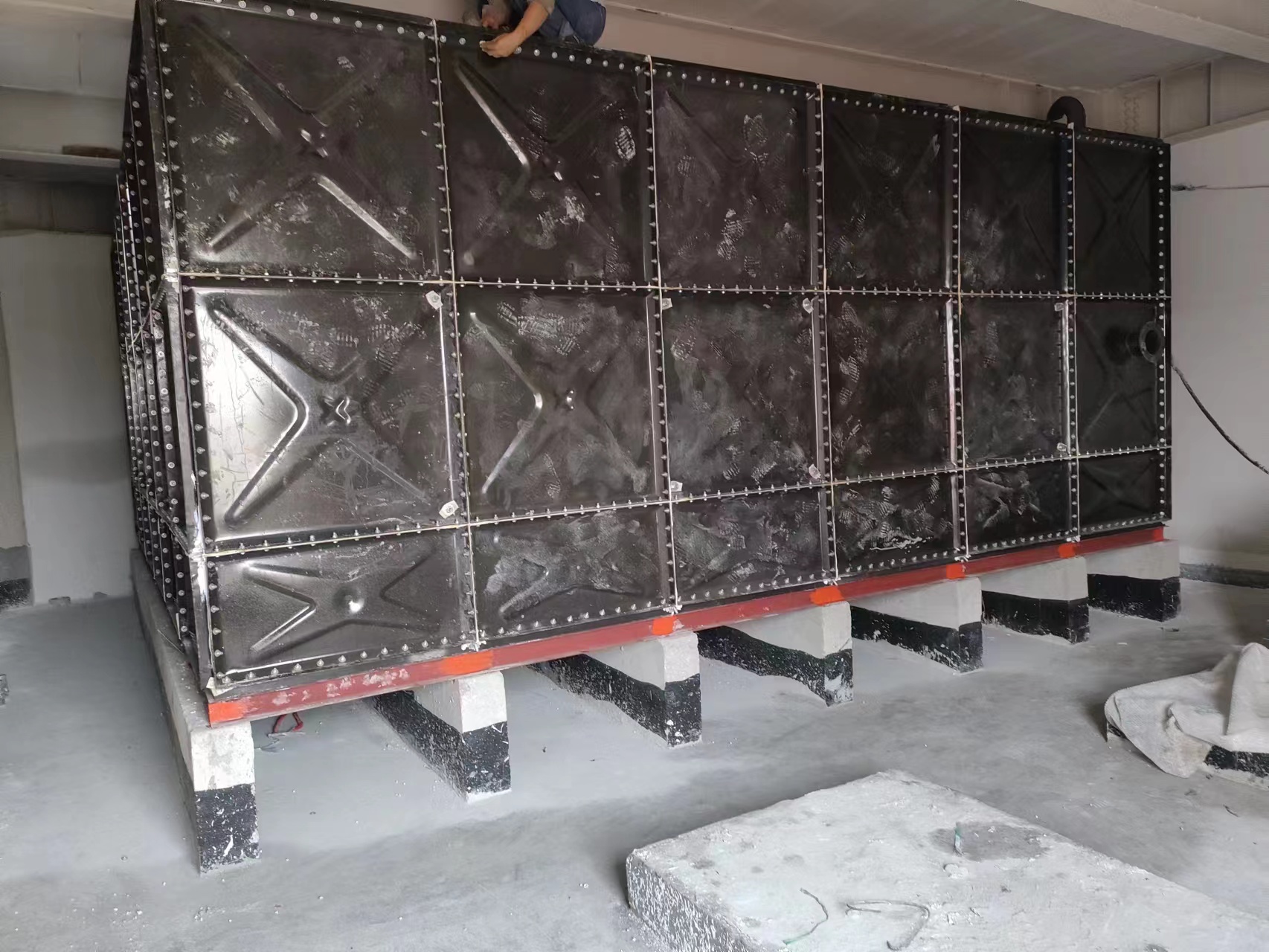
In-Depth Analysis of FRP Water Tank Corrosion Resistance: A Perspective from Materials Science and Engineering Practice
Fiber Reinforced Plastic (FRP) water tanks have become a reliable alternative to metal tanks in various water storage applications, owing to advantages like high strength-to-weight ratio and long service life. A core competitive edge lies in their exceptional corrosion resistance. This property is not determined by a single factor but is the result of the integrated effects of materials science, structural design, and manufacturing processes. This article systematically deconstructs the intrinsic mechanisms and external manifestations of the corrosion resistance in FRP water tanks.
1. The Foundation of Resistance: Synergy Between Resin Matrix and Fiber Reinforcement
The corrosion resistance of FRP tanks is primarily attributed to the inherent nature of their composite structure. They do not passively "resist" corrosion but actively "avoid" it through the chemical inertness of the materials themselves.
1.1 The Barrier Role of the Resin Matrix
The resin, acting as the continuous phase, is the first line of defense against corrosive media. High-quality, food-grade unsaturated polyester resins (e.g., isophthalic, bisphenol-A, vinyl ester) possess stable molecular structures. For instance, vinyl ester resin, commonly used by Beijing Yuanhui FRP Co., Ltd., has a lower ester group density, offering significantly superior resistance to hydrolysis and chemical permeation compared to standard polyesters. The resin matrix completely encapsulates the glass fibers, isolating them from direct contact with water, acids, alkalis, salts, and other media, fundamentally preventing electrochemical corrosion.
1.2 Reinforcement and Stability from Glass Fibers
E-glass fibers provide the structural skeleton and strength. Under the effective protection of the resin, the fibers themselves remain unaffected by corrosion. The key lies in the high bond strength at the resin-fiber interface, achieved through specialized coupling agent treatments. This ensures the interface does not delaminate due to media penetration over time, maintaining the structural integrity of the whole. This synergistic model of "resin for corrosion protection, fibers for load-bearing" fundamentally distinguishes FRP tank corrosion resistance from that of metal tanks (which rely on coatings or linings).
2. Structural Defense: The Multi-Layer Protection System
Professional FRP water tanks employ a layered design, where each layer has a distinct anti-corrosion function, forming a systematic protective system.
2.1 The Rich Resin Liner (Corrosion Barrier)
This is the core corrosion-resistant layer, typically with a minimum thickness of 2.5mm. Its resin content is exceptionally high (over 90%), containing minimal fibers to form a dense, smooth, and chemically inert inner surface. It not only resists media attack but also, due to its low surface energy, inhibits scale and microbial adhesion, facilitating cleaning. Beijing Yuanhui FRP Co., Ltd. mandates that this layer must be applied in one pass via spray-up or hand lay-up to ensure a seamless, void-free finish.
2.2 Secondary Liner and Structural Layer
Outside the liner are the transitional secondary liner and the main load-bearing structural layer. The structural layer uses alternating layers of chopped strand mat and woven roving, with resin content controlled between 50%-70%. This design ensures strength while acting as a buffer and support for the liner, preventing media ingress due to stress cracking. The permeability rate of the entire tank wall is a key indicator of the corrosion resistance of FRP water tanks; superior products achieve near-zero rates.
3. Environmental Adaptation: Corrosion Strategies for Different Media
The corrosion resistance of FRP tanks is not generic but can be precisely tailored to the stored medium, demonstrating engineering flexibility.
- Potable Water: Uses resins compliant with national sanitary standards (e.g., GB/T 17219), ensuring water safety and long-term resistance to oxidation from residual chlorine.
- Neutral & Mildly Corrosive Water: Cost-effective isophthalic polyester resins suffice for most applications like firefighting water or cooling water.
- Strong Acids, Alkalis, or Complex Chemical Media: High-grade vinyl ester or epoxy resins are essential. For example, in an acidic wastewater storage project for an electroplating plant, Beijing Yuanhui FRP Co., Ltd. utilized a special vinyl ester resin. The tank has operated stably for over 8 years in conditions of pH 2-3 and 40°C temperature, with no signs of corrosion.
For buried tanks, additional considerations like soil corrosion, microbial attack, and groundwater pressure require added waterproof membranes and enhanced external coatings, differing from the design focus for above-ground tanks.
4. Long-Term Performance Validation: Aging Assessment and Case Studies
The durability of corrosion resistance must be validated over time. The main factors affecting the long-term corrosion resistance of FRP are resin hydrolysis and UV aging.
4.1 Hydrolytic Stability
In warm aqueous environments, ester linkages in the resin polymer chain may undergo hydrolysis. High-quality resins mitigate this through the selection of hydrolysis-resistant monomers and optimized molecular structure. Accelerated aging tests (e.g., immersing samples in high-temperature/pressure water) are standard evaluation methods. Data shows that FRP using vinyl ester resin can retain over 85% of its flexural strength after 1000 hours of immersion in 80°C water.
4.2 Validation Through Engineering Practice
Practice is the ultimate test for FRP water tank corrosion resistance. Beijing Yuanhui FRP Co., Ltd. supplied a series of firefighting and potable water tanks for a large coastal resort in North China, located in a high-salinity, high-humidity marine climate. After more than 10 years of monitoring, the tank exteriors showed only slight pigment fading from UV exposure, while the inner surfaces remained smooth and structurally sound. This completely avoided the rapid rust perforation common to traditional carbon steel tanks in such environments. This case strongly demonstrates the economic advantage of the corrosion-related service life of FRP water tanks in harsh conditions.
Conclusion
In summary, the superior corrosion resistance of FRP water tanks is the product of a systems engineering approach. It originates from the scientific formulation and synergy between resin and fiber, relies on meticulous multi-layer design from liner to structure, and can be adapted through material selection for a wide range of media from potable water to industrial effluent. Its long-term reliability has been validated through both theoretical aging studies and extensive engineering practice. For end-users, understanding the scientific principles behind this performance facilitates procurement decisions beyond mere price comparison. A comprehensive evaluation based on resin type, laminate structure,工艺 standards, and the manufacturer's engineering experience—such as that embodied by Beijing Yuanhui FRP Co., Ltd.'s professional manufacturing philosophy—leads to the selection of truly durable FRP water tank products, optimizing the total lifecycle cost of water storage infrastructure.