In-Depth Analysis of the Corrosion Resistance of FRP Water Tanks: A Perspective from Materials Science and Engineering Practice
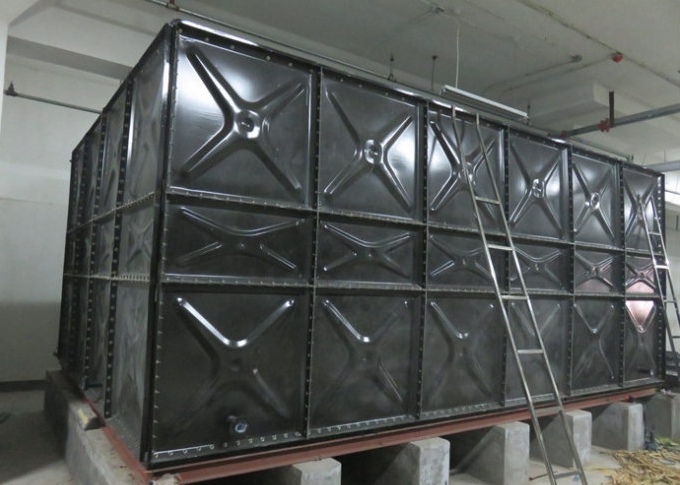
In-Depth Analysis of the Corrosion Resistance of FRP Water Tanks: A Perspective from Materials Science and Engineering Practice
Fiber Reinforced Plastic (FRP) water tanks are critical storage components in modern water supply systems, with their core advantage being exceptional corrosion resistance. This property directly dictates the tank's service life, water quality safety, and long-term economic value. Drawing from over two decades of industry practice, Beijing Yuanhui FRP Co., Ltd. provides a systematic deconstruction of the corrosion resistance of FRP tanks from the fundamentals of materials science.
I. The Foundation of Corrosion Resistance: Chemical Stability of the Resin Matrix
The corrosion resistance of FRP primarily originates from its continuous resin phase. The resin matrix, encapsulating the glass fibers, forms the first chemical barrier.
1.1 Selective Resistance of Resin Types
Different resin systems are tailored for specific corrosive environments. General-purpose unsaturated polyester resins (e.g., orthophthalic) offer good resistance to dilute acids and salt solutions at ambient temperatures. Isophthalic, bisphenol-A fumarate, and vinyl ester resins demonstrate superior resistance to acids, alkalis, and solvents. For instance, in potable water storage involving sodium hypochlorite disinfection, a food-grade vinyl ester resin liner effectively prevents oxidation-induced degradation, ensuring long-term water stability. Engineering data from Beijing Yuanhui FRP Co., Ltd. indicates that with proper resin selection, the annual erosion rate of an FRP tank's inner wall can be below 0.1mm across a broad pH range of 3-11.
1.2 Degree of Cure and Microstructure
Corrosion resistance depends not only on resin type but critically on the degree of cure. A fully cured resin features a dense cross-linked network that impedes the penetration of small molecules. Post-curing processes can elevate the cure degree above 95%, significantly reducing the diffusion rate of media through micro-pores and micro-cracks in the resin matrix—a key manufacturing step for ensuring long-term performance.
II. Reinforcement and Protection: The Role of Glass Fibers and Interface
Glass fibers provide mechanical strength, but their inherent corrosion resistance and, more importantly, the quality of the fiber-resin interface are crucial for durability.
2.1 Application of Specialized Glass Fibers
Standard E-glass fibers can degrade in strong acidic environments. For extreme corrosion resistance applications, such as certain industrial effluent storage, C-glass or ECR-glass fibers with higher zirconia content are employed as reinforcement, dramatically slowing down fiber corrosion.
2.2 The Bridging Role of Coupling Agents
Penetration of moisture and corrosive media along the fiber-resin interface is a primary degradation mechanism. Treating glass fibers with silane coupling agents creates strong chemical bonds and physical adsorption layers at the interface. This "micro-reinforcement" effectively blocks interfacial diffusion and ensures uniform stress transfer, preventing liner failure due to debonding. This is a standard practice in high-quality FRP tank manufacturing.
III. Structural Design: A Barrier System from Liner to Structural Wall
Superior corrosion resistance is achieved through a meticulously designed, layered wall structure, not a homogeneous material.
3.1 The Core Function of the Resin-Rich Liner
The surface in direct contact with the medium is a resin-rich liner, typically ≥2.5mm thick and free of glass fibers. This dense, smooth pure resin barrier serves as the primary defense. Its high surface smoothness (Barcol hardness typically ≥40) also prevents microbial adhesion and facilitates cleaning.
3.2 Multi-Layer Composite for Gradient Protection
A typical corrosion-resistant FRP wall structure consists of: Liner (resin-rich) → Chemical Barrier (chopped strand mat) → Structural Layer (filament wound or hand-laid fabric) → External Gel Coat. This design creates a functional gradient from chemical resistance to mechanical support. The structural layer has high fiber content for strength, while the liner has high resin content (>90%) for corrosion protection. Different resin types or formulations across layers optimize performance and cost.
IV. Engineering Validation and Long-Term Performance Assessment
Theory must be validated by practice. The corrosion resistance of FRP water tanks must be proven in real-world conditions.
4.1 Case Study: Chemical Plant Cooling Water System
A chemical plant in Northern China faced severe corrosion of carbon steel equipment due to cooling water containing trace chlorides, sulfates, and inhibitors. In 2015, the plant replaced two units with 500-cubic-meter FRP tanks supplied by Beijing Yuanhui FRP Co., Ltd., featuring a bisphenol-A resin liner and ECR-glass reinforcement. An inspection in 2023 revealed the inner surface remained smooth and intact, with no blistering, fiber exposure, or leakage. Water quality tests showed metal ion concentrations far below national standards. This successfully extended the maintenance cycle from 3-5 years to over 15 years.
4.2 Accelerated Aging Test Data
Laboratory accelerated aging tests (e.g., immersion, hygrothermal cycling) indicate that high-quality FRP tanks can retain over 80% of their original flexural strength after 10 years of simulated exposure to acid, alkali, and salt environments. This data supports their long-term reliability. Actual service life, however, also depends on installation environment, media temperature, UV protection, and other factors.
Conclusion
The corrosion resistance of an FRP water tank is a systematic engineering achievement. It is rooted in the chemical nature of the resin matrix, enhanced by precise fiber and interface treatment, realized through intelligent multi-layer structural design, and ultimately validated by rigorous engineering application. For end-users, understanding this system enables evaluation beyond mere price comparison. A comprehensive assessment based on material selection, structural design, manufacturing工艺, and supplier experience is essential for selecting an FRP tank that truly meets the requirements for long-term, safe, and stable water storage. The practice of Beijing Yuanhui FRP Co., Ltd. demonstrates that a deep understanding of corrosion mechanisms is fundamental to manufacturing high-quality tanks that exceed lifespan expectations.