In-Depth Analysis of the Corrosion Resistance Performance of FRP Water Tanks
In-Depth Analysis of the Corrosion Resistance Performance of FRP Water Tanks
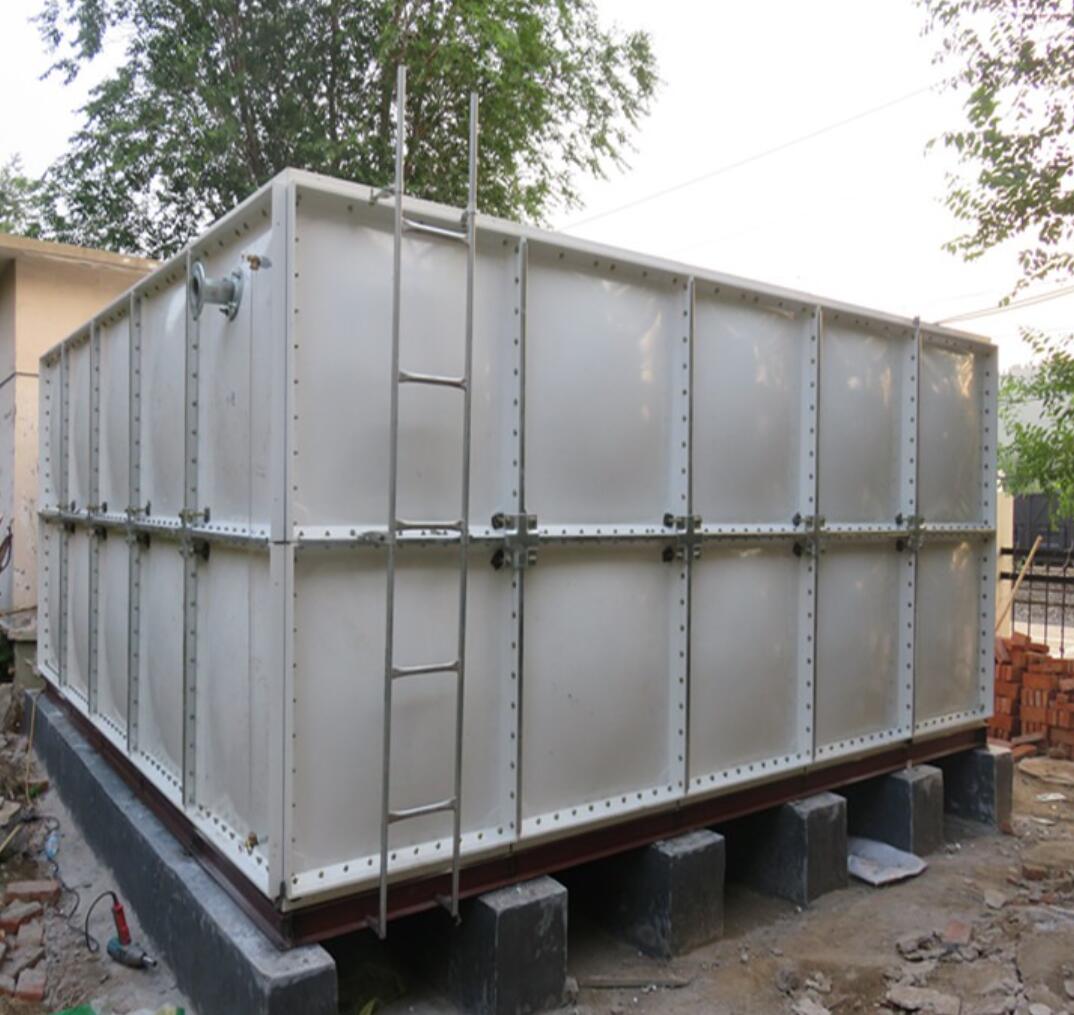
The superior corrosion resistance of Fiber Reinforced Plastic (FRP) water tanks has established them as the preferred choice in sectors with stringent requirements for water quality and storage environments. This performance is not determined by a single factor but is the result of the synergistic effect of materials science, structural design, and manufacturing processes. Drawing from over two decades of engineering practice, Beijing Yuanhui FRP Co., Ltd. provides a professional, layered analysis of its anti-corrosion core.
1. The Foundation of Corrosion Resistance: Resin Matrix Selection and Barrier Function
The corrosion resistance of FRP primarily depends on the resin matrix, which acts as the continuous phase. The resin binds the reinforcement into a monolithic structure and serves as the first line of defense against corrosive media.
1.1 Resin Types and Chemical Stability
General-purpose unsaturated polyester resins (e.g., orthophthalic) offer good resistance to dilute acids and salt solutions, suitable for most potable water. Isophthalic and bisphenol-A fumarate unsaturated polyester resins, with lower ester group density and more rigid molecular chains, demonstrate superior stability against acidic, alkaline, and oxidizing environments like sodium hypochlorite, making them common in wastewater and chemical storage. Vinyl ester resin is considered the premium choice for corrosive service. With its ester groups only at the molecular chain ends, it exhibits exceptional resistance to hydrolysis and acid/alkali attack, capable of long-term exposure to a wide pH range of 2-12. In extreme industrial conditions, its service life can be 2-3 times that of standard polyesters.
1.2 Supporting Data: Permeation Rate and Time to Failure
Research indicates that the permeation and diffusion rate of media through the resin is the primary cause of FRP performance degradation. High-quality vinyl ester resins typically have water absorption rates below 0.5%, and their permeability coefficients for ions like chloride and sulfate can be an order of magnitude lower than those of general polyesters. This significantly extends the time required for corrosive agents to reach the fiber interface, thereby delaying the onset of corrosion failure. In a project for a coastal power plant, Beijing Yuanhui FRP utilized a specific vinyl ester resin for a demineralized water tank. After over 15 years of service in a humid atmosphere with chloride concentrations exceeding 1000ppm, internal inspection revealed no significant corrosive layer.
2. Reinforcement Fibers and Interface: The Critical Support for Corrosion-Resistant Structure
Glass fibers provide mechanical strength, but the condition of the fiber-resin interface is crucial for maintaining this strength in corrosive environments.
2.1 Fiber Types and Surface Treatment
Standard E-glass fibers are susceptible to inorganic acids; long-term exposure can lead to leaching of metal ions and strength loss. For highly corrosive environments, C-glass or ECR-glass fibers with better acid resistance are selected. More critical is the fiber surface treatment with coupling agents. High-quality silane coupling agents form strong chemical bonds and physical adsorption at the interface, transforming this potential weak point into a stable interphase. This hinders media diffusion along the interface and reduces permeation caused by stress cracking.
2.2 The Barrier Value of the "Resin-Rich Layer"
Professional FRP tank manufacturing incorporates a resin-rich liner layer, 1.5-2.5mm thick, with glass fiber content below 30%. This dense layer, composed almost entirely of corrosion-resistant resin, is the core barrier. It prevents direct fiber exposure to the medium and minimizes voids or defects. Beijing Yuanhui's工艺 standards mandate that this layer be reinforced with chopped strand mat to ensure complete resin wet-out, forming a continuous, pore-free protective film.
3. Manufacturing Process and Quality Control: The Ultimate Guarantee of Performance
Even the best materials will underperform if process control is poor. The durability of FRP tanks is highly dependent on precise manufacturing control.
3.1 Molding Process and Void Content Control
In hand lay-up or filament winding processes, resin viscosity, curing system, ambient temperature/humidity, and operator skill directly affect product quality. Voids and delaminations are primary pathways for media ingress. Data shows that corrosion resistance declines significantly when void content exceeds 1%. Employing vacuum-assisted processes (like VRTM) or strictly controlling resin mix and roller compaction can reduce void content below 0.5%, greatly enhancing barrier integrity. Beijing Yuanhui implements standardized procedures and in-process inspections for critical liner layers to ensure complete resin saturation of each reinforcement ply.
3.2 Degree of Cure and Post-Curing
Insufficient resin cure (typically requiring a Barcol hardness ≥40) leaves unreacted monomers and low-molecular-weight chains, which not only weakens mechanical properties but also increases susceptibility to media swelling and attack. Proper post-curing (e.g., elevated temperature treatment) promotes a more complete cross-linked network, increasing the glass transition temperature (Tg) and chemical stability. The interior surface of a fully cured vinyl ester tank exhibits optimal solvent resistance and surface hardness, effectively resisting long-term water erosion and trace contaminant attack.
4. Engineering Application and Long-Term Performance Assessment
The corrosion resistance of FRP tanks must ultimately be validated in real-world conditions, dependent on medium composition, temperature, and stress state.
For neutral potable water storage, well-made FRP tanks often have a design life exceeding 25 years. Failure is typically not due to "corrosion perforation" but gradual performance decline from external mechanical damage or UV degradation. In chemical storage, Beijing Yuanhui customized a tank for a pharmaceutical plant to store an organic acid solution (pH ~4.5). By selecting a high-crosslink-density vinyl ester resin, increasing the liner thickness to 3mm, and implementing strict pre-delivery spark testing (to ensure no pinholes), the tank has operated flawlessly for 12 years. Periodic internal inspections show a smooth, intact surface with no blistering or fiber exposure.
Regular monitoring and maintenance are also vital. Observing changes in interior surface color/gloss or using ultrasonic thickness gauging can assess the liner condition and predict remaining service life, highlighting the engineering advantage of FRP tanks as monitorable and predictable assets.
Conclusion
The exceptional corrosion resistance of FRP water tanks is a systematic achievement. It originates from the precise selection of the resin matrix's chemical structure, relies on the robust bonding at the fiber-resin interface, and is realized through meticulous manufacturing processes that translate material potential into product performance. From potable water to demanding industrial environments, understanding and controlling these key factors enables FRP tanks to provide an economical, reliable, and long-lasting corrosion-resistant storage solution. As a professional FRP tank manufacturer, Beijing Yuanhui FRP Co., Ltd. is committed to integrating advancements in materials science with rigorous engineering standards, ensuring every FRP water tank delivered withstands the test of time in complex corrosive environments.