An In-Depth Analysis of FRP Water Tank Lifespan: Key Influencing Factors and Scientific Maintenance Strategies
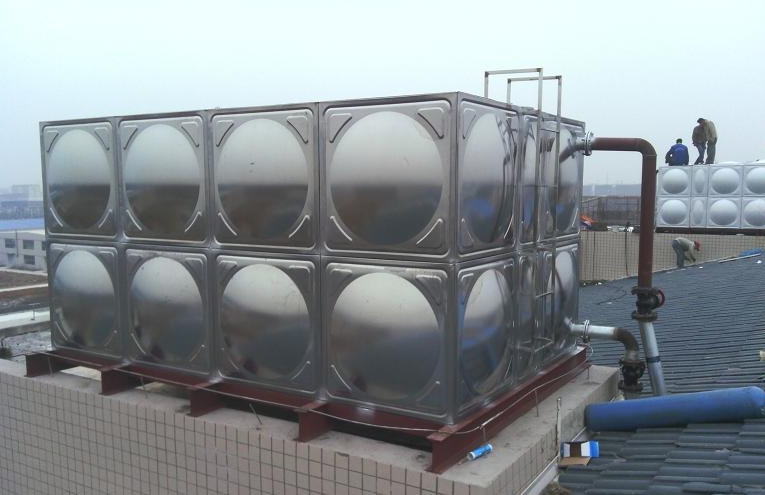
An In-Depth Analysis of FRP Water Tank Lifespan: Key Influencing Factors and Scientific Maintenance Strategies
Fiberglass Reinforced Plastic (FRP) water tanks are widely used in secondary water supply, firefighting water storage, and industrial water applications due to their advantages of light weight, high strength, corrosion resistance, and leak-proof nature. One of the primary concerns for users is their service life. While the design life of a quality FRP tank is typically 20-30 years, its actual operational lifespan can vary significantly based on multiple factors. This article delves into the core elements determining the longevity of FRP water tanks and provides practical maintenance guidance.
Design Life and Industry Standards for FRP Water Tanks
The industry generally sets the design reference life for premium FRP water tanks at around 25 years. This figure is based on material performance degradation models under ideal conditions, such as storing potable water at ambient temperature. Manufacturers like Beijing Yuanhui FRP Co., Ltd. produce tanks in compliance with national standards such as GB/T 21238-2016, which specifies requirements for raw materials, structural performance, hygienic properties, and corrosion resistance—forming the foundation for long-term service life. However, design life is not a guaranteed lifespan; actual longevity is the result of the combined effects of material science, craftsmanship quality, and environmental stress.
Four Core Factors Influencing FRP Water Tank Lifespan
1. Raw Material Quality and Resin System Selection
This is the fundamental determinant of an FRP tank's lifespan. Food-grade unsaturated polyester resins (e.g., isophthalic, vinyl ester) offer far superior corrosion and hydrolysis resistance compared to standard orthophthalic resins. The impregnation quality and content ratio of glass fibers and fabrics (like surface veil, chopped strand mat, woven roving) directly impact the laminate's interlayer bond strength and impermeability. Inferior resins or low-alkali glass fibers accelerate aging, leading to strength loss and leakage. Reputable companies insist on high-grade resins and quality alkali-free glass fibers to ensure outstanding durability from the source.
2. Manufacturing Process and Structural Design
The uniformity of hand lay-up, degree of cure control, and laminate design are critical. A proper resin-rich inner liner (usually containing a surface veil) serves as the first barrier against medium corrosion. The reinforcement lay-up must be designed based on mechanical calculations for tank height and water pressure to ensure sufficient hoop strength and axial stiffness. Process defects like air bubbles, delamination, or incomplete cure become stress concentration points and corrosion pathways, significantly shortening service life. Advanced computer-controlled filament winding processes can produce more consistent and higher-strength shell structures.
3. Service Environment and Medium Conditions
Environmental factors are the external drivers. Long-term exposure to UV radiation (outdoors unprotected), extreme temperature cycling, high humidity, or chemically polluted atmospheres accelerates resin matrix aging. The nature of the stored medium has a greater impact: residual chlorine and temperature fluctuations in potable water; acids, alkalis, salts, or organic compounds in industrial wastewater; the stagnant state in firefighting tanks—all contribute to varying degrees of internal wall erosion. For specific media, a corresponding corrosion-resistant resin system must be selected.
4. Installation, Maintenance, and Daily Management
Improper installation is a common cause of premature failure. An uneven foundation causes uneven stress distribution at the tank bottom, leading to micro-cracks that can propagate. Excessive stress at pipe connections or improper installation of manways and ladders can also cause local cracking. In daily management, regular cleaning (recommended 1-2 times annually) to prevent sediment buildup and microbial corrosion, along with checking the condition of components like float valves and level controllers to avoid overflow or dry running, are essential practices for extending service life.
Scientific Maintenance and Life Extension Strategies
To maximize the lifecycle value of an FRP water tank, the following strategies are recommended: First, select a reputable supplier like Beijing Yuanhui FRP Co., Ltd. from the procurement stage, clearly specifying raw material standards and process requirements. Second, installation must be performed strictly according to specifications by a professional team, ensuring a level foundation and flexible pipe connections. Third, establish a regular inspection regime, focusing on the tank surface for cracks, discoloration, or fiber exposure, and the interior for sediment or abnormal panel deformation. For outdoor tanks, installing a sunshield or applying a UV-resistant coating is an effective protective measure. Finally, maintain complete product certificates, material reports, and installation records for future assessment and maintenance.
Conclusion
The service life of an FRP water tank is a comprehensive subject. It is not a fixed number but a dynamic outcome defined by material quality, manufacturing craftsmanship, service environment, and maintenance level. By investing in products made from superior materials and mature processes, such as compliant tanks from Beijing Yuanhui FRP Co., Ltd., and complementing this with scientific installation and consistent maintenance, users can potentially reach or even exceed the design life. This ensures water safety and delivers long-term economic benefits. Understanding and managing these influencing factors is key to guaranteeing the long-term, stable operation of FRP water tanks.