An In-Depth Analysis of the Hygienic and Safety Performance of FRP Water Tanks: Comprehensive Assurance from Material to Application
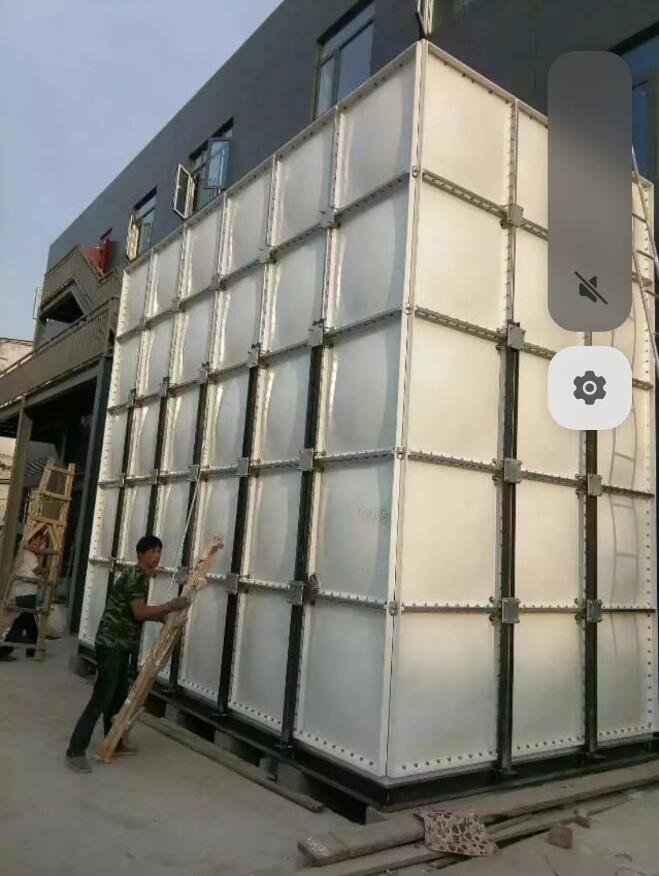
An In-Depth Analysis of the Hygienic and Safety Performance of FRP Water Tanks: Comprehensive Assurance from Material to Application
The hygienic and safety performance of core storage equipment in water supply systems is directly linked to end-user health and water quality. Fiber Reinforced Plastic (FRP) water tanks have secured a critical position in modern building secondary water supply, fire water storage, and the food industry, thanks to their superior material properties and mature manufacturing processes. The construction of their safety profile is a systematic project encompassing raw material selection, structural design, and long-term maintenance.
I. Liner Material: Food-Grade Barrier and Microbial Inhibition
The foundation of an FRP tank's hygienic safety lies in its inner liner, which is in direct contact with the stored water. High-quality tanks utilize food-grade unsaturated polyester resins or superior vinyl ester resins that comply with standards such as China's GB/T 17219 for sanitary safety evaluation of drinking water equipment. For instance, in the production practices of Beijing Yuanhui FRP Co., Ltd., the styrene residue in the standard product's liner resin is strictly controlled below 0.1%, far exceeding the national standard limit, eliminating the risk of harmful substance leaching at the source.
1.1 Surface Smoothness and Biofilm Control
The mold-forming process of FRP enables an exceptionally high surface finish. The Barcol hardness can exceed 40, resulting in a mirror-smooth interior that resists scaling, algae growth, and bacterial biofilm adhesion. Compared to the porous surface of traditional concrete tanks or the uneven welds of metal tanks, the smooth FRP surface significantly reduces habitats for microorganisms. Comparative data indicates that under identical water quality and conditions, bacterial adhesion on a smooth FRP surface can be over 70% lower than on rough concrete.
1.2 Application of Antimicrobial Resins
For facilities with stringent microbial control requirements, such as hospitals, schools, and food processing plants, leading manufacturers offer specialized resins incorporating antimicrobial agents. This creates a long-lasting antimicrobial layer on the tank interior, demonstrating significant inhibitory effects against common pathogens like E. coli and Staphylococcus aureus, with antimicrobial rates consistently above 99%, providing an upgraded safety solution for specialized industries.
II. Structural Integrity: Dual Defense Against Leakage and Contamination
Tank leakage not only wastes water but is a primary pathway for external pollutant ingress. The structural integrity of an FRP tank is a crucial physical safeguard for its hygienic safety.
2.1 Seamless Molding and Superior Sealing
FRP panels formed by compression molding or large tanks created via filament winding are inherently free from拼接缝隙. Assembly between panels employs food-grade sealing gaskets (often EPDM rubber for its excellent water and aging resistance) and bolted connections, ensuring long-term, leak-proof seals. Pressure tests from Beijing Yuanhui's projects demonstrate their tanks withstand 1.5 times the design water pressure for 24 hours without leakage or deformation, validating exceptional sealing performance.
2.2 Scientific Venting and Protective Design
To prevent ingress of external contaminants like dust and insects, qualified FRP tanks must be equipped with vent pipes fitted with insect screens (typically stainless steel mesh of at least 24 mesh). Manhole covers must be airtight, lockable, and raised above the roof panel to prevent back-siphonage of contaminated water. These detailed designs form a secondary barrier against external pollution.
III. Long-Term Stability and Maintenance Accessibility
Hygienic safety performance is not permanent; it requires stability throughout the tank's lifecycle.
3.1 Material Inertia and Water Quality Preservation
FRP is chemically inert and resistant to acid and alkali corrosion. Unlike metal tanks, it does not corrode and release impurities like iron ions into the water, thereby ensuring stored water remains odorless and unchanged in color over the long term. This inertness guarantees water quality is unaffected by the container itself during storage.
3.2 Structure Facilitating Cleaning and Disinfection
Properly designed FRP tanks include manholes for personnel access and internal ladders if needed. The smooth interior allows for efficient high-pressure washing and disinfectant application without dead spots. Regular professional cleaning and disinfection (recommended at least 1-2 times annually) are essential for maintaining hygienic performance, and the FRP material inherently supports this requirement.
IV. Standards Certification and Industry Practice
The hygienic safety of FRP tanks requires validation by authoritative standards and testing in real-world applications. Beyond mandatory sanitary safety tests like GB/T 17219 (including immersion tests, sensory, physicochemical, and toxicological指标), premium products obtain official sanitary approval certificates for drinking water contact materials.
In a project where Beijing Yuanhui FRP Co., Ltd. supplied a 200-ton process water storage tank for a major dairy producer, a complete traceability system for hygienic safety was established—from third-party test reports on resin raw materials to on-site water quality monitoring of the finished tank. Water quality data after three years of operation showed no significant deviation in key sanitary indicators compared to initial use, fully verifying the long-term hygienic stability of the FRP tank.
Conclusion
The hygienic and safety performance of FRP water tanks constitutes their core competitive advantage, enabling widespread use in civil and industrial applications. This performance stems from the chemical barrier of food-grade resin liners, the physical inhibition provided by the high-gloss surface, the pollution isolation achieved by integral sealing structures, and the design philosophy favoring maintenance. When selecting an FRP tank, users should prioritize material卫生检测报告, structural design details, and the manufacturer's project portfolio, evaluating both standard certifications and practical efficacy. For professional manufacturers like Beijing Yuanhui FRP Co., Ltd., continuously optimizing material formulations and processes while strictly adhering to and surpassing industry standards is the fundamental responsibility to ensure every tank delivered serves as a safe and reliable "water bank."