An In-Depth Analysis of the Hygienic and Safety Performance of FRP Water Tanks: A Triple Assurance of Material, Process, and Standards
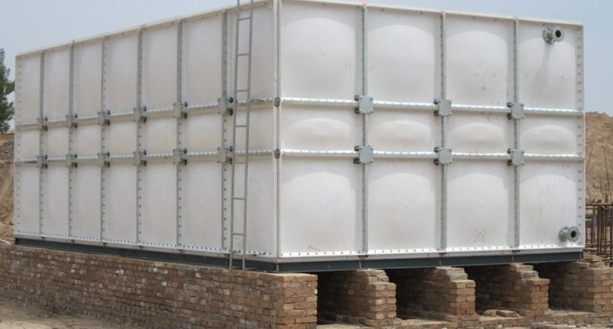
An In-Depth Analysis of the Hygienic and Safety Performance of FRP Water Tanks: A Triple Assurance of Material, Process, and Standards
The hygienic safety of water storage equipment is directly linked to end-user health and water quality. Fiberglass Reinforced Plastic (FRP) water tanks are widely used in secondary water supply and fire protection systems due to their excellent corrosion resistance and structural strength. However, their core hygienic safety features are often overlooked. This article systematically deconstructs the intrinsic mechanisms that ensure water quality safety in FRP tanks, providing a basis for professional selection.
1. Material Foundation: Food-Grade Resin and Stable Inner Liner
The hygienic safety of an FRP tank originates from its first point of contact with water—the inner liner. Its safety goes beyond mere "non-rusting" and is rooted in precise chemical material science.
1.1 Application of Food-Grade Unsaturated Polyester Resin
Professional manufacturers, such as Beijing Yuanhui FRP Co., Ltd., strictly use food-grade unsaturated polyester resins certified by national health authorities for the inner liner. These resins (e.g., isophthalic, vinyl ester) feature very low styrene residue (typically ≤0.1%) and leachable content. The dense, smooth surface formed after curing effectively prevents the leaching of harmful monomers from the resin into the water, eliminating material contamination at the source. In contrast, tanks using non-food-grade or inferior resins may leach organic compounds over time, affecting water quality.
1.2 Process Realization of the Inner Liner
A qualified food-grade inner liner typically has a thickness of no less than 2.5mm, achieved via spray-up or hand lay-up processes to ensure no bubbles, dry spots, and uniform thickness. Beijing Yuanhui's specifications require the resin content in the liner to exceed 90%, forming a resin-rich layer with a Barcol hardness above 40. This creates a dense, smooth surface resistant to dirt adhesion, establishing the physical foundation for the tank's hygienic performance.
2. Biological Safety: Structural Properties that Inhibit Microbial Growth
The potential for water tanks to become breeding grounds for microorganisms, particularly pathogens like Legionella, is a major risk in water systems. FRP tanks create multiple barriers against this through their material and design.
2.1 Smooth Surface and Antimicrobial Properties
High-quality FRP liners have a glaze-smooth, low-hydrophilicity surface, making it difficult for microbes and algae to adhere and colonize. Some premium products incorporate safety-certified antimicrobial agents (e.g., silver ions, zinc oxide) into the resin to inhibit bacterial growth long-term without affecting water quality. Case studies show that under identical conditions, the biofilm formation rate on the smooth inner wall of an FRP tank can be approximately 60% slower compared to traditional concrete tanks.
2.2 Fully Enclosed Structure and Scientific Ventilation
FRP tanks are modular but achieve overall sealing through food-grade sealing gaskets and bolted connections, effectively preventing intrusion by dust, insects, or rodents. Simultaneously, tanks must be equipped with vent pipes fitted with insect-proof screens (usually 200-mesh or finer stainless steel), ensuring air circulation while blocking contaminants and maintaining a clean internal microenvironment.
3. Structural Safety: Leak-Proof and Anti-Contamination Design
Structural integrity is fundamental to preventing secondary contamination. Leaks not only waste water but can also cause cross-contamination through ingress of external pollutants or egress of stored water.
3.1 Seamless Inner Wall and High-Strength Connections
High-quality FRP tank modules are manufactured using a molding process for a one-piece, seamless inner wall. Joints between panels are sealed with specialized food-grade rubber gaskets and multi-bolt fastening, ensuring no leakage under long-term water pressure. Beijing Yuanhui's tanks undergo full hydrostatic testing before leaving the factory, with a zero-leakage rate as a basic requirement. This integrity eliminates risks of bacterial growth and leakage at seams.
3.2 Hygienic and User-Friendly Appurtenance Design
Hygienic safety extends to every detail. Manhole covers must be sealed and raised above the tank top to prevent污水 ingress. Internal and external ladders should be stainless steel, smooth and easy to clean. The placement of inlets, outlets, and drain ports must follow hydrodynamic principles to avoid dead zones (areas where water stagnates for over 24 hours). The drain port should be at the lowest point of the tank floor for complete drainage and ease of cleaning.
4. Standard Certification and Long-Term Hygienic Maintenance
Performance requires standards for measurement, and safety requires maintenance for continuity.
4.1 Authoritative Sanitary Permits and Test Reports
In China, FRP tanks used for potable water must obtain a "Hygienic Permit for Products Related to Drinking Water Hygiene and Safety" issued by provincial health authorities. This permit imposes strict requirements on immersion tests for tank materials (resin, fiberglass, curing agents, etc.), mandating that post-immersion water quality complies with standards for turbidity, chromaticity, chemical oxygen demand, heavy metals, and other parameters as per the relevant national evaluation规范. Requesting and verifying this permit, along with recent third-party test reports (e.g., from SGS), is a necessary step during procurement.
4.2 Scientific Cleaning and Maintenance Cycles
Even the best tanks require regular maintenance. A comprehensive inspection every six months and a professional cleaning/disinfection at least annually are recommended. Cleaning should use harmless disinfectants (e.g., sodium hypochlorite solution) followed by thorough rinsing. Beijing Yuanhui FRP Co., Ltd. provides complete maintenance guidelines and record cards to help clients establish maintenance logs, ensuring the FRP tank maintains excellent hygienic safety performance throughout its service life (often exceeding 30 years).
Conclusion
The hygienic and safety performance of an FRP water tank is a systematic engineering achievement. It is rooted in the selection of food-grade raw materials, realized through meticulous manufacturing processes, manifested in structures that resist microbial growth, and ultimately guaranteed and sustained by authoritative standard certifications and regular maintenance. For facilities with stringent water quality requirements—such as hospitals, schools, hotels, and food processing plants—choosing a supplier like Beijing Yuanhui FRP Co., Ltd., which emphasizes full-process hygienic control, represents a long-term commitment to water safety. A deep understanding of these performance dimensions empowers users to look beyond price comparisons and make more informed decisions based on lifecycle health and safety considerations.