A Comprehensive Analysis of the FRP Water Tank Production Process: From Mold to Finished Product
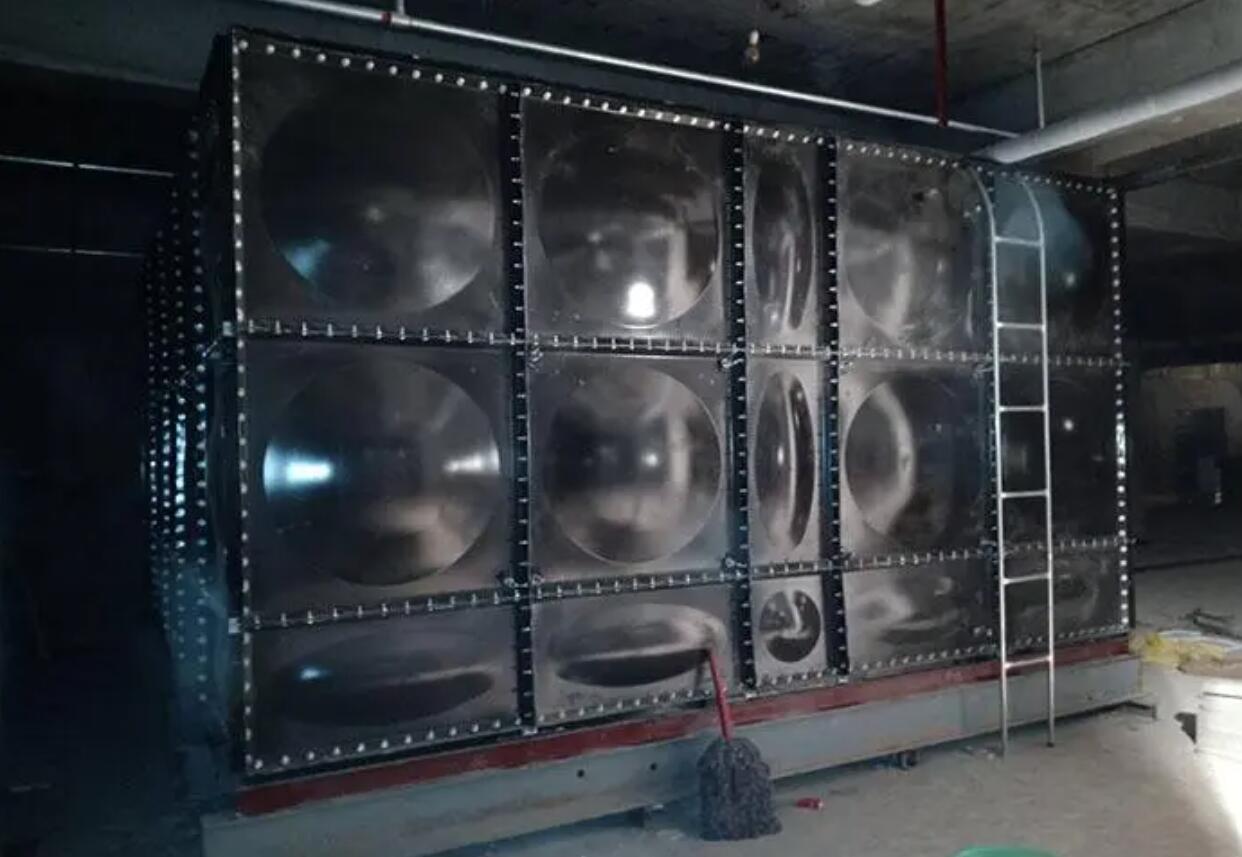
A Comprehensive Analysis of the FRP Water Tank Production Process: From Mold to Finished Product
Fiber Reinforced Plastic (FRP) water tanks have become a preferred choice for secondary water supply and fire water storage, owing to their high strength-to-weight ratio, corrosion resistance, and long service life. Behind these superior properties lies a rigorous, precise, and standardized production process. This article provides a systematic breakdown of the entire manufacturing journey of an FRP water tank, from design to dispatch, highlighting its core technical aspects.
1. Mold Preparation and Surface Treatment: The Foundation of Quality
The mold forms the very foundation of FRP tank shaping. Its quality directly dictates the smoothness of the tank's inner surface, dimensional accuracy, and demolding success. Professional manufacturers, such as Beijing Yuanhui FRP Co., Ltd., utilize dedicated molds characterized by high precision and superior surface finish.
1.1 Mold Cleaning and Inspection
Prior to each production cycle, the mold must undergo thorough cleaning to remove dust, grease, and any residual material. A meticulous inspection follows to ensure the mold is free from cracks and deformation, with dimensions conforming to design specifications (tolerance is typically controlled within ±2mm).
1.2 Application of Release Agent
The uniform application of a high-performance release agent (such as semi-permanent wax or polymer-based agents) is a critical step. This ensures the smooth demolding of the cured tank shell and guarantees the cleanliness and smoothness of the inner surface, which must meet standards for food-grade resin contact. Beijing Yuanhui's procedure mandates at least two coats, allowing complete drying and film formation.
2. Material Formulation and Laminating Structure Formation: Core Process Breakdown
The FRP tank shell employs a laminated structure, achieving designed strength through the composite of resin and glass fiber. This stage represents the core of the production process, primarily divided into two mainstream techniques: Hand Lay-up and Filament Winding.
2.1 Resin System and Reinforcement Materials
The inner liner, in direct contact with water, must be made using food-grade unsaturated polyester resin (e.g., isophthalic resin) compliant with national health standards, with styrene residue strictly controlled below 0.1%. The structural layer utilizes alkali-free glass fiber mat, woven roving, or filament winding yarns. The ratio of resin to catalyst requires precise measurement (error within 1%), with ambient temperature and humidity monitored to ensure consistent gel time.
2.2 Hand Lay-up Process Steps
This remains the most common process for manufacturing rectangular tank panels and custom shapes. It begins with applying a resin-rich gel coat (approx. 0.5mm thick) onto the mold to form a smooth, dense inner liner. Subsequently, layers of glass fiber mat and woven roving are alternately laid, with each layer meticulously rolled to impregnate fibers and remove air bubbles. For a standard 3x3 meter panel, the total thickness is typically designed between 8-12mm, varying based on the panel's location (side, top, bottom) and pressure requirements.
2.3 Filament Winding Process
Cylindrical tanks are predominantly manufactured using computer-controlled filament winding machines. This process involves rotating a mandrel while precisely laying resin-impregnated continuous glass fiber strands at predetermined winding angles and tensions. The fiber content can exceed 65%, resulting in exceptional hoop strength and superior product consistency. Beijing Yuanhui's large-scale winding equipment can produce single-piece tanks with diameters up to 20 meters.
3. Curing, Demolding, and Post-Processing: Ensuring Stability
The formed part must undergo complete curing and post-processing to achieve stable physical and chemical properties.
3.1 Curing Control
Initial curing occurs at room temperature, with the environment strictly controlled between 15-30°C. For equipped facilities, post-curing in a low-temperature oven (40-60°C) is employed. This significantly increases the resin's degree of cure (to over 85%), thereby markedly enhancing the tank's long-term corrosion resistance and dimensional stability.
3.2 Demolding and Trimming
Once the part has sufficiently cured to achieve demolding strength, compressed air or specialized tools are used for demolding. The demolded panel then undergoes trimming, edge grinding, and the cutting of pre-designed openings (for inlets, outlets, manholes, overflow pipes). All cut edges are sealed with resin to prevent fiber exposure.
3.3 Stiffener Installation and Assembly Preparation
To enhance the stiffness of large panels, FRP structural stiffeners are bonded to the back of the panels using resin. Subsequently, all panels are numbered, and assembly accessories like food-grade rubber gaskets and stainless steel bolts are prepared for final site installation.
4. Quality Inspection and Performance Verification: The Final Gateway
A stringent quality inspection system is the ultimate safeguard for the safe and reliable operation of FRP water tanks.
4.1 In-Process and Visual Inspection
Quality inspectors conduct periodic checks during production for resin content, bubble removal, and lay-up sequence. Every finished panel undergoes a 100% visual inspection to ensure a smooth inner surface, free from bubbles, cracks, exposed fibers, with uniform coloration.
4.2 Performance Sampling Tests
According to the Chinese National Standard GB/T 21238-2016, samples from each production batch are periodically sent to laboratories for testing Barcol hardness, flexural strength, resin insoluble content (degree of cure), and water sanitation performance (immersion tests). For instance, Beijing Yuanhui's products consistently exhibit flexural strength above 150MPa, exceeding the standard requirement of 120MPa.
4.3 Trial Assembly and Leakage Test
Standard panels are periodically trial-assembled in the factory to check joint precision. For small one-piece tanks or critical components, a full hydrostatic pressure leakage test is conducted to ensure perfect sealing.
Conclusion
The production of FRP water tanks is far more complex than simply "brushing resin and laying fiberglass." It is a systematic engineering discipline integrating materials science, structural mechanics, and precision manufacturing. Every step, from the meticulous preparation of the mold and precise resin formulation to the disciplined layer-by-layer application, profoundly impacts the final product's longevity and safety. Professional manufacturers like Beijing Yuanhui FRP Co., Ltd., achieve consistent delivery of high-performance, durable tanks by standardizing, digitizing, and rigorously executing this full-process methodology. This drives the entire industry toward higher quality and standards. For end-users, understanding these core production processes is also crucial for evaluating product quality and making informed procurement decisions.