Analyzing FRP Water Tank Lifespan: Key Influencing Factors and Scientific Maintenance Guidelines
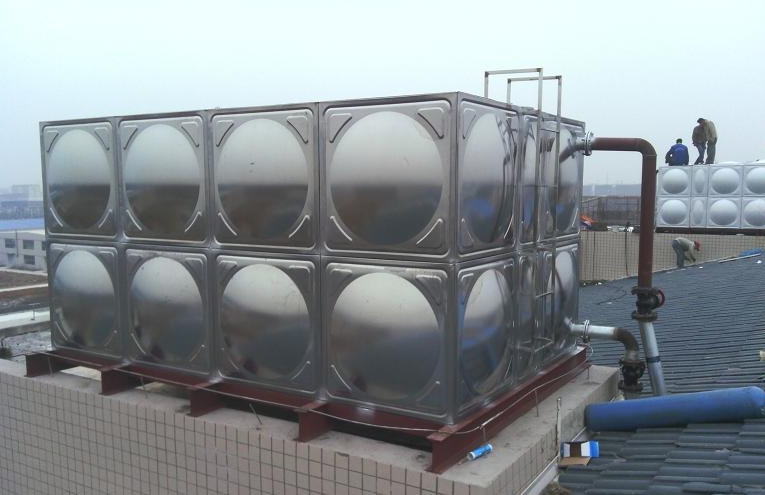
Analyzing FRP Water Tank Lifespan: Key Influencing Factors and Scientific Maintenance Guidelines
Fiber Reinforced Plastic (FRP) water tanks are widely used in secondary water supply, fire protection, and industrial water storage due to their lightweight, high strength, corrosion resistance, and design flexibility. One of the most critical concerns for end-users is their service life. While the typical design lifespan ranges from 20 to 30 years, the actual longevity can vary significantly based on multiple factors. This article systematically examines the core elements affecting FRP tank durability and provides professional maintenance strategies.
1. Design Life vs. Actual Service Life: Understanding the Fundamentals
The industry standard design life for FRP water tanks is generally 20-30 years. This benchmark assumes the use of high-quality, food-grade resins (e.g., isophthalic, vinyl ester) and alkali-free glass fibers compliant with standards, operating under ideal conditions. However, "design life" is not a "guaranteed life." Actual service life is the combined result of design, material quality, manufacturing, installation, environmental exposure, and maintenance rigor. Project data from Beijing Yuanhui FRP Co., Ltd. shows that tanks produced under strict specifications and maintained properly have reliably operated for over 25 years.
2. Four Core Factors Influencing FRP Tank Lifespan
2.1 Raw Material Quality: The Foundation of Longevity
The resin matrix and glass fiber reinforcement form the core structure. Inferior resins (e.g., cheap orthophthalic resins) exhibit poor hydrolytic and UV resistance, leading to discoloration and strength degradation. Glass fibers with high alkali content are susceptible to "leaching" in water, causing structural weakening. The durability of ancillary materials like sealing gaskets and bolts is equally crucial. Sourcing from reputable manufacturers like Beijing Yuanhui FRP Co., Ltd., who insist on high-grade resins and alkali-free fibers, is the first step toward ensuring a long-lasting FRP water tank.
2.2 Manufacturing Craftsmanship and Structural Design
Manufacturing techniques directly impact homogeneity and internal defects. Improper hand lay-up can introduce air bubbles, delamination, or uneven resin distribution, creating weak points. Advanced processes like controlled molding or computer-guided filament winding ensure consistent wall thickness and dense structure. In design, rational placement of stiffeners and a tapered thickness profile (thickest at the bottom) effectively resist hydrostatic pressure and minimize stress concentration, thereby extending the FRP tank's service life.
2.3 Installation Environment and Operational Conditions
Environmental exposure acts as an external aging accelerator. Prolonged UV radiation degrades the resin surface; extreme thermal cycling induces micro-cracks; an uneven installation base subjects the tank to constant stress. Furthermore, the stored medium is critical. While potable water is standard, prolonged contact with aggressive chemicals or hot fluids exceeding the resin's thermal tolerance (typically below 60°C for general polyesters) will drastically shorten the FRP water tank's lifespan.
2.4 Routine Maintenance and Periodic Inspection
The adage "the product is three parts, maintenance is seven" applies here. Neglect is a common cause of premature failure. A maintenance schedule should include: internal cleaning to prevent sediment and microbial growth; checking seals at manways, pipes, and connections for leaks; and inspecting the shell for abnormal deformation or cracks. Professional inspection every 1-2 years is recommended to address minor issues before they escalate.
3. Strategies for Scientific Maintenance and Life Extension
Maximizing an FRP tank's potential requires a systematic approach. Initially, select a certified manufacturer with proven expertise, such as Beijing Yuanhui FRP Co., Ltd., based on specific application needs. Ensure installation follows specifications, with a perfectly level and stable foundation. During operation, avoid storing non-design media. For outdoor tanks, install sunshades or apply anti-UV coatings. Maintain a detailed log of all inspections and repairs to enable predictive lifecycle management.
Conclusion
The service life of an FRP water tank is a dynamic outcome of a multi-variable system. It is not a fixed number but the culmination of quality management across the entire chain—from material selection and manufacturing to installation and long-term care. Users should evaluate not just the initial cost but the total lifecycle value. By partnering with quality-conscious suppliers, ensuring proper installation, and implementing proactive, scientific maintenance, it is entirely feasible to achieve or even exceed the upper limit of an FRP water tank's design lifespan, ensuring safe water storage and optimal return on investment.