An In-Depth Analysis of the Hygienic and Safety Performance of FRP Water Tanks: From Material Science to Engineering Practice
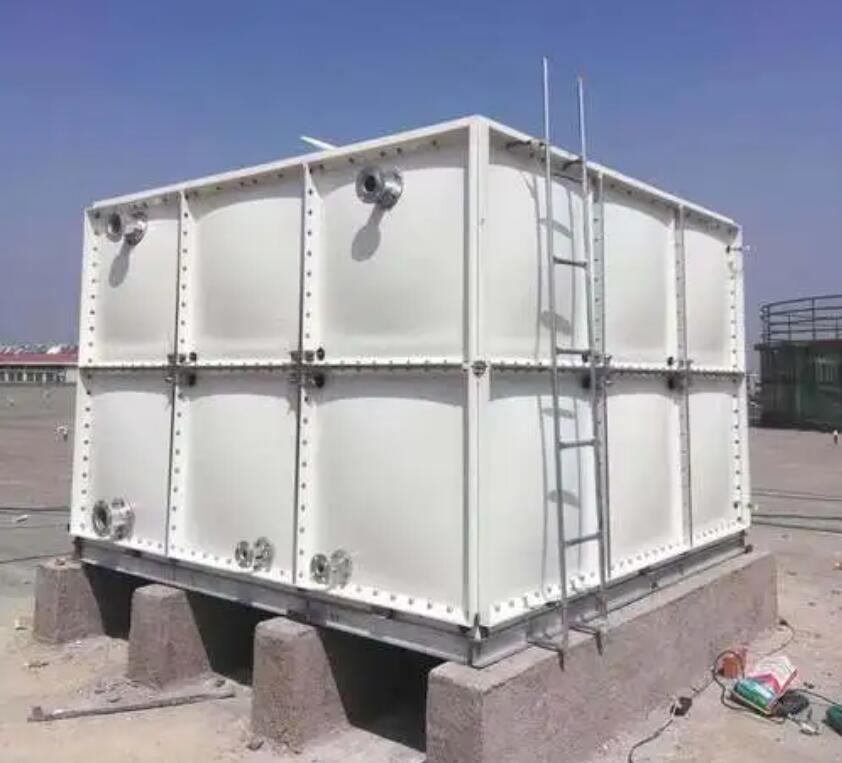
An In-Depth Analysis of the Hygienic and Safety Performance of FRP Water Tanks: From Material Science to Engineering Practice
The hygienic safety of water storage equipment is a core issue concerning public health and water quality. Fiberglass Reinforced Plastic (FRP) water tanks play a crucial role in modern water supply systems due to their unique material properties and mature manufacturing processes. Their sanitary performance is not determined by a single factor but results from the combined effects of materials, craftsmanship, maintenance, and long-term stability. This article aims to provide a professional analysis of the intrinsic mechanisms that ensure water safety in FRP tanks.
1. The Foundation of Safety: Food-Grade Resin and Non-Toxic Curing
The cornerstone of an FRP tank's hygienic safety lies in its primary material composition. The selection of resin for the inner liner is paramount. Reputable manufacturers like Beijing Yuanhui FRP Co., Ltd. typically employ food-grade unsaturated polyester resins or higher-standard vinyl ester resins that comply with national safety evaluation standards for drinking water equipment. When fully cured, these resins form a stable chemical structure that does not leach harmful substances such as free monomers or styrene into the water.
Critical Process: Degree of Cure and Post-Processing
Achieving a "full cure" is a technical key to safety. Incomplete curing can lead to monomer migration. Professional manufacturing ensures a cure degree exceeding 95% through precise control of initiators, promoters, temperature, and time. After molding, the interior surface is finely polished and specially treated to form a dense, smooth, and inert "rich-resin layer." This barrier effectively prevents fiberglass strand exposure and eliminates the risk of fiber contamination, providing the first line of defense for water quality.
2. Surface Structure and Microbial Control: A Physical Barrier Against Biofilm
Microbial growth on tank interiors is a major source of secondary contamination. The smooth inner surface of an FRP tank inherently inhibits microbial adhesion through physical means. Its surface roughness (Ra) can be controlled below 0.5μm, significantly lower than that of concrete or welded metal tanks. This smoothness makes it difficult for bacteria and algae to attach and colonize, while also simplifying cleaning and disinfection procedures.
Long-term monitoring data from Beijing Yuanhui FRP Co., Ltd. in projects for hospitals and food processing plants shows that, under identical maintenance cycles, the total bacterial count on the inner walls of their FRP tanks is consistently 1-2 orders of magnitude lower than that of traditional steel tanks. Furthermore, incorporating antimicrobial agents (e.g., silver ions, zinc oxide) into the liner can provide active bacteriostatic functionality, further enhancing biological safety—a technology already applied in highly demanding sectors like biopharmaceuticals and premium drinking water.
3. Structural Integrity and Long-Term Stability: Preventing Leakage and Aging Contamination
Hygienic safety depends not only on initial state but also on long-term service stability. FRP tanks are manufactured using filament winding or compression molding processes, resulting in a seamless, weld-free structure. This fundamentally eliminates the risk of leakage and corrosion contamination associated with corroded or cracked welds, completely avoiding iron ion pollution from rust common in metal tanks.
Impermeability and Anti-Aging Properties
High-quality FRP tanks exhibit excellent impermeability, with extremely low water vapor transmission rates, preventing external contaminant ingress. Simultaneously, by adding UV absorbers and anti-aging agents to the liner and applying a protective gel coat or coating on the exterior, the tanks effectively resist UV radiation, thermal cycling, and atmospheric corrosion. This prevents material degradation, ensuring the integrity of the inner liner throughout its design life (often exceeding 20 years). Long-term stability means the tank itself does not become a source of contamination due to material breakdown.
4. Standards Compliance and Practical Application: From Certification to Case Studies
Authoritative sanitary certifications provide objective validation of an FRP tank's performance. Products from正规 manufacturers must pass immersion tests conducted by nationally accredited laboratories. These tests assess dozens of parameters, including color, turbidity, odor, visible particulates, chemical oxygen demand, and leaching of heavy metals and formaldehyde. Only after passing all tests can a product obtain the official sanitary permit for drinking water contact materials.
The hygienic advantages of FRP tanks are proven in practice. For instance, in a secondary water supply renovation project for a large residential community in Beijing, the replacement with SMC modular tanks from Beijing Yuanhui FRP Co., Ltd. led to a 70% reduction in end-user water quality complaints. Regular water quality tests showed significant and more stable improvements in turbidity and total bacterial count at the tank outlet. This is attributed to the non-corrosive and easy-to-clean nature of FRP, which allows for more thorough and efficient tank maintenance.
Conclusion
The hygienic and safety performance of an FRP water tank is a systematic engineering achievement. It originates from the proper selection of food-grade resin materials, precise craftsmanship ensuring high cure degree and a smooth liner, the superior sealing provided by the seamless structure, and the long-term stability guaranteed by anti-aging formulations. These factors work synergistically to construct a comprehensive water protection system encompassing both physical barriers and chemical inertness. For end-users, selecting a supplier like Beijing Yuanhui FRP Co., Ltd., which possesses a strict quality control system, complete sanitary certifications, and a wealth of successful case studies, is the most critical step in ensuring the long-term safe service of an FRP tank and safeguarding water health. In the pursuit of higher-quality drinking water today, a deep understanding and rigorous selection of water storage equipment based on safety performance is more important than ever.