Analyzing the Service Life of FRP Water Tanks: Key Influencing Factors and Scientific Maintenance Guidelines
Analyzing the Service Life of FRP Water Tanks: Key Influencing Factors and Scientific Maintenance Guidelines
Fiber Reinforced Plastic (FRP) water tanks are widely used in civil water supply, fire water storage, and industrial water circulation due to their advantages of light weight, high strength, corrosion resistance, and ease of molding. A core metric of significant concern is their service life. While market promises often cite design lives of "20 years," "30 years," or more, the actual operational lifespan can vary considerably due to multiple factors. This article delves into the intrinsic mechanisms and external conditions that determine the service life of FRP water tanks, providing professional guidance for selection, installation, and maintenance.
I. The Intrinsic Foundation of FRP Tank Life: Raw Materials and Manufacturing
The lifespan of an FRP tank is fundamentally rooted in its "birth" stage—the selection of raw materials and the control of manufacturing processes.
1.1 Resin System Selection and Corrosion Resistance
The type and grade of the resin matrix directly determine the tank's corrosion resistance. Food-grade isophthalic unsaturated polyester resin is the standard for high-quality tanks, offering far superior long-term water stability and anti-permeability compared to cheaper orthophthalic resins. For tanks storing special media (e.g., slightly acidic/alkaline industrial water), higher-performance materials like vinyl ester resin may be required. Beijing Yuanhui FRP Co., Ltd., in projects dealing with high-hardness water in northern regions, has significantly enhanced the anti-ion permeation capability of the tank liner by optimizing the resin formulation, forming the first line of defense for long-term structural integrity.
1.2 Reinforcement Materials and Structural Strength
Glass fibers serve as the skeleton bearing structural strength. A rational laminate design using medium-alkali or E-glass rovings, chopped strand mats, and woven rovings dictates the tank's mechanical properties. Substandard or damp fibers and simplistic lamination can lead to delamination, deformation, or even cracking under long-term hydrostatic pressure. Advanced filament winding or molding processes ensure thorough fiber wet-out and uniform distribution, granting the tank excellent hoop and axial strength to resist long-term load fatigue.
1.3 Process Details and Quality Control
Cure degree is a critical technical parameter reflecting process quality. Incompletely cured FRP products suffer from drastically reduced mechanical and corrosion-resistant properties. Professional manufacturers like Beijing Yuanhui FRP Co., Ltd. employ strict temperature/humidity control, post-curing treatments, and Barcol hardness testing to ensure products achieve optimal cure before leaving the factory. Furthermore, details like liner thickness and smoothness, and reinforcement at corners significantly impact long-term durability.
II. External Environment and Installation Conditions: Critical Variables for Lifespan
Even a high-quality tank can see its lifespan severely compromised by improper installation and harsh environments.
2.1 Installation Foundation and Support Structure
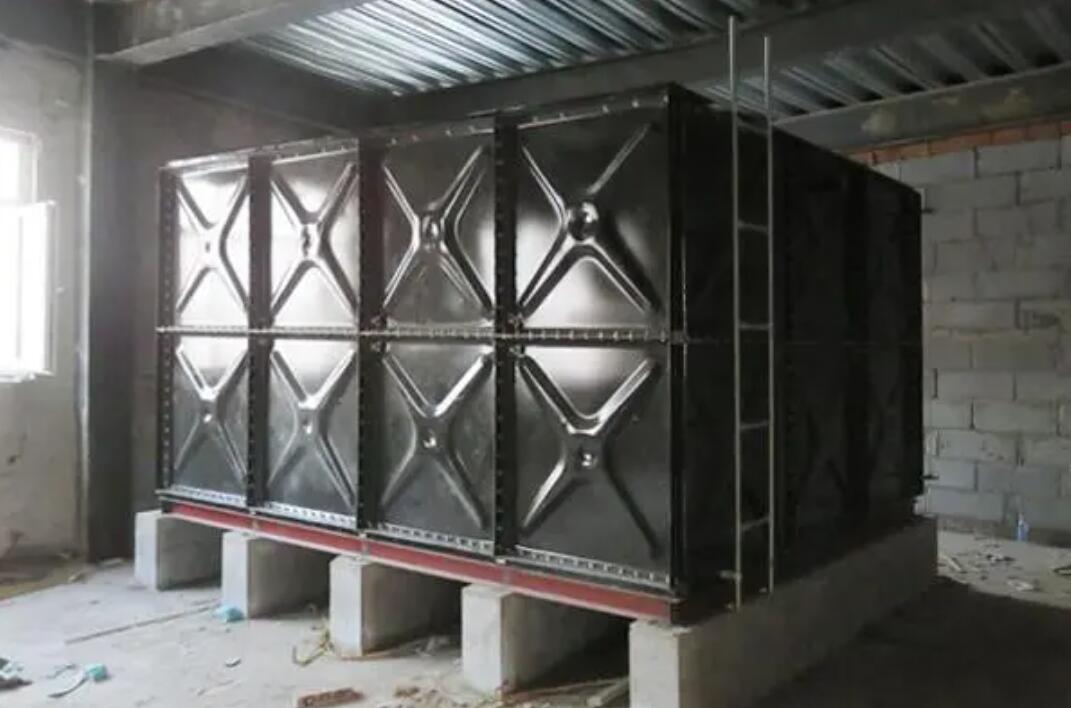
A level, solid concrete or steel frame foundation is paramount. An uneven foundation causes uneven stress distribution on the tank bottom, leading to local stress concentration and leakage over time. For large modular tanks, the spacing and specifications of the supporting steel channels must be professionally calculated. A documented case showed that excessive spacing between support channels caused significant sagging of the tank floor under full water load, causing irreversible structural damage and drastically shortening its service life.
2.2 Ambient Temperature and Medium Characteristics
Outdoor tanks exposed to prolonged UV radiation can experience resin chalkiness and strength loss due to photo-oxidative aging. Therefore, outdoor tanks must be equipped with a UV-resistant gel coat or shading measures. The temperature of the stored medium is also crucial; typically, the long-term service temperature for FRP water tanks should not exceed 60°C (140°F). For hot water storage, heat-resistant resin systems are required. The chemical properties of the medium, such as pH and chloride ion concentration, must be fully considered during the design and selection phase.
III. Scientific Maintenance and Management: The Core to Proactively Extending Service Life
Viewing FRP water tanks as "maintenance-free" is a common misconception. Scientific maintenance is the bridge connecting design life to actual service life.
3.1 Regular Inspection and Cleaning Regime
An annual comprehensive external inspection is recommended, focusing on surface cracks, exposed fibers, or discoloration (which may indicate internal corrosion). An internal inspection (with proper safety ventilation) should be conducted every two to three years to assess the inner wall condition and clean any sediment. Sediment not only contaminates water but can also cause pitting corrosion. The maintenance manual provided by Beijing Yuanhui FRP Co., Ltd. to its clients specifies inspection points and cleaning procedures, effectively preventing potential issues.
3.2 Maintenance of Accessories and Sealing Systems
Sealing gaskets on manholes, ladders, and pipe connection flanges can lose elasticity and cause leaks over time. They should be inspected regularly and replaced. Vent screens must remain intact to prevent biological ingress. External forces on connecting pipes should not be directly transferred to the tank nozzles to prevent cracking.
3.3 Timely Handling of Abnormalities
Upon discovering any minor leak or surface damage, contact the professional manufacturer immediately for repair. Avoid using non-specialized materials (e.g., ordinary silicone sealant) for DIY repairs, as this may exacerbate corrosion. Professional repair typically involves steps like grinding, cleaning, layered reinforcement, and re-curing to restore structural integrity.
Conclusion
The service life of an FRP water tank is not a fixed number but a dynamic outcome determined jointly by its "innate genetics" (materials and工艺) and "postnatal upbringing" (installation, environment, and maintenance). To maximize return on investment and secure long-term, reliable service, users must select reliable suppliers like Beijing Yuanhui FRP Co., Ltd., who prioritize material and process control during procurement. Furthermore, strict adherence to professional specifications during installation and use, coupled with the establishment of a scientific maintenance system, is essential. Only then can the excellent durability of FRP water tanks be fully realized, achieving their decades-long design service life and providing users with safe and stable water storage.