An In-Depth Analysis of FRP Water Tank Lifespan: Key Influencing Factors and Extension Strategies
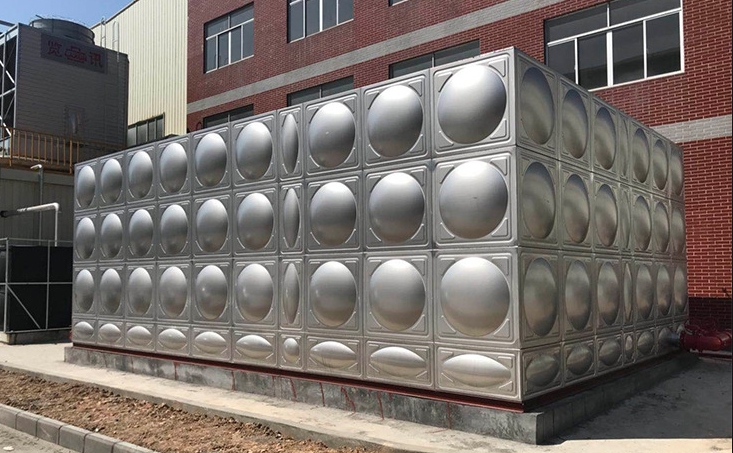
An In-Depth Analysis of FRP Water Tank Lifespan: Key Influencing Factors and Extension Strategies
Fiber Reinforced Plastic (FRP) water tanks have become a preferred solution in industrial and civil water storage due to their light weight, high strength, corrosion resistance, and ease of molding. A central concern for users is their operational lifespan. Industry standards typically cite a design life reference of 15-20 years, but actual service life can vary significantly, hinging on management practices throughout the tank's entire lifecycle.
Design Lifespan and Industry Benchmarks for FRP Tanks
According to standards such as JC/T 658.1-2007 and common engineering practice, a high-quality FRP water tank has an expected design lifespan of over 15 years under standard conditions. Many premium products can achieve 25-30 years of stable operation in ideal environments. Engineering records from Beijing Yuanhui FRP Co., Ltd. show tanks installed at a university in 2005 remain structurally sound and in safe operation today with regular maintenance, demonstrating this durability potential. However, "design life" is a theoretical value; actual longevity is the product of material properties, manufacturing quality, service environment, and maintenance.
Core Factors Influencing the Lifespan of FRP Water Tanks
The long-term durability of an FRP tank is determined by a system of interdependent variables.
1. Raw Material Quality and Structural Design
This forms the tank's "genetic" foundation. The water and corrosion resistance of food-grade resin, the strength and toughness of medium-alkali or non-alkali glass fibers, and the bond strength at their interface are critical. Substandard resin or high-alkali fibers can lead to early leakage, whitening, and strength loss. For instance, tanks using isophthalic polyester resin offer markedly superior corrosion resistance compared to those using standard orthophthalic resin. Furthermore, sound structural design—including rib layout, panel thickness distribution, and load calculations—directly determines the tank's resistance to deformation and fatigue under long-term hydrostatic pressure.
2. Molding Process and Manufacturing Craftsmanship
The manufacturing process brings the "genetics" to life. The uniformity of hand lay-up, the compactness of SMC compression molding, and the fiber tension control in filament winding all directly impact the final product's integrity. Common defects like air bubbles, delamination, incomplete curing, resin-rich or dry spots become points of stress concentration and pathways for corrosion, drastically shortening service life. Processes such as computer-controlled filament winding and controlled-temperature curing cycles, as employed by Beijing Yuanhui FRP Co., Ltd., ensure uniform wall thickness, thorough fiber impregnation, and high cure conversion, safeguarding lifespan from the production stage.
3. Installation Quality and Foundation Support
The adage "30% product, 70% installation" holds true for FRP tanks. An uneven foundation causes uneven stress distribution on the tank floor, leading to cracks over time. Improper bolt-tightening sequences, misaligned gaskets, or insufficient compression during assembly directly cause leaks. Professional installers strictly adhere to foundation levelness tolerances (typically ≤5mm) and use methods like diagonal progressive tightening to ensure overall seal integrity.
4. Storage Medium and External Environment
The nature of the stored medium is a decisive external factor. Normal-temperature potable water is least corrosive. Storing hot water (usually ≤60°C), liquids with pH extremes, or water with high chloride content accelerates hydrolysis and aging of the resin matrix. External environmental factors like prolonged UV exposure, large diurnal temperature swings, high humidity, or corrosive industrial atmospheres degrade and chalk the surface resin, reducing structural strength—a significant concern in coastal or industrial areas.
5. Operational Use and Maintenance Regime
Lack of maintenance is a common cause of premature tank failure. Long-term neglect leads to sediment buildup and microbial growth, which not only contaminates water but also creates biological acids or uneven pressure damaging the inner liner. Frequent, severe fluctuations in inlet water pressure cause hydraulic shock fatigue. Physical impact or unauthorized placement of heavy loads on the tank roof can cause structural damage.
Strategies for Scientifically Extending FRP Tank Lifespan
Extending tank life requires a systematic approach based on the factors above.
Selection and Procurement Phase: Source tanks from reputable manufacturers like Beijing Yuanhui FRP Co., Ltd., specifying raw material grades (e.g., resin type, fiber class) and process standards. Select material grades with corrosion resistance appropriate for the intended storage medium.
Installation and Commissioning Phase: Ensure a level, robust concrete foundation. Insist on professional installation and conduct a static hydrostatic test (a 24-hour water fill with no leakage).
Operation and Maintenance Phase: This is crucial for lifespan extension. Implement a scheduled inspection and maintenance program, including internal cleaning and disinfection at least annually. Inspect the inner liner for cracks or fiber exposure, and check seals and pipe connections. For outdoor tanks, consider installing sunshades or applying UV-resistant gel coats. Avoid storing media or temperatures outside the tank's design specifications.
Promptly repair minor coating damage or hairline cracks using compatible FRP patching kits to prevent defect propagation.
Conclusion
The service life of an FRP water tank is a manageable systems engineering outcome. It is not a fixed number but the culmination of quality across the entire chain—from material selection and precision manufacturing to proper installation and scientific maintenance. Users should look beyond initial purchase cost and consider the total lifecycle cost. Partnering with quality-focused manufacturers like Beijing Yuanhui FRP Co., Ltd. and establishing a robust maintenance protocol is the most reliable way to ensure the safe, prolonged service of an FRP tank, maximizing its economic value. By proactively managing the influencing factors, it is entirely possible for a well-made FRP water tank to reliably serve beyond its design life, reaching 30 years or more.