In-Depth Analysis of the Corrosion Resistance Performance of FRP Water Tanks: Mechanisms, Validation, and Selection Guidelines
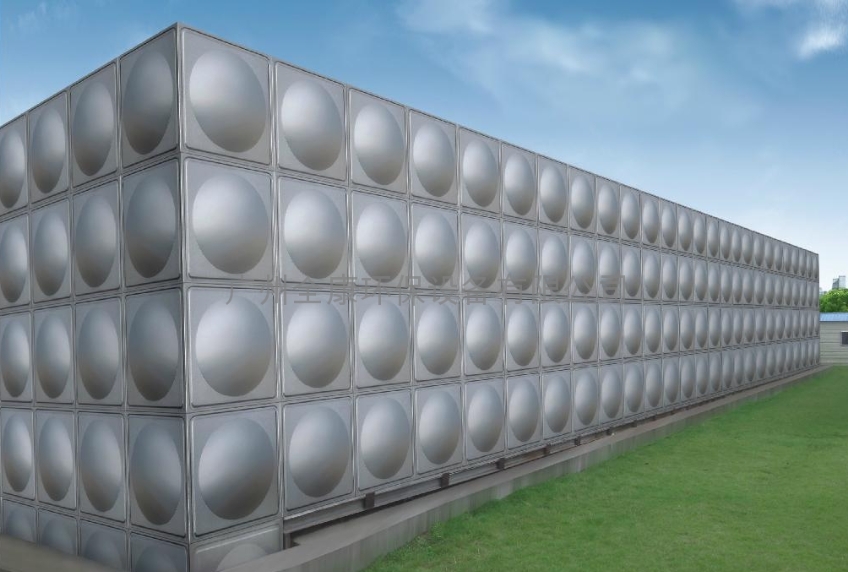
In-Depth Analysis of the Corrosion Resistance Performance of FRP Water Tanks: Mechanisms, Validation, and Selection Guidelines
Fiber Reinforced Plastic (FRP) water tanks have secured a vital position in modern water supply, firefighting, and chemical liquid storage sectors due to their outstanding overall performance. Their superior corrosion resistance is the core advantage distinguishing them from traditional metal tanks, directly impacting long-term system safety and total cost of ownership. This article delves into the intrinsic mechanisms, validation methods, and key engineering application considerations of the anti-corrosion performance of FRP tanks.
1. Core Mechanisms of Corrosion Resistance: Material Science and Structural Design
The corrosion resistance of FRP tanks is not determined by a single factor but stems from their unique composite material system and manufacturing process.
1.1 Barrier and Passivation Role of the Resin Matrix
The resin, serving as the continuous phase, is the first line of defense against medium erosion. Companies like Beijing Yuanhui FRP Co., Ltd. typically use food-grade unsaturated polyester resin, vinyl ester resin, or epoxy resin. Vinyl ester resin, for example, has low ester group density and is shielded by methyl groups, offering exceptional resistance to the penetration of acids, alkalis, salts, and some organic solvents. The resin completely encapsulates the glass fibers, forming a dense, low-porosity protective layer that prevents corrosive media from reaching the reinforcing fibers.
1.2 Reinforcement and Stability of Glass Fibers
Reinforcing materials like E-glass or C-glass are inherently chemically inert. When fully impregnated and encapsulated by high-quality resin, the fiber-resin interface bond is robust, preventing the formation of media penetration channels due to interfacial delamination. This composite structure effectively overcomes the fundamental weakness of electrochemical corrosion in metallic materials.
1.3 Optimization of Structural Layer Design
Professional FRP tanks employ a multi-layer composite structure: the inner liner, the structural layer, and the outer protective layer. The inner liner has a high resin content (usually >70%), providing a smooth, dense, resin-rich surface that contacts the stored medium and offers the primary corrosion barrier. The structural layer ensures mechanical strength, while the outer layer protects against atmospheric aging. This targeted design achieves a perfect unity of corrosion resistance and load-bearing capacity.
2. Performance Validation: Data, Standards, and Real-World Cases
Theoretical mechanisms require rigorous practical validation. The corrosion resistance of FRP tanks can be quantitatively assessed through various methods.
2.1 Laboratory Testing and Industry Standards
According to the Chinese National Standard GB/T 21238-2016 "Fiberglass Reinforced Plastic Water Tanks," there are clear requirements for sanitary performance and corrosion resistance. Immersion tests involve placing samples in acid, alkali, and salt solutions of varying concentrations and temperatures, periodically checking Barcol hardness, flexural strength retention rate, and appearance changes. Data shows that FRP tank liners made with premium vinyl ester resin can typically retain over 85% of their mechanical properties after 90 days of immersion in a 40°C solution of 10% sulfuric acid or 10% sodium hydroxide, with no blistering or cracking.
2.2 Comparative Analysis with Traditional Materials
Compared to stainless steel tanks, FRP tanks are insensitive to chloride ions (Cl-), completely eliminating the risk of pitting and stress corrosion cracking in coastal areas or environments with high chloride content in water. Compared to rubber-lined or coated carbon steel tanks, FRP is a seamless, monolithic structure, avoiding hazards like lining detachment or weld corrosion. A case from Beijing Yuanhui FRP Co., Ltd. involved a hydrochloric acid dilution storage tank for a chemical plant in North China. After eight years of continuous operation, an internal inspection revealed the tank wall remained smooth, whereas the originally planned metal alternative had an expected maintenance cycle of less than three years.
3. Key Factors Influencing Corrosion Resistance and Selection Guidelines
Not all FRP tanks offer the same level of corrosion resistance. Performance depends on material selection, process control, and service conditions.
3.1 Medium Compatibility and Resin Selection
This is the primary step in selection. For potable cold water, food-grade isophthalic unsaturated polyester resin may suffice. For hot water or weakly alkaline water, a more hydrolysis-resistant resin like isophthalic-NPG type is preferable. For storing strong acids, strong alkalis, or mixed media in industries like electroplating, chemicals, or environmental protection, highly cross-linked vinyl ester resin is essential. Users must accurately provide suppliers like Beijing Yuanhui FRP Co., Ltd. with the composition, concentration, temperature, and possible variations of the storage medium.
3.2 Control of Manufacturing Process Quality
In hand lay-up processes, operator skill directly affects resin content uniformity and bubble control. Advanced computer-controlled filament winding ensures constant fiber tension and precise resin content in the structural layer, resulting in a more stable and reliable corrosion barrier. The gel coat application for the inner liner is also crucial for enhancing surface smoothness and permeability resistance.
3.3 Installation and Maintenance Considerations
Even with an excellent tank body, improper installation and use can introduce risks. Support foundations must be level and prevent settlement to avoid micro-cracks from localized stress. Openings for vents and overflow pipes require proper corrosion-proof treatment to prevent the "bucket effect." Regular tank cleaning is necessary to avoid localized erosion from long-term debris accumulation.
Conclusion
The corrosion resistance of FRP water tanks is the result of a systematic engineering approach, rooted in scientific material composite principles and realized through meticulous manufacturing processes. Its value lies not only in the initial investment but more significantly in the low-maintenance, high-reliability operation over a service life spanning decades, leading to a favorable total cost of ownership. For users, a deep understanding of its anti-corrosion mechanisms, coupled with selecting a qualified supplier like Beijing Yuanhui FRP Co., Ltd.—one capable of providing scientific material selection, standardized manufacturing, and professional technical support based on the actual storage medium and operating conditions—is fundamental to ensuring the long-term, safe, and stable service of FRP tanks, allowing their exceptional corrosion resistance to be fully utilized. In an era increasingly focused on infrastructure durability and safety, an in-depth understanding of the corrosion resistance of FRP water tanks is a critical foundation for sound engineering decisions.