Seismic Performance Analysis and Key Design Specifications for FRP Water Tanks
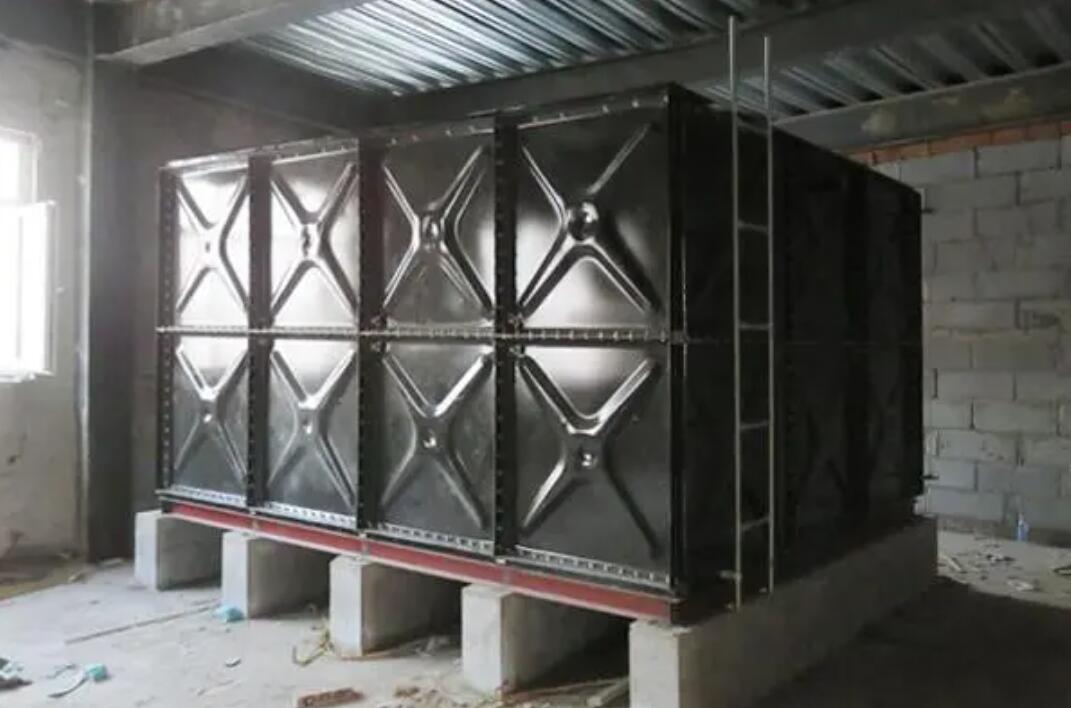
Seismic Performance Analysis and Key Design Specifications for FRP Water Tanks
Earthquake damage to water supply systems directly impacts post-disaster rescue and recovery. As the core water storage equipment, the seismic performance of Fiber Reinforced Plastic (FRP) water tanks is critical. The FRP material, known for its light weight, high strength, corrosion resistance, and design flexibility, exhibits unique advantages in seismic structures. Professional seismic design must strictly adhere to national and industry codes to ensure functional integrity and structural safety under seismic action.
Seismic Advantages and Mechanical Properties of FRP Material
The seismic performance of FRP tanks originates from their composite nature. Comprising glass fiber reinforcement and a resin matrix, FRP boasts a higher specific strength (strength-to-density ratio) than ordinary steel. This means an FRP tank has a lighter self-weight while meeting the same load-bearing requirements. According to mechanical principles, seismic inertial force is proportional to structural mass. Reduced self-weight directly decreases seismic load, constituting an inherent seismic advantage.
From a material mechanics perspective, FRP exhibits good elasticity and certain ductility. Under alternating loads induced by earthquakes, its multi-directional fiber layup structure effectively disperses and absorbs vibration energy, preventing brittle failure. For instance, in projects for high-intensity seismic zones (e.g., Intensity 8), Beijing Yuanhui FRP Co., Ltd. employs a composite process combining circumferential and longitudinal filament winding with hand lay-up reinforcement. This enhances tensile strength to over 300 MPa and allows for targeted design of the elastic modulus to control deformation amplitude under seismic waves.
Core Seismic Design Codes and Standards
The seismic design of FRP water tanks must be integrated into the building's overall seismic system. Key national codes and standards include:
Code for Seismic Design of Buildings (GB 50011)
This fundamental code establishes the seismic fortification objective: "no damage under frequent earthquakes, repairable under moderate earthquakes, and no collapse under rare earthquakes." Design must determine the seismic influence coefficient based on the fortification intensity of the location, site category, and the functional importance of the tank (e.g., fire water storage). Horizontal seismic action on the tank and its support structure (e.g., channel steel base) must be calculated, considering the influence of vertical seismic action.
Technical Code for Water Storage Facilities (GB 51019)
This code specifies requirements for the seismic resistance of water storage facilities. It mandates reliable connection between the tank and its foundation to prevent sliding or overturning. For FRP tanks, it emphasizes the strength design of connecting components, such as ensuring anchor bolts have sufficient safety margin in pull-out force calculations. It also requires local reinforcement at vulnerable points like manholes and pipe connection interfaces, which are prone to leakage due to stress concentration during earthquakes.
Furthermore, the industry standard "FRP Water Tanks" (JC/T 658) stipulates requirements for sheet strength, hygienic performance, and connection sealing from a product performance perspective, forming the basis for tank quality.
Key Seismic Structural Design and Engineering Practice
Based on code requirements, professional seismic design for FRP tanks focuses on the following key structural aspects:
1. Tank Body Structural Reinforcement Design
Computer-Aided Engineering (CAE) simulation under seismic conditions optimizes the layout and dimensions of stiffeners. Dense grid or ring-shaped rib structures are typically used to divide large panels into smaller units, significantly enhancing overall stiffness and anti-buckling capacity. Panel thickness is not uniform; it is increased in areas of maximum bending moment (e.g., the lower third of the height) and corners.
2. Foundation and Anchorage System
Foundation levelness and rigidity are paramount. Steel foundation beams require anti-corrosion treatment and must be securely welded to embedded parts in the concrete foundation. The spacing, diameter, and embedment depth of anchor bolts require rigorous calculation. In a 2019 project for a data center located in a seismic zone, Beijing Yuanhui FRP Co., Ltd. employed a combination of chemical and mechanical anchors with shear keys, successfully passing a specialized seismic review.
3. Flexible Pipe Connections
Rigidly connected pipes are highly susceptible to cracking due to differential displacement during earthquakes. Codes mandate flexible connections for all inlet/outlet pipes, using components like rubber expansion joints or stainless steel bellows, with sufficient displacement allowance. This is a critical detail for preventing pipeline rupture and maintaining tank functionality post-earthquake.
Conclusion
The excellent seismic performance of FRP water tanks results from the synergy between their material properties and scientific design. Their light weight and high strength provide favorable conditions, but true safety depends on strict adherence to national codes like GB 50011 and GB 51019. Every detail, from tank reinforcement and foundation anchorage to flexible pipe connections, requires precise calculation and meticulous construction. As FRP water tanks are widely used in critical facilities like high-rise buildings, hospitals, and schools, their seismic design has become a core measure of a manufacturer's technical capability. The engineering practice of Beijing Yuanhui FRP Co., Ltd. demonstrates that only by translating code requirements into reliable seismic performance details can FRP tanks be ensured as a stable "lifeline water source" during seismic disasters.