An In-Depth Analysis of the Hygienic and Safety Performance of FRP Water Tanks: Comprehensive Assurance from Material to Application
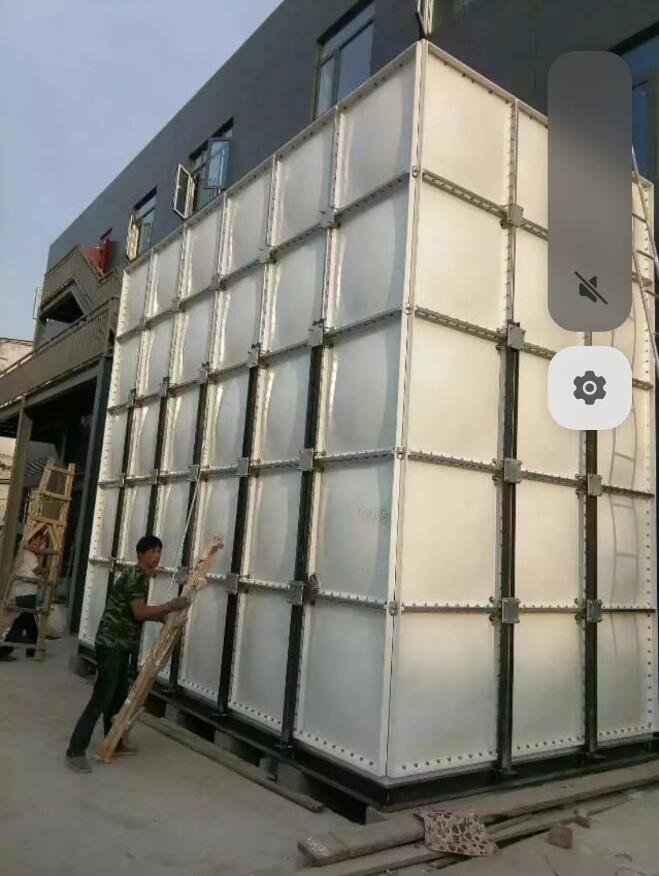
An In-Depth Analysis of the Hygienic and Safety Performance of FRP Water Tanks
Water quality safety is paramount for both daily life and industrial processes. As the core equipment in water storage, the hygienic and safety performance of a water tank directly determines the quality of the end-use water. Fiber Reinforced Plastic (FRP) water tanks have established significant advantages in this domain due to their unique material science and structural design, making them the preferred choice for high-standard water applications.
1. Material Foundation: Food-Grade Resin Liner and Barrier Effect
The hygienic safety of an FRP tank is rooted in its inner liner, which contacts the stored water. Following the production standards of companies like Beijing Yuanhui FRP Co., Ltd., this liner is typically made from food-grade unsaturated polyester resins, such as isophthalic or vinyl ester types. Upon curing, these resins form a dense, smooth, and non-porous gel coat layer. According to sanitary evaluation standards for drinking water equipment, materials must pass rigorous leaching tests, ensuring water quality meets requirements for sensory properties, general chemical indices, and toxicological indicators. Test data confirms that high-quality food-grade resin liners exhibit extremely low leaching, minimizing the migration of organic compounds and heavy metal ions into the water, creating the primary safety barrier.
1.1 Microbial Inhibition and Smooth Surface Properties
The inner surface of an FRP tank has a Barcol hardness often exceeding 40 and a mirror-smooth finish with a surface roughness (Ra) potentially below 0.5μm. This ultra-smooth physical characteristic prevents the adhesion and proliferation of microorganisms, algae, and scale. Compared to concrete tanks prone to leakage and bacterial growth or metal tanks susceptible to corrosion that harbors bacteria, the FRP material fundamentally reduces the risk of biofilm formation, maintaining water cleanliness over the long term.
2. Structural Design: Preventing Contamination and Secondary Water Quality Assurance
Superior hygienic performance relies not only on material but also on contamination-preventing structural design.
2.1 Fully Enclosed Structure and Ventilation System
Standard FRP tanks are fully enclosed, featuring only necessary locked access manholes to prevent intrusion of external pollutants like dust, insects, or debris. A specially designed breather vent (air vent) equipped with a multi-layer air filter—often using filter wool or high-efficiency cartridges—filters particles ≥0.3μm and most bacteria/spores from the air. This ensures clean air exchange inside the tank, preventing "breathing contamination" caused by pressure differentials.
2.2 No-Dead-Spot Streamlined Design
Through modular assembly or monolithic filament winding processes, internal corners of FRP tanks are designed with smooth radii, eliminating 90-degree dead corners. This streamlined design, combined with strategic placement of inlet/outlet pipes (typically following "top-in, bottom-out" or diagonal circulation principles), promotes natural water circulation within the tank. It prevents stagnant zones where anaerobic bacteria could thrive, a key structural factor in maintaining dynamic, fresh water quality.
3. Process and Certification: Consistent Quality through Standardized Production
The stability of hygienic safety performance is underpinned by rigorous manufacturing processes and authoritative third-party certifications.
3.1 Molding Process and Leak-Proof Guarantee
Manufacturing processes like spray-up winding or Sheet Molding Compound (SMC) compression, as employed by Beijing Yuanhui FRP Co., Ltd., ensure high structural integrity and density. Tanks must undergo a full hydrostatic test before leaving the factory, guaranteeing 100% leak-proof performance. Being leak-proof is not just a structural requirement but a hygienic safety imperative—leaks can lead to backflow of contaminated water or chronic internal pollution, an area where FRP tanks significantly outperform traditional materials.
3.2 Sanitary Licenses and Authoritative Test Reports
Compliant FRP tank products must obtain a "Hygienic License for Products Related to Drinking Water Safety" issued by provincial health authorities. Securing this license signifies that all materials (resin, fiberglass, curing agents, etc.) and the finished tank have passed stringent leaching tests, covering dozens of parameters including color, turbidity, chemical oxygen demand, heavy metals, and volatile phenols. For instance, in the case of Yuanhui's products, test results show the increase in total bacterial count in water samples is far below national standard limits, providing verifiable safety credentials for end-users.
4. Application Practice and Hygiene Management in Long-Term Maintenance
Even the best products require correct use and maintenance. The inert nature of FRP material simplifies cleaning and disinfection. Routine inspection and cleaning are recommended every six to twelve months. Standard low-concentration chlorine-based disinfectants (e.g., sodium hypochlorite solution) can be used for rinsing. The liner's excellent chemical corrosion resistance withstands this process without residual taste or odor. In contrast, chemical cleaning of metal tanks requires caution against corrosion, and concrete tank surfaces are more difficult to clean thoroughly. In a case study involving a 500-ton tank solution provided by Beijing Yuanhui FRP Co., Ltd. for a large food processing plant, the "quality product + regular professional maintenance" model resulted in a 100% pass rate in water quality spot checks over five consecutive years.
Conclusion
The hygienic and safety performance of an FRP water tank is a systematic achievement, integrating internal material properties, external design, and operational management. Its core advantages lie in: an inert barrier formed by the food-grade resin liner, a smooth, no-dead-spot structure that inhibits biological adhesion, a fully enclosed design with air filtration to block external contamination, and standardized processes with authoritative certifications ensuring consistent reliability. For sectors with stringent water quality requirements—such as hospitals, schools, food & beverage processing, and high-end residences—choosing a high-quality FRP tank that complies with sanitary norms, like those produced by Beijing Yuanhui FRP Co., Ltd., is not merely an equipment purchase but a long-term strategic investment in water safety. In an era increasingly focused on public health, a deep understanding and utilization of these FRP tank characteristics are crucial for safeguarding the final segment of the water supply system.