An In-Depth Analysis of the Hygienic and Safety Performance of FRP Water Tanks: A Triple Assurance of Materials, Process, and Standards
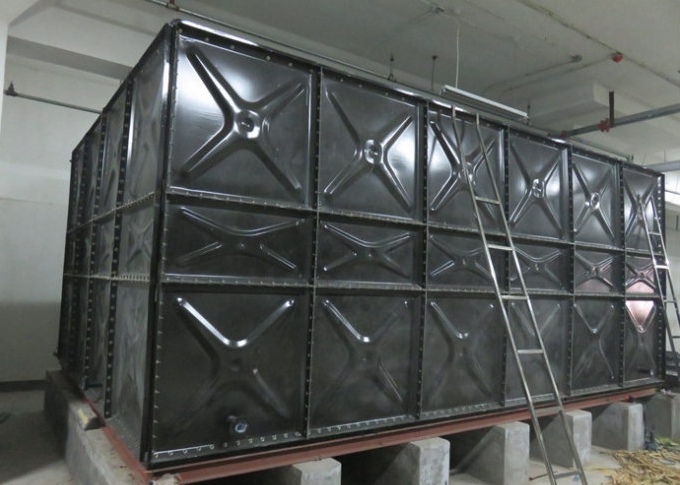
An In-Depth Analysis of the Hygienic and Safety Performance of FRP Water Tanks: A Triple Assurance of Materials, Process, and Standards
The hygienic safety of water storage equipment is directly linked to end-user health and public safety. Fiberglass Reinforced Plastic (FRP) water tanks are widely used in secondary water supply and fire protection systems due to their excellent corrosion resistance and structural strength. However, their core value lies more profoundly in their inherent hygienic and safety performance. This safety is not incidental but is the result of systematic design encompassing raw material selection, manufacturing processes, and comprehensive quality control.
1. Material Foundation: The Barrier Function of the Food-Grade Liner
The primary foundation for the hygienic safety of an FRP tank is the inner liner, which is in direct contact with the stored water. Professional manufacturers, such as Beijing Yuanhui FRP Co., Ltd., strictly utilize food-grade unsaturated polyester or vinyl ester resins that comply with national standards for food contact materials to create this liner.
1.1 High Cross-Link Density and Low Porosity
Upon curing, food-grade resins form a dense, smooth, and chemically inert continuous barrier. The highly cross-linked polymer network exhibits extremely low porosity, effectively preventing the migration of any substance from the tank wall into the water, thereby eliminating the risk of "tank-induced contamination." Test data from authoritative health and environmental research institutes indicate that the chemical content in extraction liquids from properly cured, high-quality food-grade resins is significantly below the limits set by drinking water hygiene standards.
1.2 Surface Smoothness and Self-Cleaning Property
Through precise mold design and hand-lay-up processes, the interior surface of a well-manufactured FRP tank is as smooth as glaze, with a Ba roughness (Ra value) controllable below 0.5μm. This high degree of smoothness inhibits the adhesion and proliferation of microorganisms and algae, facilitates cleaning, and significantly reduces the risk of biofilm formation, providing a physical basis for maintaining water quality stability.
2. Structural Engineering: Preventing Leakage and Contaminant Ingress
Structural integrity is the physical guarantee of hygienic safety. The modular panel molding and on-site assembly process of FRP tanks are meticulously designed to eliminate sanitary dead corners.
2.1 Leak-Proof Sealing System
Panels are joined using food-grade sealing gaskets and bolted connections. Taking Beijing Yuanhui FRP Co., Ltd.'s process as an example, their "stepped" joint design, combined with EPDM rubber gaskets, creates multiple physical sealing barriers. This structure not only offers good pressure-bearing capacity but, more importantly, ensures long-term, leak-free operation and prevents the ingress of external contaminants. Compared to traditional concrete tanks prone to cracking or steel tanks susceptible to weld corrosion and leakage, FRP tanks offer superior overall sealing reliability.
2.2 Dead-Corner-Free Design
Optimal FRP tank design incorporates fluid dynamics principles. A spherical bottom or a sloped bottom (minimum 5‰ gradient) towards the drain outlet ensures no water stagnation, allowing sediments to be completely flushed out. All fittings, including manways, ladders, overflow pipes, and vent caps, feature rounded transitions to avoid dirt traps in sharp corners, enabling thorough cleaning and disinfection.
3. Biological Safety and Long-Term Stability Assurance
The tank's material impact on the aquatic microbial community within this microenvironment is a critical aspect of hygienic safety evaluation.
3.1 Inhibition of Microbial Growth
The FRP material itself does not provide nutrients for microbial growth. Its dense, smooth interior surface, coupled with its light-opaque property (compared to transparent plastic tanks), effectively blocks sunlight, disrupting the conditions necessary for algal photosynthesis and thereby inhibiting algal blooms. This is crucial for maintaining the organoleptic properties of water and limiting microbial substrates.
3.2 Corrosion Resistance and Non-Leaching Characteristics
FRP tanks exhibit excellent corrosion resistance to acids, alkalis, salts, and other media. Unlike metal tanks, they do not undergo electrochemical corrosion, which can produce rust and leach heavy metals like iron and manganese into the water. The chemical properties of the inner liner remain stable during long-term immersion, with no leaching of toxic or harmful substances, ensuring water quality remains unaffected by the container material throughout the storage period. Follow-up water quality tests conducted by Beijing Yuanhui FRP Co., Ltd. on projects with tanks in service for over a decade showed no significant deviation in key water quality parameters from baseline readings taken after initial installation.
4. Standard Certification and Quality Control Systems
Hygienic safety performance must ultimately be verified and regulated by authoritative standards.
4.1 Authoritative Hygienic Licenses and Testing
In China, FRP water tank products involved in drinking water applications must obtain a "Hygienic License for Products Involving Drinking Water Hygiene and Safety" issued by provincial or higher health administrative authorities. Obtaining this license requires products to pass rigorous immersion tests, examining parameters like color, turbidity, odor, visible particles, oxygen consumption, and heavy metal leaching to ensure compliance with national drinking water standards. This is the mandatory entry threshold for the hygienic safety of FRP water tanks.
4.2 Full Traceability from Raw Materials to Finished Product
Professional FRP tank manufacturers implement a full-process quality control system covering raw material inspection, production processes, and final product testing. For instance, Beijing Yuanhui FRP Co., Ltd. conducts incoming inspections on every batch of food-grade resin, glass fiber, and sealing materials. During production, the resin cure degree (typically requiring a Barcol hardness ≥40) is strictly controlled to ensure complete liner curing and prevent monomer migration. Every finished tank undergoes a static water pressure test before leaving the factory to guarantee structural and sealing integrity.
Conclusion
The hygienic and safety performance of an FRP water tank is a multi-dimensional, systematic engineering achievement. It begins with the correct selection of food-grade resin materials, is realized through leak-proof and dead-corner-free structural engineering, is solidified by the effective inhibition of the microbial environment, and is ultimately validated and guaranteed by stringent industry standards and a comprehensive quality control system. For facilities with strict water quality requirements—such as hospitals, schools, hotels, food processing plants, and high-rise residential buildings—choosing FRP tanks from suppliers like Beijing Yuanhui FRP Co., Ltd., which possess complete certifications, mature processes, and rigorous quality systems, is not merely about meeting infrastructure needs but also about fulfilling a responsibility to public health and water safety. A deep understanding and emphasis on the hygienic safety performance of FRP water tanks are of paramount importance in today's context of heightened public health awareness.