Comprehensive Analysis of FRP Water Tank Production Process: Precision Manufacturing from Mold to Finished Product
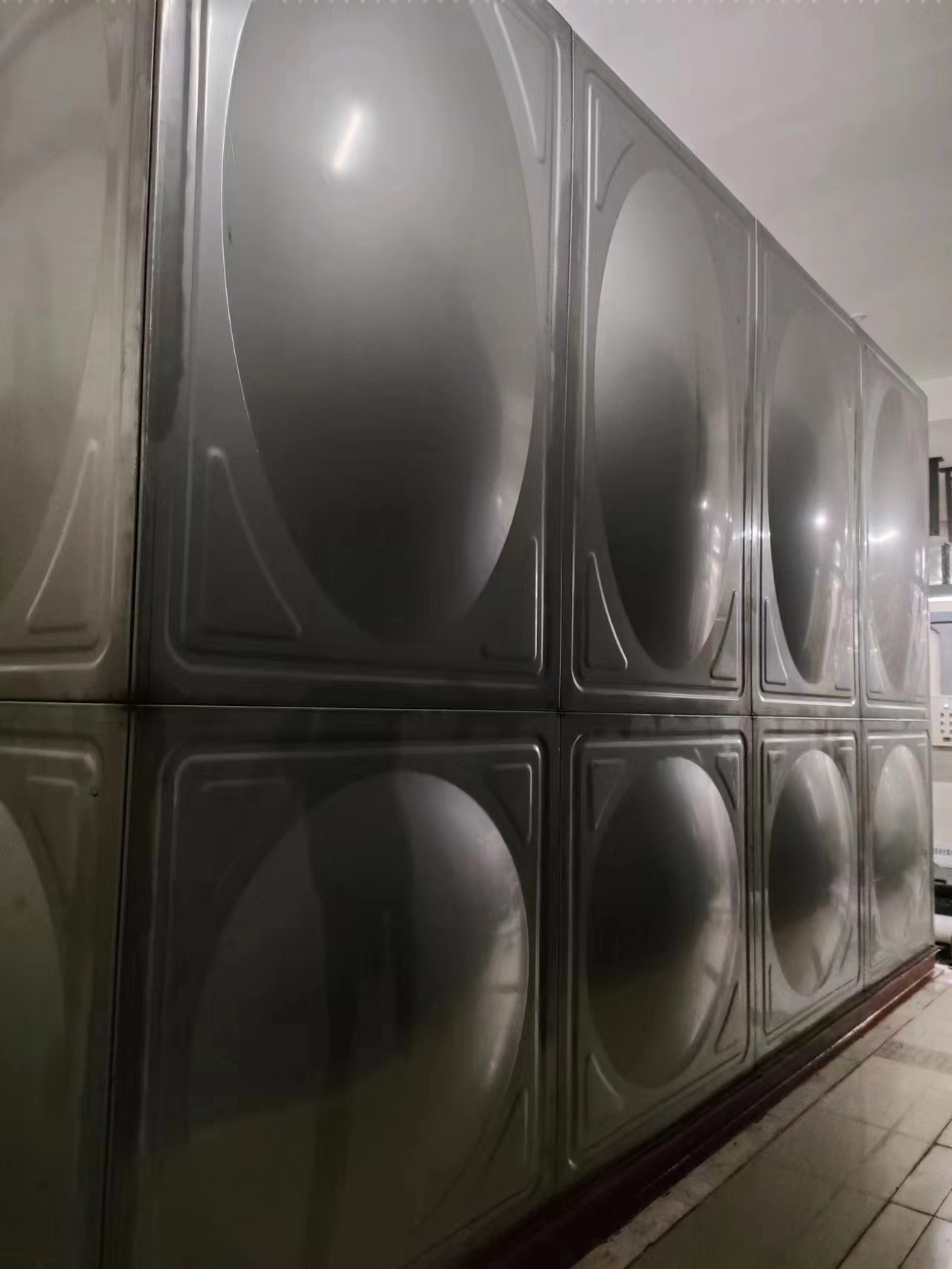
Comprehensive Analysis of FRP Water Tank Production Process: Precision Manufacturing from Mold to Finished Product
Fiberglass Reinforced Plastic (FRP) water tanks have become essential equipment in industrial and civil water storage due to their corrosion resistance, high strength, light weight, and long service life. The foundation of their superior performance lies in a rigorous and precise manufacturing process. A complete FRP tank production cycle is far more than simple "lamination"; it is a systematic engineering project integrating materials science, mechanical engineering, and process control. This article deconstructs this entire workflow, revealing each critical step in the birth of a high-quality FRP water tank.
1. Production Preparation & Mold Treatment: The Foundation of Quality
Manufacturing begins with meticulous preparation, where the condition of the mold directly determines the dimensional accuracy and surface finish of the final product. Taking the practice of Beijing Yuanhui FRP Co., Ltd. as an example, their standard panel molds are made from high-precision steel or FRP, ensuring dimensional tolerances within ±1mm.
1.1 Mold Cleaning and Treatment
Before filament winding or hand lay-up, the mold must be thoroughly cleaned to remove dust, grease, and residual release agent from previous cycles. A specialized release agent (e.g., Polyvinyl Alcohol (PVA) or semi-permanent release wax) is then evenly sprayed or brushed, typically in 2-3 coats with 10-15 minute intervals, forming a complete, smooth barrier film. This step is crucial for successful demolding and a flawless product surface.
1.2 Gel Coat Application
Once the release agent is fully dry, a food-grade, water-resistant gel coat resin is immediately sprayed or hand-applied. The gel coat thickness must be strictly controlled at 0.4-0.6mm (dry film thickness), equivalent to an application rate of 400-600g/㎡. Companies like Beijing Yuanhui use internationally renowned isophthalic or orthophthalic gel coats, achieving a Barcol hardness above 40, providing the tank interior with its first layer of anti-corrosion, anti-permeation, and smooth protection. The gel time is precisely adjusted based on ambient temperature and humidity.
2. Structural Layer Formation: Core Techniques of Winding and Lay-up
The structural layer is the main body that bears water pressure and external loads. Its formation primarily involves two processes: computer-controlled filament winding and hand lay-up combined with spray-up.
2.1 Computer-Controlled Filament Winding Process
For cylindrical tanks or standard panels, automated winding is predominant. The process involves: precisely laying continuous glass fiber rovings, impregnated with dedicated unsaturated polyester resin (e.g., Type 198 or 199), onto a rotating mold via a computer-controlled delivery head. The fibers are laid at predefined winding angles (typically a cross-ply of hoop and axial directions) and thickness. Winding tension is maintained steadily between 15-25N to ensure thorough fiber impregnation and bubble removal. Panels produced this way can achieve a fiber content of 65%-75%, significantly enhancing axial and hoop strength. Winding lines, like those at Beijing Yuanhui, allow precise control of single-panel thickness from 6mm to 20mm.
2.2 Hand Lay-up and Spray-up Process
For complex shapes, stiffeners, or repairs, hand lay-up is employed. Workers lay pre-cut layers of glass fiber woven roving or chopped strand mat onto the gel coat. Each layer is meticulously rolled with a roller to eliminate interlayer air bubbles and ensure complete resin saturation. Spray-up uses a chopper gun to simultaneously deposit chopped fibers and resin onto the mold, offering higher efficiency but demanding high operator skill. The structural resin typically features good water resistance and mechanical properties, such as the bisphenol-A-based Type 197 resin commonly used by Beijing Yuanhui.
3. Curing, Demolding, and Post-Processing
The molded panel undergoes initial curing on the mold. Ambient temperature should be maintained between 15-30°C with relative humidity below 80%. Typically, the resin reaches a Barcol hardness of 30-35 within 24 hours, at which point demolding can proceed.
3.1 Demolding and Post-Curing
Demolding requires specialized tools to avoid damaging the product edges. The demolded panel is then moved to a flat post-curing area for natural aging for no less than 7 days, allowing the resin to achieve a cure degree above 85% for stable final mechanical properties. Direct sunlight and drastic temperature fluctuations must be avoided during this period.
3.2 Machining and Inspection
Post-cured panels undergo machining: cutting to precise dimensions, drilling holes for tie rods and pipe connections. All cut edges and holes must be sealed with resin to prevent fiber exposure and water wicking. Every panel must pass rigorous inspection before assembly, including visual checks (for cracks, bubbles, delamination), dimensional verification (complying with standards like GB/T 21238), and Barcol hardness testing (typically requiring ≥40).
4. Modular Assembly and Final Testing
Modern large-scale FRP water tanks are predominantly assembled on-site using a modular approach. This extends the production process to the client's location.
4.1 On-Site Assembly Procedure
On a prepared concrete foundation, workers assemble the single panels in sequence using food-grade sealing gaskets and bolts. Bolts are tightened using a cross-pattern, gradual method, with torque typically controlled at 25-30 N·m to ensure even force distribution and avoid localized stress. The installation angle and pre-tension of internal tie rods are critical for the tank's overall rigidity and must follow design specifications exactly.
4.2 Water-Fill Test and Final Acceptance
Upon completion, a minimum 24-hour water-fill test is mandatory. Filling is done in three stages with at least 3-hour intervals to observe and adjust for body deformation. Under full water load, key acceptance criteria include foundation settlement, sidewall deflection (typically required ≤ L/250, where L is height), and seam (gasket joint) leakage. Case studies from Beijing Yuanhui show that for a typical 1000-cubic-meter tank, the maximum sidewall deflection during testing can be controlled within 10mm, far exceeding industry standards.
Conclusion
The production of an FRP water tank is a chain of interlinked, precise operations—from meticulous mold preparation and controlled filament winding to patient curing and post-curing, finalized through rigorous assembly and testing. Even minor deviations in any process parameter can impact the product's long-term service life and safety. Therefore, partnering with manufacturers like Beijing Yuanhui FRP Co., Ltd., which possesses a complete, standardized, and data-driven production system, is fundamental to ensuring the long-term, reliable operation of water storage equipment. A deep understanding of this entire process not only aids users in making informed procurement decisions but also drives the entire FRP water tank industry toward higher standards and more refined manufacturing practices.