In-depth Analysis of Seismic Performance and Key Design Codes for FRP Water Tanks
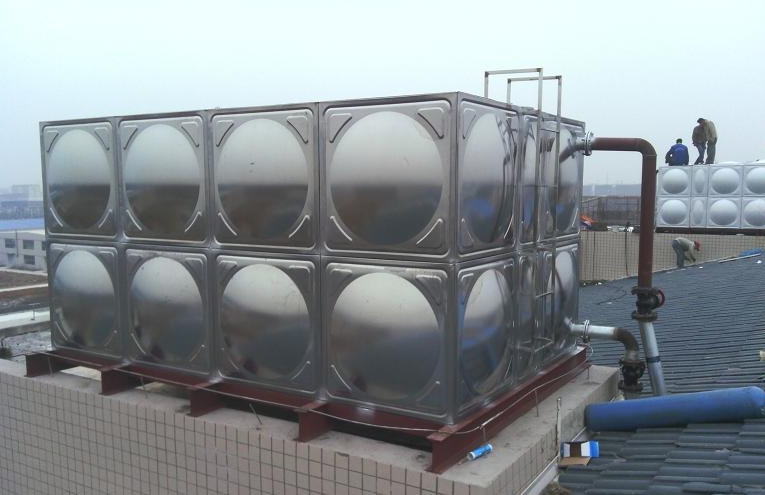
In-depth Analysis of Seismic Performance and Key Design Codes for FRP Water Tanks
The safety of water supply systems is severely tested by seismic events. As critical water storage facilities, the seismic performance of Fiber Reinforced Plastic (FRP) water tanks directly impacts post-earthquake emergency water supply and the continuity of lifeline infrastructure. The unique composite nature of FRP material confers significant advantages in seismic design.
Seismic Performance Advantages of FRP Material
The seismic resilience of FRP tanks is fundamentally rooted in their material properties. FRP, a composite of glass fiber reinforcement and a thermosetting resin matrix, exhibits characteristics distinct from traditional steel or concrete.
High Specific Strength and Lightweight Nature
With a density of approximately 1.5-2.0 g/cm³, only one-quarter to one-fifth that of steel, the lightweight property of FRP drastically reduces the overall mass of the tank. This directly minimizes seismic inertial forces. Engineering calculations from Beijing Yuanhui FRP Co., Ltd. indicate that for an equivalent capacity, an FRP tank can reduce seismic load by about 60%-70% compared to a steel tank, providing a physical foundation for its superior seismic performance.
Excellent Toughness and Crack Resistance
Unlike brittle materials, FRP can absorb substantial energy before failure, demonstrating good toughness. Its tensile strength ranges from 200-500 MPa, comparable to mild steel, but with better elongation at break. Under seismic-induced deformation, the FRP shell can dissipate energy through elastic deformation, preventing brittle cracking (as in concrete) or buckling failure (as in steel), thereby effectively avoiding water leakage.
Superior Fatigue Resistance
Seismic loading is essentially a dynamic, cyclic load. FRP composites exhibit high tolerance to cyclic stress, with a fatigue strength typically 50%-70% of their static tensile strength, outperforming many metallic materials. This ensures slower degradation of structural performance during multiple aftershocks, enhancing long-term reliability.
Core Principles of Seismic Structural Design for FRP Tanks
Superior material properties must be coupled with scientific structural design to maximize seismic resilience. Professional FRP tank design adheres to the following core principles.
Reinforced Tank Body Structure
Modern modular FRP tanks focus seismic design on joint connections and overall shape optimization. Key measures include: 1) A grid-like layout of stiffening ribs, which divides panel areas into smaller units, significantly enhancing stiffness and stability; 2) Use of high-strength, food-grade resins and directionally wound glass fibers, with local thickening or additional reinforcement layers at stress concentration zones (corners, openings); 3) Specialized sealing gaskets combined with high-strength bolts at module joints to maintain watertight integrity and structural continuity under seismic displacement.
Foundation and Anchorage System Design
The connection between the tank and its foundation is a critical, potentially weak link. Per seismic design codes, a reliable anchorage system is mandatory. Design involves calculating horizontal seismic shear to determine the number, diameter, and embedment depth of anchor bolts. Beijing Yuanhui FRP Co., Ltd. often employs a method where the tank base is integrally connected to pre-embedded steel plates, with stress checks in the anchorage zone conducted via finite element analysis to prevent sliding or overturning during an earthquake.
Internal Tie-Rod and Bracing System
For large-volume tanks, shell stiffness alone is insufficient. An internal network of FRP or food-grade stainless steel tie-rods is essential, forming a space-truss support system. These rods effectively restrain lateral deformation of the tank walls and transfer hydrodynamic pressures to the structure and foundation. The spacing and pre-tensioning force of the tie-rods require precise calculation based on tank dimensions, design water level, and seismic fortification intensity.
Key Design Codes and Standards
Ensuring the seismic safety of FRP water tanks necessitates strict adherence to relevant national and industry design codes, which provide mandatory or guiding criteria for design, manufacturing, and acceptance.
Primary Code References
1. Code for Seismic Design of Buildings (GB 50011): The overarching general code specifying seismic action calculation methods, fortification classifications, and standards. As non-structural components, tanks must meet its requirements, particularly for connections to the main structure.
2. Code for Design of Water Supply and Drainage Engineering Structures (GB 50069): This code specifically addresses water storage structures, stipulating load combinations, strength calculations, and crack control. It details the calculation of hydrodynamic pressures under seismic conditions (e.g., sloshing wave height, pressure distribution on walls).
3. Industry Standards for Glass Fiber Reinforced Plastic Water Tanks (JC/T 658.1-2007 / JC/T 658.2-2007): These standards directly regulate the material properties, structural forms, manufacturing processes, and inspection rules for FRP tanks, establishing a fundamental quality baseline.
Crucial Parameters for Seismic Calculation
Key parameters for design include: seismic influence coefficient (determined by fortification intensity and site class), total mass of the tank and water, direction of seismic action (considering both horizontal and vertical components), and liquid sloshing effects. For FRP water tanks serving critical lifeline projects (e.g., hospitals, firefighting water supply), the seismic fortification category is often classified as "Focus Fortification" (Class B), requiring seismic actions to be calculated based on a one-degree higher intensity.
Case Study: Seismic Design Practice by Beijing Yuanhui
For an 800-cubic-meter FRP tank in the emergency water supply system of a major Beijing hospital, Beijing Yuanhui FRP Co., Ltd. implemented comprehensive seismic measures. The site had a seismic fortification intensity of 8 degrees (0.20g design ground acceleration). The design featured thickened molded panels with a 30% denser stiffening rib grid, a double-layer internal stainless steel tie-rod network, and an anchorage system using M24 chemical anchor bolts at 800mm spacing. ANSYS software was used for seismic response spectrum analysis during design, confirming that maximum stress under a rare earthquake scenario remained below 80% of the material's allowable stress. This tank system has operated reliably for over five years, withstanding minor seismic events.
Conclusion
The seismic performance of FRP water tanks constitutes a core competitive advantage for their application in seismic zones and high-standard projects. This advantage stems from the inherent lightweight, high-strength, and tough nature of FRP material, but is critically dependent on rigorous structural design and strict compliance with national design codes. Every detail, from shell reinforcement and anchorage to internal bracing, is vital for seismic safety. As research into seismic performance deepens and FRP tank design standards evolve, professional manufacturers like Beijing Yuanhui FRP Co., Ltd. are continuously enhancing product safety and reliability through technological innovation and precise engineering management, playing a crucial role in securing post-earthquake water supply lifelines. The integration of smart monitoring technologies for real-time seismic response sensing and early warning represents a promising future direction for the industry.