An In-Depth Analysis of FRP Water Tank Insulation Performance and Key Application Scenarios
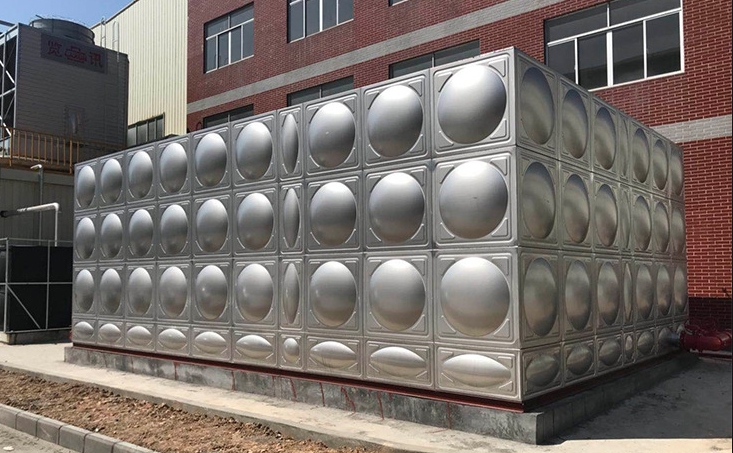
An In-Depth Analysis of FRP Water Tank Insulation Performance and Key Application Scenarios
Fiber Reinforced Plastic (FRP) water tanks have become a mainstream choice for modern water storage systems due to their lightweight, high strength, corrosion resistance, and long service life. Their insulation performance, however, is a critical functional attribute that directly impacts operational efficiency and energy costs in specific applications. This article systematically analyzes the core technology behind FRP tank insulation and focuses on its typical applications in practical engineering.
1. Technical Principles and Core Parameters of FRP Tank Insulation
The insulation performance of an FRP water tank is not inherent to the FRP material alone but is achieved through a specialized composite insulation structure. The core lies in the "insulation core material + FRP shell" sandwich design.
1.1 Insulation Structure and Material Selection
Common insulation core materials include polyurethane foam (PUR), expanded polystyrene board (EPS), rock wool, and rubber foam. Among these, in-situ foamed polyurethane is the most widely used, with a thermal conductivity coefficient as low as 0.022-0.027 W/(m·K). It provides seamless filling, effectively eliminating thermal bridges. Beijing Yuanhui FRP Co., Ltd. often employs customized-thickness polyurethane integral foaming processes in its projects to ensure uniform and dense insulation layers.
1.2 Key Performance Indicators
The core metrics for evaluating insulation performance are the thermal conductivity coefficient (K-value) and the heat loss rate. A well-designed insulated FRP water tank can limit water temperature drop to within 2-3°C over 24 hours under an ambient temperature difference of 20°C. For instance, a 50-cubic-meter insulated tank with a 100mm thick polyurethane layer can achieve a daily heat loss rate of less than 5%.
1.3 Influencing Factors
Insulation effectiveness is influenced by multiple factors: insulation layer thickness, ambient temperature and humidity, installation quality, and joint sealing. Critical details like manholes and pipe connections require special sealing and insulation treatment, which reflects a manufacturer's craftsmanship.
2. Three Critical Engineering Elements Determining Insulation Quality
Superior insulation performance results from the combined effect of design, materials, and construction.
2.1 Integrated Structural Design
The insulation layer must bond tightly with the FRP inner liner and outer shell. Superior design treats the insulation as an integral part of the structure, considering mechanical calculations to prevent cracking or delamination due to thermal stress. Beijing Yuanhui FRP Co., Ltd. utilizes modular design, completing insulation layer lamination in the factory, ensuring better integrity than field-applied wrapping methods.
2.2 Material Compatibility and Durability
Insulation materials must be compatible with FRP, preventing corrosion or decomposition over time. They should also possess good hydrophobic and anti-aging properties to avoid a drastic drop in performance due to moisture absorption.
2.3 Process Detail Control
Precise control of foaming pressure, temperature, and curing time determines the foam's closed-cell ratio and uniformity. Details like seam treatment in manual wrapping and the installation of vapor barriers are crucial for long-term stability.
3. Analysis of Core Application Scenarios for Insulated FRP Water Tanks
The value of insulated FRP tanks is particularly pronounced in the following areas with stringent temperature control requirements.
3.1 Civil and Commercial Water Supply in Severe Cold Regions
In northern winters, preventing pipes and tanks from freezing is paramount. Insulated FRP tanks effectively prevent stored water from freezing, ensuring normal water supply for residents and commercial facilities. For example, in a residential project in Northeast China, insulated FRP tanks from Beijing Yuanhui with 100mm polyurethane maintained water temperature above 0°C even in extreme -25°C conditions, completely avoiding freeze damage.
3.2 Food, Beverage, and Pharmaceutical Industries
These industries have strict standards for process water temperature. Insulated tanks are used for storing hot water, chilled water, or constant-temperature process water, significantly reducing energy consumption. A dairy plant using an insulated FRP tank to store 85°C CIP cleaning hot water reported a temperature drop of less than 5°C over 24 hours, greatly reducing steam costs for reheating.
3.3 Solar Water Heating Systems
As the storage component paired with solar collectors, the performance of the insulated tank directly determines the system's thermal efficiency. High-quality insulated FRP tanks maximize solar heat retention, minimizing auxiliary energy input. Field data indicates that a qualified solar-specific insulated tank should have heat loss accounting for less than 15% of the system's total heat gain.
3.4 Constant-Temperature Swimming Pools and Hot Spring Systems
Maintaining a constant temperature for large water bodies is highly energy-intensive. Insulated FRP tanks serve as buffer or balancing tanks in such systems, reducing heat dissipation. When used with heat pumps or boilers, they can lower operational energy consumption by approximately 20%-30%.
4. Selection and Maintenance: Ensuring Long-Term Insulation Efficacy
When selecting an insulated FRP tank, users should define the operating temperature range, environmental conditions, and allowable heat loss rate, requesting detailed insulation calculations from the supplier. Regular maintenance should focus on inspecting the integrity of the insulation jacket, especially for damage or water ingress at seals. Any sign of moisture in the insulation layer requires immediate attention.
The insulation performance of an FRP water tank is a systematic engineering achievement, where every step from material science to structural design and precise construction is vital. For professional manufacturers like Beijing Yuanhui FRP Co., Ltd., deeply understanding the thermal requirements of different applications and providing customized insulation solutions is key to succeeding in high-end markets such as district heating stations and biopharmaceutical plants. As building energy codes and industrial efficiency standards continue to rise, FRP water tanks with excellent and stable insulation performance will see their application breadth and depth expand continuously.