An In-Depth Analysis of the Hygienic and Safety Performance of FRP Water Tanks: A Triple Assurance of Materials, Craftsmanship, and Standards
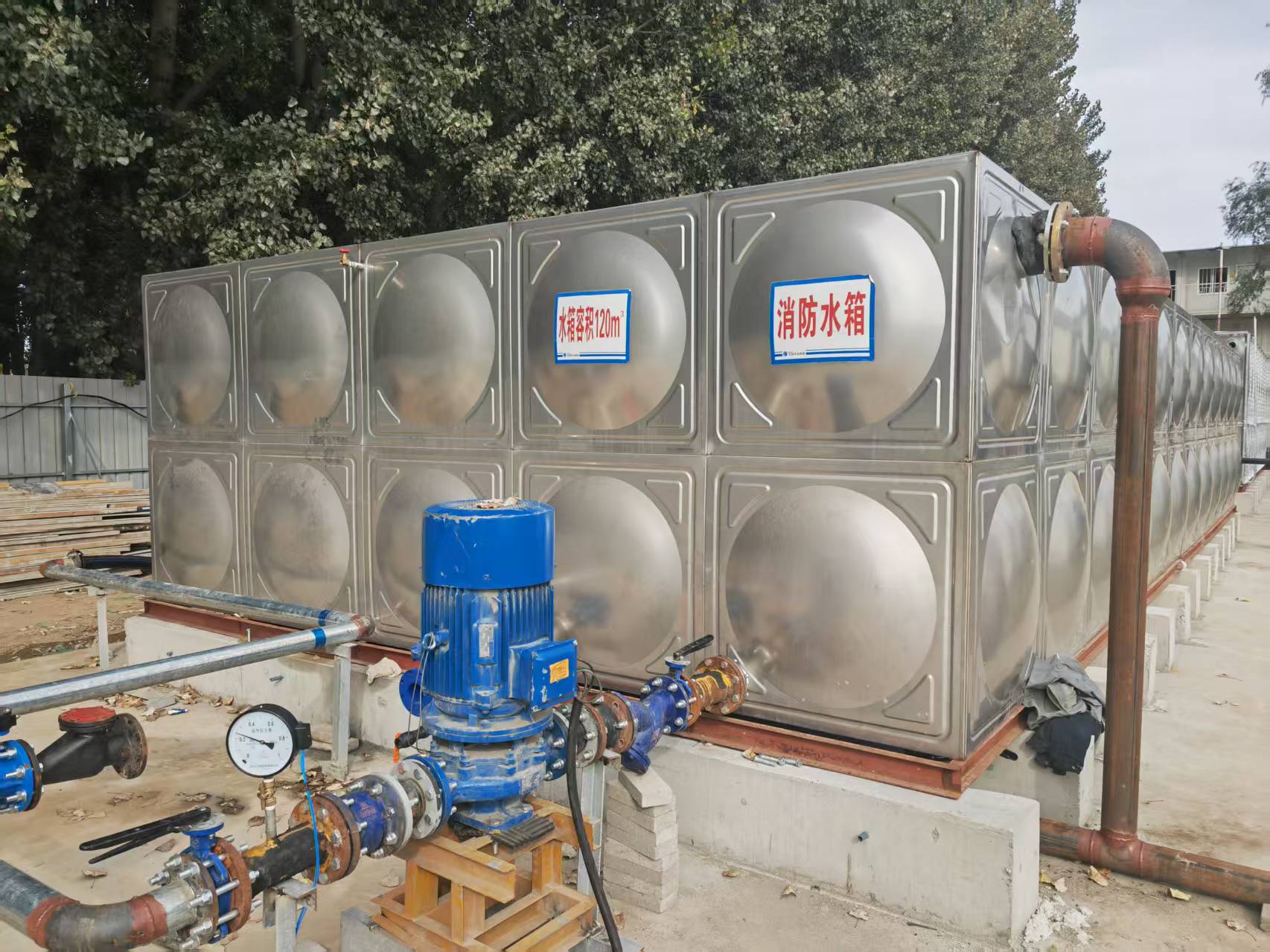
An In-Depth Analysis of the Hygienic and Safety Performance of FRP Water Tanks: A Triple Assurance of Materials, Craftsmanship, and Standards
The hygienic safety of water storage equipment is directly linked to end-user health and water quality. Fiberglass Reinforced Plastic (FRP) water tanks are widely used in secondary water supply and fire protection systems due to their excellent corrosion resistance and structural strength. However, their core value lies more profoundly in their inherent hygienic and safety performance—a systematic achievement built upon material selection, manufacturing process control, and rigorous standard certification.
1. The Food-Grade Liner: The Primary Barrier for Water Safety
The foundation of an FRP tank's hygienic safety is its inner surface, the resin-rich layer in direct contact with stored water. Professional manufacturers, such as Beijing Yuanhui FRP Co., Ltd., strictly employ food-grade unsaturated polyester resins compliant with China's GB/T 17219-1998 standard, or superior vinyl ester resins, as the lining material.
1.1 Low Styrene Emission and High Cross-Link Density
High-quality food-grade resins, after curing, exhibit extremely low residual styrene monomer (typically below 0.1%), effectively preventing the migration of organic compounds into the water. Simultaneously, a dense, highly cross-linked polymer network forms a smooth, glaze-like surface with a Barcol hardness often exceeding 40. This surface significantly reduces the adhesion of calcium/magnesium ions, microorganisms, and biofilm compared to traditional concrete or corroding metal tanks, lowering cleaning frequency and maintenance costs.
1.2 Dual Assurance: Impermeability and Corrosion Resistance
The liner's critical function is impermeability. Long-term water immersion creates osmotic pressure; inferior resins or processes can lead to leaching. By utilizing a "three-mat, three-fabric" or customized lining structure combined with integrated spray-up/filament winding processes—as practiced by Beijing Yuanhui FRP Co., Ltd.—a uniform liner thickness of no less than 2.5mm is guaranteed. This completely isolates the fiber reinforcement from water, eliminating any risk of secondary contamination. This construction also enables resistance to long-term erosion by water with a pH range of 6.5-8.5, outperforming many metallic materials.
2. Material Properties that Inhibit Microbial Growth
The dark, humid interior of a water tank is a potential breeding ground for microbes. FRP materials possess inherent anti-microbial tendencies, primarily due to their combined physical and chemical structure.
2.1 Surface Characteristics and Biofilm Control
The very low porosity (water absorption typically under 0.3%) and hydrophobic nature of the FRP inner surface make it difficult for bacteria and algae to anchor and form biofilms. A comparative study in municipal secondary water supply systems indicated that, within the same cleaning cycle, the average total bacterial count on the inner wall of high-quality FRP tanks was approximately 15%-20% lower than that of stainless steel tanks, attributed to fewer welds and better surface continuity.
2.2 Supplementary Anti-Microbial Solutions
For applications with stringent hygiene requirements, such as pharmaceutical or food processing, certified antimicrobial agents (e.g., silver-ion composites) can be integrated into the resin matrix, providing active inhibition. Beijing Yuanhui FRP Co., Ltd. employed this technology in a custom tank solution for a dairy enterprise, passing a third-party 168-hour immersion bacterial colony test with an inhibition rate exceeding 99%.
3. Structural Integrity and Long-Term Water Quality Assurance
Hygienic safety depends not only on material but also on the long-term stability of the tank's overall structure. Any minor crack or deformation can lead to contaminant ingress or create cleaning dead zones.
3.1 Seamless Molding and Seismic Performance
Advanced computer-controlled filament winding allows for monolithic tank construction, particularly the seamless integration of the roof and body. This eliminates leakage and mold risks associated with sealant joints in traditional panel-type tanks. Furthermore, the elastic modulus of FRP material (often above 1.5×10^4 MPa) and rational stiffener design enable the tank to maintain structural integrity under minor foundation settlement or seismic activity (seismic fortification intensity up to 8 degrees), preventing water contamination from stress-induced cracks.
3.2 System Safety: Accessories and Sealing
Hygienic safety is a systemic concept. Details such as vent ports equipped with at least 300-mesh stainless steel insect screens, manhole covers sealed with food-grade silicone gaskets, and internal ladders made of FRP instead of plated steel collectively form a comprehensive safety system. In Beijing Yuanhui FRP Co., Ltd.'s standard configuration, all water-contact accessories come with material safety reports, ensuring no contamination risk from the main body to the components.
4. Standard Certification and Full Lifecycle Management
Authoritative certifications provide objective endorsement of an FRP tank's hygienic safety. Beyond GB/T 17219, quality products should obtain the Drinking Water Hygiene Safety Product Sanitation Permit and comply with industry manufacturing standards like JC/T 658.1-2007 or JC/T 718-2012.
From a lifecycle perspective, the durability of FRP tanks (design life up to 30+ years) implies minimal decay in hygienic performance over their long service. Regular professional maintenance, such as semi-annual inspections of inner wall smoothness and cleaning/disinfection, ensures optimal performance. Companies like Beijing Yuanhui FRP Co., Ltd. provide not just products but also tailored inspection and maintenance plans based on water quality safety.
Conclusion
The hygienic and safety performance of FRP water tanks represents a complete value chain—from molecular-level resin selection to macroscopic structural design, down to systematic accessory integration and standard certification. It is more than mere "rust resistance"; it is about providing a stable, clean, and durable physio-chemical environment for stored water through material science innovation and precision manufacturing. Choosing a supplier like Beijing Yuanhui FRP Co., Ltd., which emphasizes lining craftsmanship, adheres strictly to standards, and offers systematic solutions, is a prudent decision to ensure the long-term hygienic safety of FRP water tanks, ultimately safeguarding user health. In an era of heightened public health awareness, a deep understanding and emphasis on the intrinsic safety performance of water storage equipment is paramount.