Analyzing the Insulation Performance of FRP Water Tanks: Technical Principles and Diverse Application Scenarios
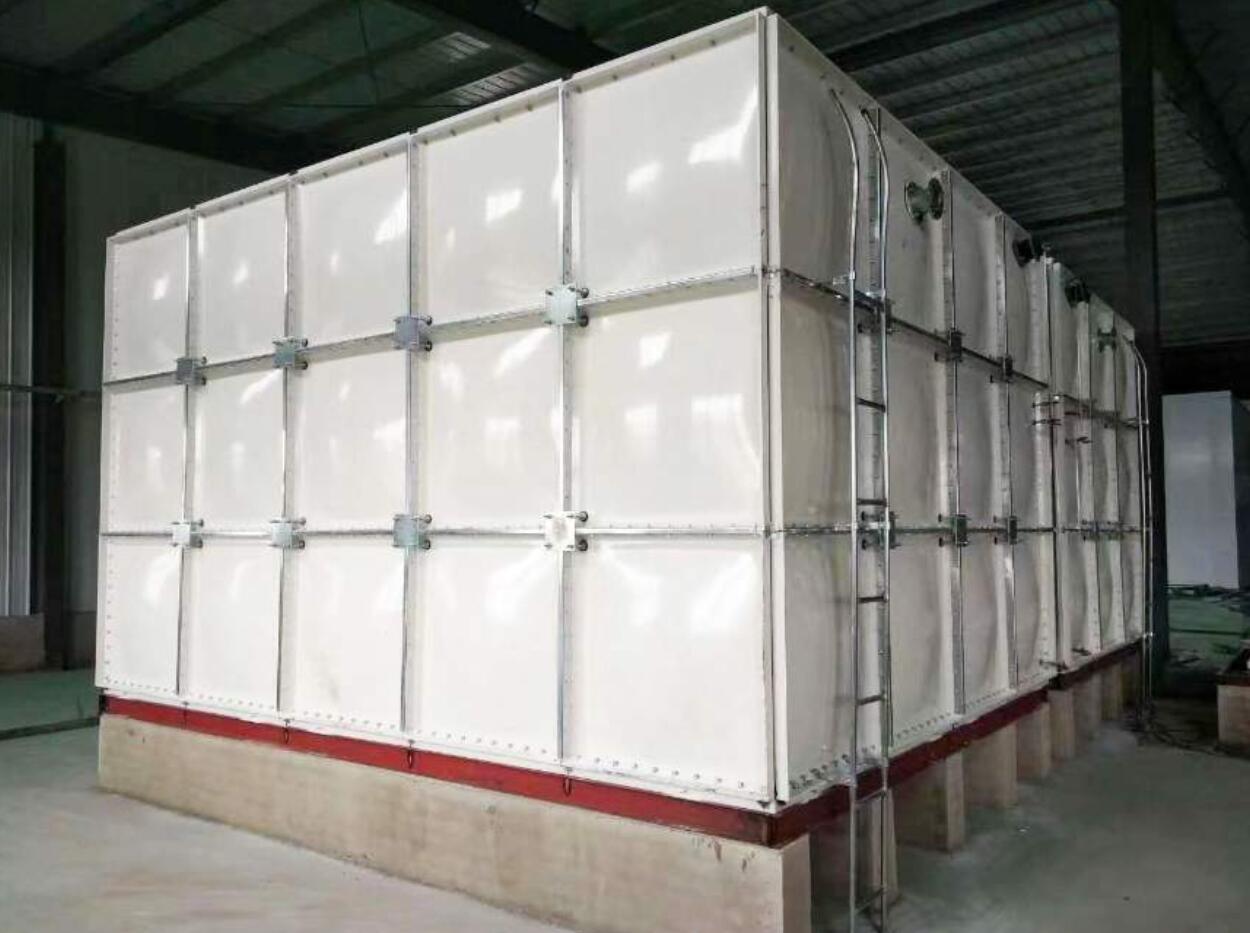
Analyzing the Insulation Performance of FRP Water Tanks: Technical Principles and Diverse Application Scenarios
Fiber Reinforced Plastic (FRP) water tanks have become a mainstream choice for modern water storage systems due to their superior corrosion resistance, high strength-to-weight ratio, and long service life. However, their insulation performance—a critical characteristic—often determines their suitability and energy efficiency in specific environments. This article systematically dissects the technical core of FRP tank insulation and focuses on its practical applications across various sectors.
The Technical Core of FRP Tank Insulation Performance
The insulation performance of an FRP water tank is not a single material property but a system performance constituted by the base material, structural design, and insulation layer. The tank body, filament-wound from food-grade resin and glass fiber, has a thermal conductivity of approximately 0.4 W/(m·K), providing a basic level of thermal resistance. Yet, professional insulation treatment is the key to enhancing its performance.
Mainstream Insulation Structures and Material Selection
The common approach involves attaching an insulation layer to the tank shell. Beijing Yuanhui FRP Co., Ltd. typically employs materials such as polyurethane foam (PUF) sprayed in-situ, rubber-plastic foam, or rock wool. Among these, PUF insulation is often the preferred choice due to its excellent closed-cell rate (often above 90%) and low thermal conductivity (0.022-0.027 W/(m·K)). The insulation thickness is determined through thermal calculation. In severely cold northern regions, for domestic hot water tanks, the insulation layer is usually designed to be 50mm to 100mm thick to ensure a temperature drop of no more than 5°C within 24 hours.
Key Factors Affecting Insulation Efficacy
Insulation effectiveness is influenced by multiple factors: primarily the ambient temperature differential—greater differentials demand higher performance from the insulation layer. Secondly, humidity can drastically increase the thermal conductivity of insulation materials if they absorb moisture. Finally, installation craftsmanship is crucial; the insulation layer must be continuous, seamless, and well-sealed with an outer cladding to prevent thermal bridging. Professional FRP tank manufacturers, like Beijing Yuanhui FRP Co., Ltd., ensure the integrity and effectiveness of the insulation through stringent process controls.
In-Depth Analysis of Core Application Scenarios
The quality of insulation performance directly defines the application boundaries of FRP water tanks. Their use has expanded from basic cold water storage to various scenarios with strict temperature requirements.
Civil Construction and Centralized Heating
In solar water heating systems or air-source heat pump systems for high-rise residences, hotels, and schools, insulated storage tanks are the thermal core. A well-designed insulated FRP tank can significantly reduce system heat loss and lower auxiliary heating energy consumption. For instance, in a large residential solar heating project in North China, a 120-cubic-meter insulated FRP tank supplied by Beijing Yuanhui achieved a daily average temperature drop of less than 3°C during winter when ambient temperatures reached -15°C, markedly improving the solar fraction.
Industrial Processes and Specialized Sectors
In industries like food & beverage, chemical, and pharmaceutical, processes often require constant-temperature storage of water or solutions. The combination of corrosion resistance and insulation in FRP tanks demonstrates unique advantages here. For example, in a dairy plant, hot caustic solution storage tanks for CIP (Cleaning-in-Place) systems must be maintained at specific temperatures to ensure cleaning efficacy. Polyurethane-insulated FRP tanks can stably maintain media temperature while resisting chemical corrosion.
Severe Cold Regions and Special Applications
In plateau, alpine border stations, and remote field stations, freeze protection of water supply systems is critical. FRP tanks with thickened insulation layers, possibly supplemented by electric trace heating systems, become a reliable choice. Their lightweight nature also facilitates transportation and installation, adapting to the construction conditions in remote areas.
The Economic and Sustainability Value of Insulation Performance
Evaluating the insulation performance of an FRP tank should not be based solely on the initial investment but must consider the lifecycle cost and benefits.
Economically, while the initial cost of an insulated tank is about 20%-35% higher than a standard tank, the energy cost savings can typically recoup the incremental investment within 2 to 4 years. For a project involving a 50-cubic-meter tank storing 65°C hot water, high-quality insulation can prevent heat loss equivalent to thousands of kilowatt-hours of electricity annually, demonstrating significant long-term operational benefits.
From a sustainability perspective, reducing heat loss directly decreases fossil fuel consumption and carbon emissions. The FRP material itself allows for a long design life (up to 30+ years) with low maintenance requirements, aligning with green building and sustainable development principles. The insulation performance data reports provided by Beijing Yuanhui FRP Co., Ltd. for their projects are becoming important documentation for clients pursuing green building certifications.
Conclusion
The insulation performance of FRP water tanks is a systems engineering feat integrating materials science, thermal design, and precision manufacturing. It has evolved from an add-on feature to a key performance indicator determining the success of tanks in hot water storage, industrial temperature maintenance, and extreme environment applications. As energy efficiency standards rise and carbon neutrality goals advance, requirements for FRP tank insulation will become more stringent and refined. Leading manufacturers in the industry, such as Beijing Yuanhui FRP Co., Ltd., are driving the development of FRP tanks towards higher energy efficiency and broader applications through continuous material R&D, structural optimization, and precise operational simulation. They provide reliable and economical temperature-controlled water storage solutions for various industries.